Trump's Daring Iran Rescue Mission Narrowly Avoided Catastrophic Failure
President Trump's audacious operation to extract a US airman from Iranian territory came perilously close to ending in disaster, with potential for dozens of casualties. The mission, which Trump later celebrated as a historic success, nearly unraveled when American aircraft became stranded behind enemy lines.
Stranded Aircraft and Close Call
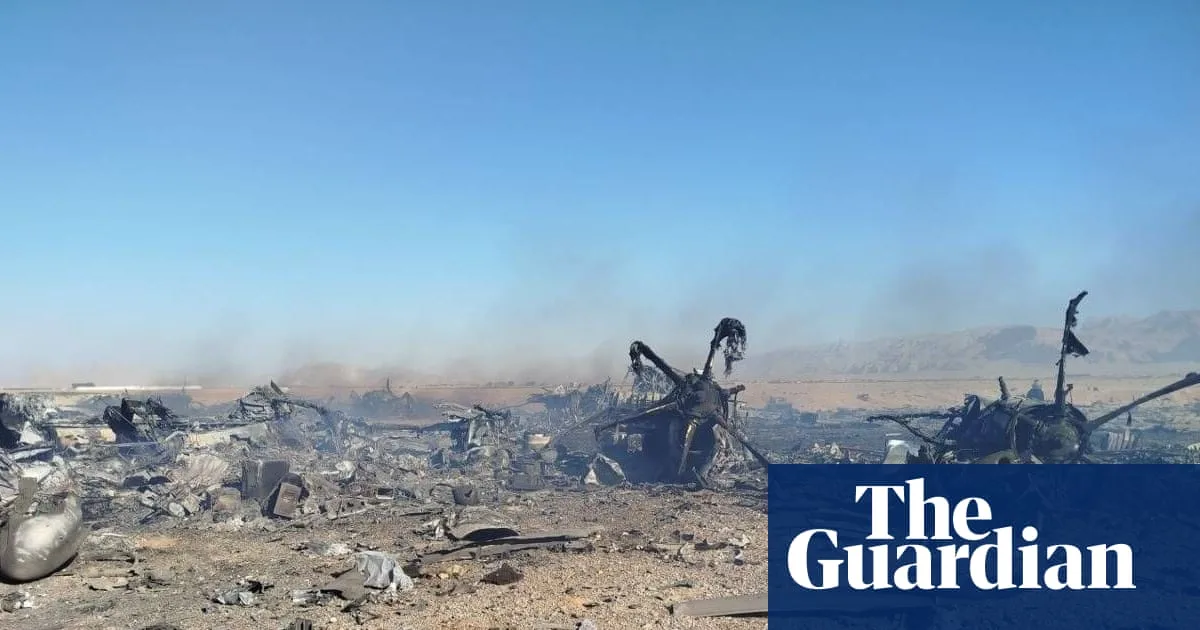
During the extraction attempt, two C-130 transport planes and one helicopter became stuck in mud at a remote Iranian airfield, leaving military personnel stranded as Basij militia fighters closed in on their position. The situation grew increasingly dire as Iranian forces advanced toward the botched rescue site.
Just as the mission appeared destined for failure, three additional transport planes arrived under intense pressure. The colonel and other forces were evacuated under gunfire from approaching Iranian troops. In their hasty retreat, American forces were compelled to destroy their own stranded aircraft to prevent them from falling into Iranian military hands.
Costly Escape and Conflicting Narratives
The destruction of American aircraft likely cost millions of dollars and demonstrated how narrowly the mission avoided complete failure. Iranian state media claimed they had shot down the two transport planes, though they provided no evidence to support this assertion. Iranian officials later declared the US mission a failure and labeled the rescue story as a cover-up for what they called Trump's heavy defeat.
President Trump offered a starkly different assessment, branding the operation a tremendous success that proved American "dominance and superiority" over Iranian airspace. In a Truth Social post, he celebrated what he called "one of the most daring Search and Rescue Operations in U.S. History."
The Airman's Harrowing Ordeal
The rescued colonel had ejected from an F-15E fighter jet that was shot down over Iran, finding himself stranded in treacherous mountainous terrain deep behind enemy lines. Armed with only a handgun for protection, his situation appeared increasingly bleak as Iranian forces became aware of his presence.
Iranian authorities offered a $60,000 reward for his capture, prompting Basij militia to advance along mountain roads below his position. Despite injuries, the colonel trekked approximately 70 miles and climbed to 7,000 feet, where he activated his emergency beacon and remained hidden for nearly two days while hoping for rescue.
Complex Rescue Operation
The CIA reportedly confused Iranian forces by spreading misinformation that the colonel had already been located, buying valuable time to actually find the stranded airman. Meanwhile, the pilot from the same aircraft had been rescued hours after the crash, though that operation was kept quiet to avoid jeopardizing the second rescue attempt.
American forces employed A-10 Warthog aircraft to slow advancing Iranian troops, blocking roads around the extraction zone and striking communications towers and approaching vehicles. Iranian officials reported at least four fatalities from these strikes.
Escalating Tensions and Broader Conflict
The rescue mission unfolded against a backdrop of escalating hostilities between the US and Iran. Following the downing of two US aircraft on Friday, Iran placed bounties on American airmen and vowed revenge against US military forces. Iranian media released images of the destroyed F-15E jet with taunting captions questioning American military technology.
Trump had earlier issued an ultimatum giving Iran 48 hours to "make a deal" or face severe consequences, which Iranian military commanders dismissed as "helpless, nervous, unbalanced and stupid action." The announcement of the successful rescue came as Iran launched missiles and drones at Israel and Kuwait, with several Middle Eastern nations reporting defensive actions against Iranian attacks.
Aftermath and Assessment
The remaining three rescue planes eventually flew from Iran to Kuwait, completing the mission just before midnight. According to reports, an MH-6 Little Bird helicopter was also destroyed after sustaining damage before evacuation. Iranian sources claimed hundreds of soldiers and Basij fighters who attempted to interfere with the rescue operation were "neutralized" by American special forces.
Trump emphasized that this marked the first time in military memory that two US pilots had been rescued separately from deep within enemy territory. He asserted that dozens of aircraft armed with "the most lethal weapons in the World" were deployed to retrieve the airman, and that both operations concluded "without a SINGLE American killed, or even wounded," despite reports of injuries during the pilots' rescue and the colonel's own injuries.
Iranian media reported five fatalities during the US rescue operation, highlighting the dangerous nature of the mission that nearly ended in catastrophe but ultimately succeeded in extracting American personnel from hostile territory.