Trump Issues Stark Warning as US and Iran Delegations Converge on Islamabad
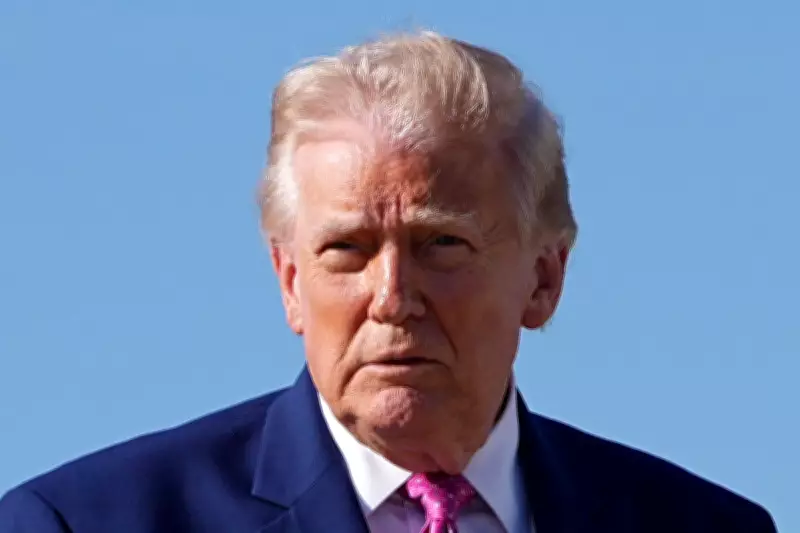
US President Donald Trump has declared that the United States will "finish" the war with Iran if high-stakes peace talks fail, as senior delegations from both nations arrive in Pakistan for critical negotiations. Speaking to reporters on Friday, Trump asserted that the strategically vital Strait of Hormuz would reopen "fairly soon – with or without" Iran's cooperation, adding ominously: "If it doesn't, we'll be able to finish it off one way or the other."
Delegations Arrive Amid Tensions and Conditions
The American team is led by Vice President JD Vance, who departed for Islamabad with expectations of a positive outcome but issued a cautionary note: "If they're going to try to play us… the negotiating team is not that receptive." Iran's delegation, headed by parliamentary speaker Mohammad Baqer Qalibaf and including key political and security officials, has already landed. However, Tehran has set preconditions, insisting that talks cannot commence without a ceasefire in Lebanon and the release of its frozen assets, which it claims Washington has yet to deliver.
World Bank Warns of Significant Economic Fallout
Amid the diplomatic flurry, World Bank President Ajay Banga has highlighted the severe economic implications of the ongoing Middle East conflict. He warned that if the war persists, it could slash global growth by up to 1 percentage point, while inflation might surge by 200 to 300 basis points. In a more optimistic scenario with an early resolution, the growth impact would be smaller, around 0.3 to 0.4 percentage points. Banga emphasized the uncertainty, stating: "The question really is, does this current peace and the negotiations that are going to be happening this weekend – will this lead to a lasting peace and then a reopening of the Strait?" Emerging markets are particularly vulnerable, with projected growth at 3.65 percent in 2026 and inflation rising to 4.9 percent, as oil prices have already skyrocketed by approximately 50 percent.

Humanitarian Crisis Deepens in Lebanon
The United Nations has reported that shelters for displaced people in Lebanon are "severely overcrowded," with nearly half of the country's public schools now serving as reception centres. UN spokesperson Stéphane Dujarric noted that needs "exceed the available capacity," and the health system is under extreme strain, with some hospitals at risk of depleting trauma supplies within days. Up to 1.2 million people have been displaced by Israeli attacks, with around 140,000 sheltering in about 680 sites, according to UN figures. The crisis worsened after Lebanese authorities reported over 300 fatalities from strikes on Wednesday alone.
Reports Suggest Deal Is Imminent
Despite the tensions, there are indications that a potential agreement between the US and Iran is "almost done." According to a source cited by Al Jazeera, preliminary negotiations were conducted by advance teams before the arrival of Vance and Iranian officials, raising hopes for a signed deal. Pakistan is facilitating indirect talks, with diplomatic support from countries including Saudi Arabia, Egypt, Turkey, and China, underscoring a concerted international effort to broker peace.
Violence Persists Despite Ceasefire Announcement
Fighting in Lebanon has continued unabated despite the US-Iran ceasefire, with fresh Israeli strikes and Hezbollah retaliation reported on Friday. An Israeli attack on a government building in Nabatieh killed 13 Lebanese state security personnel, according to President Joseph Aoun, prompting Hezbollah to fire rockets into northern Israel. This escalation follows earlier strikes that killed more than 350 people in densely populated areas shortly after the ceasefire was announced. The US and Israel maintain that the Lebanon conflict is not covered by the ceasefire, while Tehran insists it is integral to the broader war, highlighting a critical rift ahead of the Islamabad talks.

Logistical and Security Preparations in Pakistan
Pakistan has imposed an unprecedented lockdown in Islamabad, deploying thousands of security personnel in anticipation of the talks, which Prime Minister Shehbaz Sharif has described as decisive for the conflict's outcome. The US delegation includes President Trump's envoy Steve Witkoff and adviser Jared Kushner, while Iran's team features foreign minister Abbas Araqchi. The Iranian delegation was welcomed by Pakistan's chief of army staff Asim Munir and minister for foreign affairs Mohammad Ishaq Dar, signaling the high-level engagement.
Ongoing Challenges in the Strait of Hormuz
Iran has yet to lift restrictions in the Strait of Hormuz, where disruption to shipping has severely impacted global energy supplies. Reports indicate that Iran has been unable to locate all the mines it planted in the strait, complicating efforts to reopen the vital passageway despite the two-week ceasefire. US officials told The New York Times that this inability to remove the mines has hindered Iran from fulfilling its part of the truce, adding another layer of complexity to the negotiations.
Hezbollah Actions and Regional Dynamics
Hezbollah has claimed responsibility for a drone strike targeting Israeli soldiers in southern Lebanon, described as a response to Israel's post-ceasefire attacks. The group's actions underscore the persistent volatility in the region, with Iran arguing that the Lebanon conflict is inseparable from the wider war, a stance rejected by the US and Israel. This disagreement threatens to undermine what Pakistan has termed "make-or-break" talks aimed at ending the six-week conflict.