Starmer's Balancing Act: Venezuela Silence vs. Greenland Stance on US
Starmer's Venezuela Silence vs. Greenland Stance on US

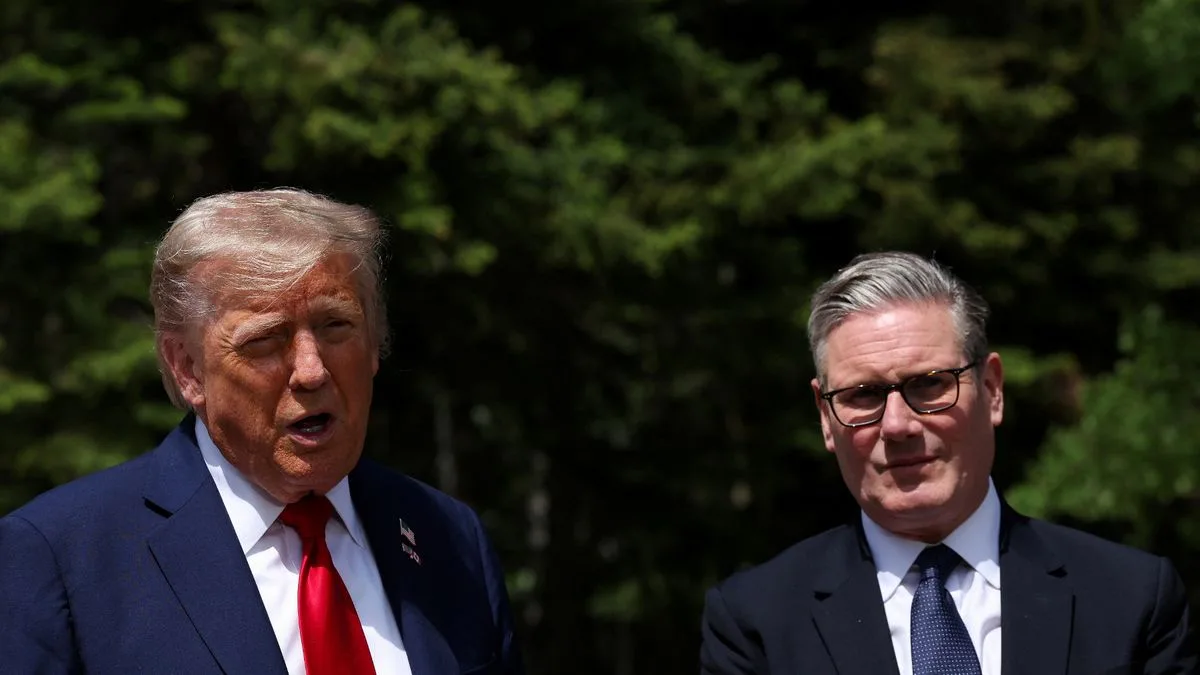
Prime Minister Keir Starmer's Labour government, which entered office pledging to use realist means for progressive ends, has faced a defining challenge from the actions of US President Donald Trump. The contrasting UK responses to US interventions in Venezuela and Greenland have laid bare the limits and calculations of Starmer's foreign policy doctrine.

The Calculated Ambiguity on Venezuela

When President Trump took controversial and potentially illegal action in Venezuela, many expected the UK's new prime minister, a self-described lifelong advocate of international law, to issue a swift condemnation. However, Starmer's public response was notably ambiguous, drawing criticism from some who saw it as a betrayal of progressive values.

This strategic silence, however, was rooted in a pressing geopolitical necessity. The UK was, at that precise moment, engaged in delicate efforts to broker a progressive conclusion to the war in Ukraine. US cooperation was deemed absolutely vital to pressure Russia into negotiations respecting Ukrainian self-determination. Openly condemning Trump over Venezuela risked alienating the US president and collapsing the fragile alignment needed for the Ukraine strategy.

Wide Pickt banner — collaborative shopping lists app for Telegram, phone mockup with grocery list

The stakes were raised further when it emerged that British forces assisted the US in seizing a Russian-flagged oil tanker linked to Venezuela. While Trump's motives centred on Venezuelan oil, a progressive realist could argue the action served a wider goal: undermining Russian investments and crippling its sanctions-evading 'shadow fleet'. For Starmer, the ambiguity on Venezuela represented a regrettable but potentially worthwhile trade-off to secure a greater progressive objective in Ukraine.

Drawing the Line at Greenland

The calculus shifted dramatically with Trump's subsequent moves regarding Greenland. Here, Starmer abandoned ambiguity for a firm, public stance. In a significant speech, he reminded audiences that while Britain is a pragmatic country willing to compromise with the US, "being pragmatic does not mean being passive. And partnership does not mean abandoning principle."

The core principle at stake in Greenland, as in Venezuela, was national self-determination. So why draw the line here? The argument for US annexation of Greenland to pressure Russia was fundamentally flawed. Greenland is already part of NATO, the premier anti-Russian alliance. No positive outcome could emerge from US coercion of the territory, a point European governments, including the UK, reinforced.

Trump's petty linkage of the issue to Norway denying him a Nobel Prize underscored that US policy was being driven by the personal ambitions of an imperial president. At this juncture, progressive realism demanded no further compromise. Starmer's speech was a deliberate attempt to halt a slippery slope and reaffirm the UK's red lines.

The Future of the Transatlantic 'Security Community'

A deeper principle jeopardised by the Greenland episode is the foundation of multilateral cooperation: respect and trust. The transatlantic relationship has long been considered a "security community" built on shared values and a sense of "we-ness," not mere transactional deals. Starmer's speech was an appeal to that historic narrative of solidarity from WWII through to the Cold War.

The critical question is whether that narrative still holds power in a US where the "America First" doctrine of Trump and the Maga movement dismisses notions of gratitude and shared destiny. The UK has for decades leveraged its US alliance to serve both moral and material interests. If the Trump administration continues to undermine the transatlantic security community, this foundational relationship may cease to serve British interests.

Pickt after-article banner — collaborative shopping lists app with family illustration

In conclusion, Starmer's handling of these twin crises reveals the tightrope walk of progressive realism. Strategic ambiguity on Venezuela was justified by the overriding goal of ending the war in Ukraine. However, unfettered US imperialism towards Greenland, devoid of strategic logic and driven by personal grievance, required a firm and public defence of principle. The episode signals that while the UK will compromise with the US, there are clear limits, and the future health of the special relationship now hangs in the balance.




