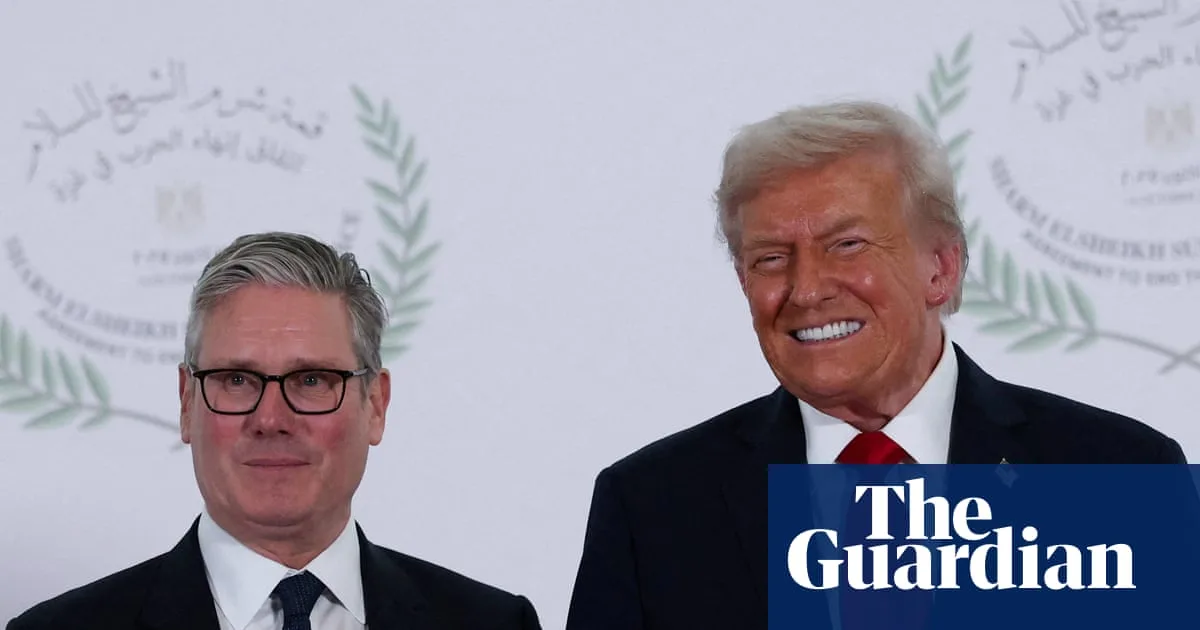
Prime Minister Sir Keir Starmer has defined his approach to an increasingly volatile Donald Trump as one of 'steady diplomacy', a stance put to the test as the US President threatens military action against Greenland. The crisis emerged on Monday 19 January 2026, prompting what amounted to an emergency press conference from Downing Street.
The Greenland Crisis and a Call for Calm
Faced with President Trump's threats to launch a military initiative in Greenland – a territory of the NATO ally Denmark – Sir Keir has concluded that a pragmatic, non-confrontational approach is the UK's best strategy. The Prime Minister publicly stated he does not believe the threats are genuine, aiming to de-escalate tensions while a US tariff war looms. His strategy is to avoid a head-on collision, manage the President in the national interest, and buy time.
Sir Keir, now ensconced in No 10 for some 18 months, understands the profound dependency of post-Brexit Britain on the United States for trade, investment, intelligence, and national security, including the nuclear deterrent. He has emphasised that Greenland's future is a matter for Greenlanders and Danes, and that a trade war benefits no one, a message he has delivered directly to the White House.
Navigating the 'Peak Trump' Phenomenon
There are signs that 'peak Trump' may be approaching, offering a glimmer of hope for diplomatic resolution. Resistance is growing within other branches of the US government; Republican voices in Congress are criticising the proposed attack on a NATO ally's territory, and the Supreme Court is poised to rule on the constitutionality of Trump's use of tariffs as a foreign policy weapon. With mid-term elections looming, the political calculus in Washington may be shifting.
This is not a novel dilemma for Downing Street. Similar challenges arose frequently during Trump's first term, forcing British premiers and Western allies to navigate between appeasement and resistance. The lesson learned is that standing up to Trump often fuels his aggression, while appeasing him invites further bullying. Past storms, like last year's trade wars and the bizarre plan to turn Gaza into a beach resort, have eventually blown over, albeit leaving lasting damage to trust in the US as a reliable partner.
A Toxic Cocktail of Vanity and Policy
The current Greenland initiative is a uniquely toxic product of President Trump's habit of linking disparate policy areas – national security, trade, commercial opportunities, and even the Nobel Peace Prize – all laced with his personal vanity. The situation escalated when Trump wrote to the Prime Minister of Norway stating, 'I no longer feel an obligation to think purely of Peace'. While the Trump administration has rarely ruled out military force in foreign policy, the threat of war against an ally like Denmark marks a dangerous departure from convention.
Ironically, the trigger seems to be European nations, including Britain, sending modest forces to Greenland to counter Chinese and Russian Arctic incursions. Rather than seeing this as solidarity, President Trump interpreted it as an 'anti-US' move. Sir Keir reportedly spent much of a phone call trying to convince him otherwise. The wider lesson, according to Downing Street, is to involve President Trump in any action in 'his' hemisphere he might find problematic to avoid provoking an overreaction.
For now, the UK's official position remains one of calm persistence. 'Our job is to find a way forward,' as Sir Keir puts it. This method is more time-consuming and exhausting than firing off a social media rebuke, but it is, in his view, how a British Prime Minister should behave. In this role as an unofficial 'Trump whisperer', striving to keep calm and carry on, Sir Keir may yet deserve a small peace prize of his own.






