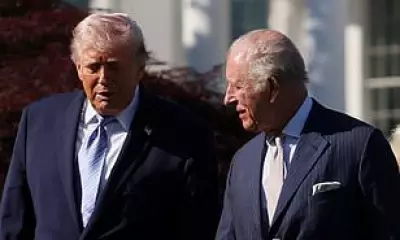
Prime Minister Keir Starmer's attempt to project calm statesmanship in the face of Donald Trump's latest international provocation has spectacularly misfired, offering little reassurance amid a deepening crisis over Greenland.
A Press Conference That Offered No Answers
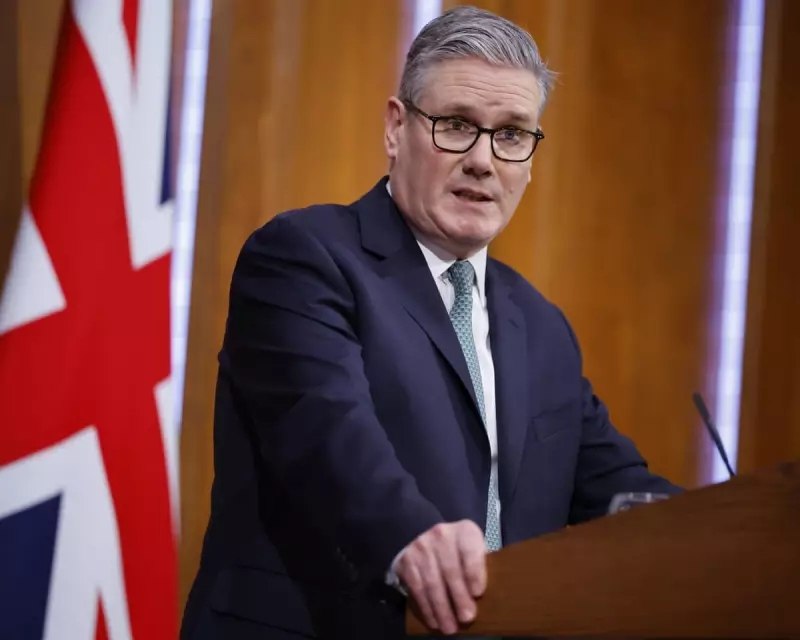
Forced to abandon a planned domestic policy speech for a second time, Starmer addressed the nation from Downing Street on Monday in an emergency press conference. The Prime Minister, adopting his most grave barrister's tone, asserted that Greenland's sovereignty was a matter solely for Greenland and Denmark. He drew a firm line, declaring UK values resolute, yet offered no concrete plan should the US follow through on its threat to seize the island by force.
Starmer's strategy was one of de-escalation. He implicitly criticised French President Emmanuel Macron's threat of retaliatory tariffs and admonished Liberal Democrat leaders Ed Davey and Zack Polanski for "making trouble." His prescription was "calm diplomacy" and a rational man-to-man conversation with President Trump, in the belief that once the situation was explained, the US leader would see reason and step back from his threats of tariffs and annexation.

The Fatal Flaw: Assuming Trump is Rational
The core failure of Starmer's approach, however, lies in a fundamental misreading of the US president. His entire diplomatic framework is predicated on the idea that Donald Trump is a sentient, rational being capable of responding to reasoned argument. Observers note this is a catastrophic category error.
Trump has consistently demonstrated that he operates as a bully, relishing the exercise of power over weaker parties and showing contempt for alliances like NATO. His desire for Greenland appears driven by machismo and a desire for historical legacy, not geopolitical strategy. He enjoys watching allies like Starmer scramble to coordinate a response to his whims.
No Plan B and a Diminishing Bargaining Chip
Journalists at the conference were left deeply unsatisfied, pressing the Prime Minister on a non-existent "Plan B." While Starmer insisted he did not believe Trump would use force, the president has explicitly stated he would if Denmark refuses to sell. The PM's warning that retaliatory tariffs are a "bad idea" and that falling out with a key nuclear ally is unwise did nothing to address what happens when Trump ignores this advice.
Critics argue Starmer inhabits a 'KeirWorld' where rocking the boat is forbidden, while Trump operates in a realm of impunity. The concern is that every humiliation is met with an invitation for more. There are growing fears that Starmer's perceived strength as a 'Trump wrangler' is illusory. His major bargaining chip—a coveted state visit—was offered too early and too cheaply, leaving the UK with diminished leverage.
The episode represents yet another humiliation in the Prime Minister's fraught relationship with The Donald. As the so-called rules-based order crumbles, granting licence to adversaries like Putin and Xi, Starmer's calm diplomacy looks dangerously like weakness. The question now is not about toadying, but whether the UK has any strategy at all for dealing with an irrational actor in the White House.