
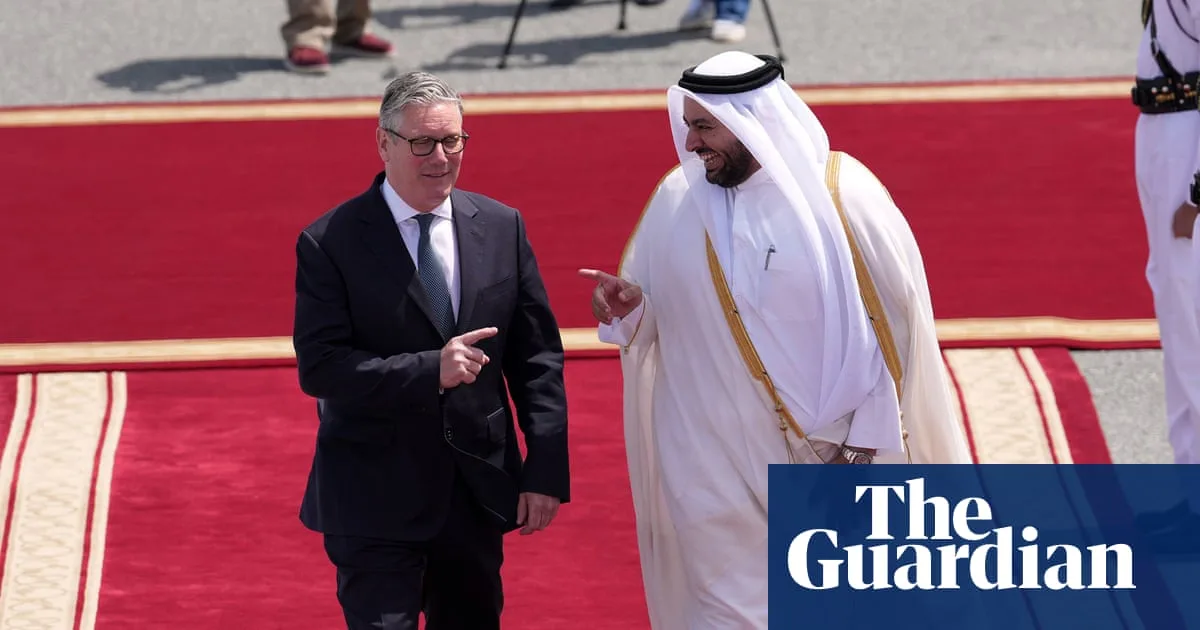
Prime Minister Sir Keir Starmer has insisted that remaining in Nato is in the best interests of the United States, pushing back against threats from US President Donald Trump to leave the alliance. Speaking at the end of a multi-stop Gulf trip, Starmer said Europe must do more to support Nato in light of the war in Iran.
Starmer, who met leaders in Saudi Arabia, the United Arab Emirates, Bahrain and Qatar, agreed with Trump's calls for European members to increase defence spending but stressed the alliance's importance. “It’s the single most effective military alliance the world has ever known,” he said. “Do we Europeans need to do more? Yes. I’ve been making that argument for the best part of two years.”
Trump has repeatedly criticised European Nato members for not participating more fully in strikes against Iran and has threatened to pull Washington out of the alliance. Starmer, however, argued that Nato is a defensive alliance that has kept members safer for decades and that a stronger European element would benefit all sides.
Starmer and Trump spoke on Thursday night, with much of the call focused on ensuring safe passage through the Strait of Hormuz, a vital shipping route blocked by Iran after US and Israeli attacks. Starmer stressed the need to avoid Iran charging levies on ships, a possibility Trump had mooted. “There can’t be tolling or restrictions on that navigation,” Starmer said.
UK Defence Secretary John Healey said on Friday that the UK’s actions in the Gulf “spoke for themselves”. While the UK refused to participate in attacks on Iran, it contributed to defending Gulf states from Iranian drones and missiles and provided bases for US defensive missions. “If we focus on our actions rather than just simply the exchange of words and social media posts, then the fundamentals for me remain,” Healey said.




