Russia's Frontline Advances in Ukraine Grind to a Halt
For the first time in over two and a half years, Russian forces made no territorial gains in Ukraine during March, according to an analysis by the Institute for the Study of War. The data, reviewed by AFP, indicates that Ukrainian forces actually recaptured approximately 9 square kilometres last month as Moscow's offensive momentum significantly slowed.
The Institute for the Study of War attributes this Russian slowdown to effective Ukrainian counteroffensive operations and significant communication limitations. These limitations stem directly from Russia's own ban on using Starlink satellite terminals within Ukraine, a critical tool for battlefield coordination. Furthermore, the Kremlin has attempted to restrict access to the Telegram messaging app, which is widely used by Russian troops on the frontline for communication and information sharing.
Trump's NATO Threat Labelled 'Putin's Dream Plan'
In a parallel development causing deep concern in European capitals, US President Donald Trump stated on Wednesday that he was "seriously considering" withdrawing Washington from the NATO military alliance. Trump justified this by claiming the alliance "were not there for us" when he initiated military action in Iran.

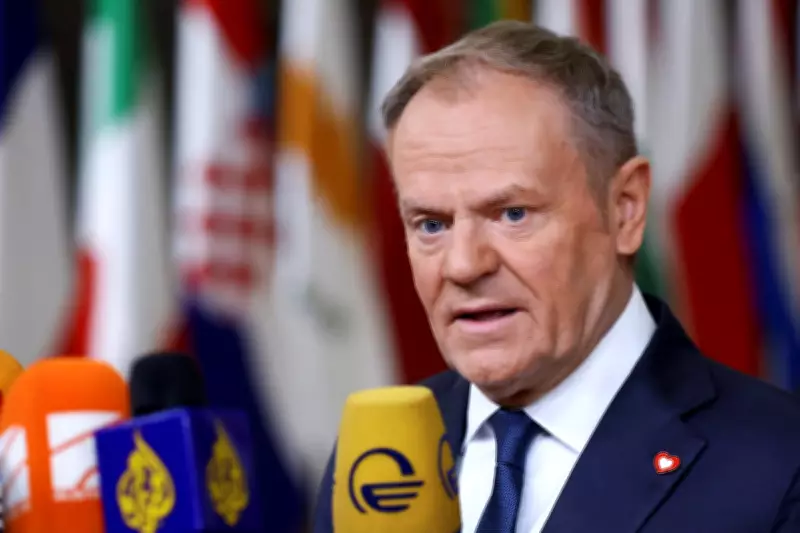
This war in Iran has substantially diverted US attention and resources away from the conflict in Ukraine. Poland's Prime Minister, Donald Tusk, responded forcefully, stating that the combined threat of NATO's potential breakup, alongside other crises, "looks like Putin's dream plan." Tusk, a former President of the European Council, linked Trump's stance to a broader pattern of actions benefiting Moscow, including easing sanctions pressure and halting aid for Ukraine.
Kharkiv Endures Sustained Drone Barrage
On the ground, Russian forces maintained a relentless, day-long barrage of drone strikes on Kharkiv, Ukraine's second-largest city, on Thursday. Local officials reported at least two people injured, including an eight-year-old girl. Kharkiv Mayor Ihor Terekhov documented strikes across four city districts via Telegram, with one official citing at least 20 separate drone impacts. The attacks continued past 2 a.m., causing fires and significant damage to residential buildings, as shown in footage from Reuters and AFP.
Further south, in Zaporizhzhia, a Russian attack damaged a high-rise apartment block and a local business. Conversely, over the border in Russia's Belgorod region, Governor Vyacheslav Gladkov reported 13 people injured by Ukrainian drone attacks. In Moscow, Mayor Sergei Sobyanin claimed air defence units had intercepted three Ukrainian drones overnight.
Ukraine's Strategic Strikes and Winter Preparations
Amid the fighting, Ukraine's defence ministry announced it had successfully struck five strategic Russian defence plants and ten oil refining facilities in March. These attacks targeted locations from occupied Crimea to deep within Russia, including the Leningrad Oblast, as part of a systematic effort to degrade Russia's military-industrial capacity.
Looking ahead, President Volodymyr Zelensky stated that Ukraine is already preparing for the next winter, working to protect 245 critical facilities across the country. This follows one of the coldest winters in over a decade, during which Russia's relentless attacks on energy infrastructure left millions without power. Zelensky emphasised the urgency of installing alternative power generation and restoring damaged facilities.
Diplomatic and Domestic Developments
In a diplomatic overture, President Zelensky offered Ukraine's hard-won maritime expertise to help keep the Strait of Hormuz open amid Middle Eastern tensions. He highlighted Ukraine's development of naval drone technology, which has been pivotal in challenging Russian dominance in the Black Sea.
Domestically, tensions over mobilisation surfaced in Lviv, where a customs officer was detained on suspicion of murdering an enlistment officer during a document check. Ukraine's defence ministry condemned the killing while acknowledging the mobilisation system requires changes.

Meanwhile, the Russian Foreign Ministry issued a stark travel advisory, warning its citizens against visiting dozens of countries with US extradition treaties. It claimed, without providing evidence, that US intelligence agencies use "fraudulent schemes" to lure Russians abroad for detention, reflecting heightened geopolitical tensions since the 2022 invasion.