Israel's Supreme Court Permits Aid Groups to Continue Gaza Operations Amid Strikes
Israeli Court Allows Aid Groups in Gaza as Strikes Kill Four

Israel's Supreme Court has intervened to permit international aid organisations to continue their vital work in the Gaza Strip and other Palestinian territories. This judicial decision, announced on Friday, effectively suspends a contentious Israeli government order that would have barred numerous aid groups from operating.

Court Overturns Government Ban on Aid Organisations

The Supreme Court's order grants a temporary injunction, following a petition from seventeen aid groups. This legal action halts an earlier Israeli government decision that aimed to ban thirty-seven aid organisations by March 1st. The government's move was based on the groups' refusal to comply with new regulations introduced last year.

These controversial rules require aid groups to register the names and contact information of all employees, while also providing detailed accounts of their funding sources and operational activities. Aid organisations have strongly criticised these requirements, labelling them as invasive and arbitrary measures that would severely hinder the delivery of critical assistance to Gaza's war-ravaged population.

"A Step in the Right Direction"

Athena Rayburn, executive director of AIDA—an umbrella organisation representing over one hundred groups operating in Palestinian territories—commented on the ruling. "This is, however, a step in the right direction—with a long, long way still to go. We will keep fighting to be able to do our jobs, and deliver life saving assistance to Palestinians in need," she stated.

Legal representatives for the aid groups expressed relief, noting that the decision provides Palestinians in Gaza and the West Bank with some much-needed "breathing room." The petition argued that Israel's new rules violate international law, asserting that as an occupying power, Israel has an obligation to ensure food and medicine reach civilians. Furthermore, it contended that Israel lacks the authority to shutter organisations in areas under the nominal control of the Palestinian Authority.

Deadly Airstrikes Continue Amid Fragile Ceasefire

As the court issued its ruling, Israeli airstrikes overnight killed at least four people in Gaza, according to hospital reports on Friday. These strikes have repeatedly disrupted the U.S.-negotiated truce that took effect on October 10th. The escalating Palestinian death toll has led many in Gaza to assert that the war continues unabated despite the ceasefire agreement.

The recent strikes targeted two police checkpoints—one in southern Gaza near Khan Younis and another in the Bureij refugee camp. Israel's military stated on Friday that it killed several armed militants in the eastern part of Rafah, a town on the border with Egypt. The army claimed these strikes were in direct response to violations of the ceasefire agreement.

Gaza's Humanitarian Catastrophe

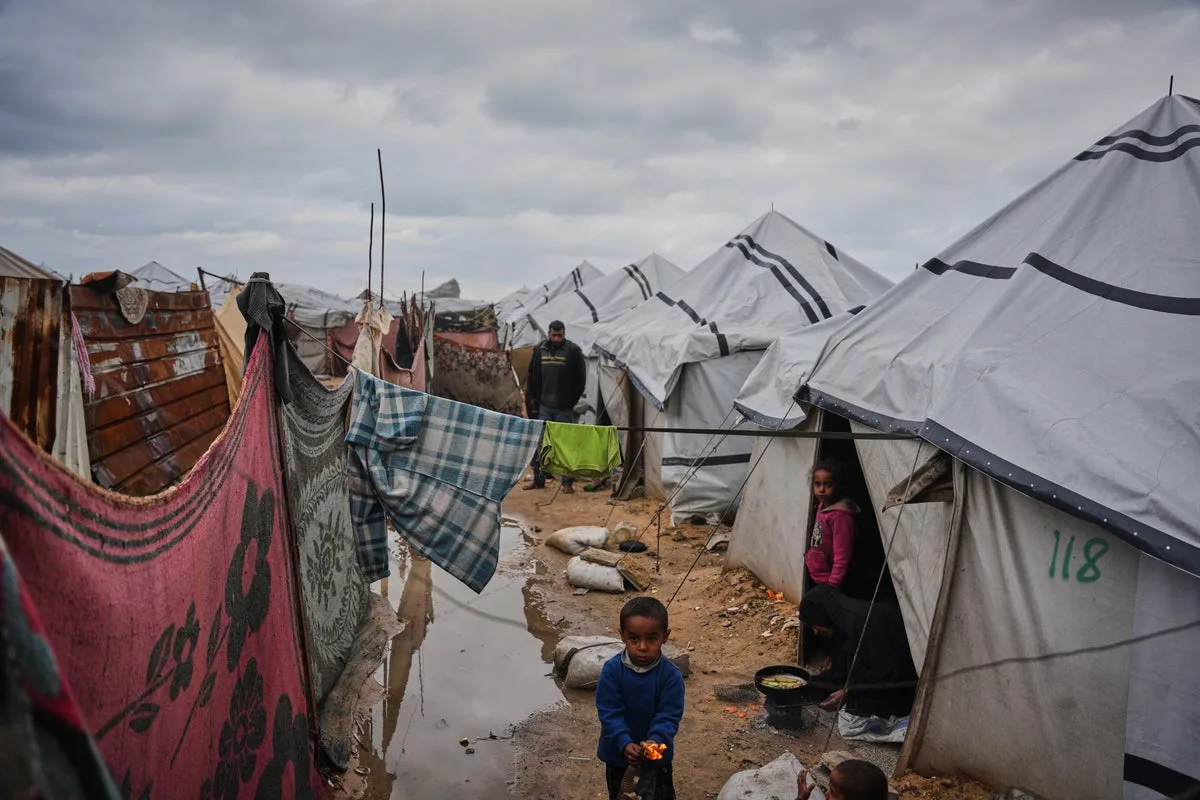
The vast majority of Gaza's two million residents depend entirely on aid organisations for food, water, healthcare, shelter, and other essential services. This reliance has intensified following Israel's two-year offensive that destroyed much of the territory's infrastructure. Hundreds of thousands of Palestinians currently live in temporary tents, with reconstruction efforts yet to begin despite a shaky ceasefire agreement reached in October.

U.S. Embassy Expands Services in West Bank Settlement

Meanwhile, in the occupied West Bank, the U.S. Embassy began offering consular services for the first time on Friday at an Israeli settlement. This move continues a significant policy shift under U.S. President Donald Trump, whose administration has adopted a far friendlier stance toward Israeli settlements in the West Bank compared to previous American presidents.

American citizens lined up to enter what appeared to be a gymnasium in the town of Efrat, where approximately four thousand U.S. citizens reside. Rows of tables filled the room, with a prominent sign on the wall reading: "US Embassy welcome to Efrat." The city's mayor, Dovi Sheffler, expressed his enthusiasm about the new service. "The United States says Efrat is part of Israel, Efrat is going to be forever here," he declared.

The U.S. Embassy has previously provided consular services in Ramallah and other Palestinian cities in the West Bank, where Palestinian Americans also reside. More than 3.4 million Palestinians and 700,000 Israelis live in the occupied West Bank and east Jerusalem—territories captured by Israel in 1967 that Palestinians seek for a future state. The international community overwhelmingly considers Israeli settlement construction in these areas to be illegal and a major obstacle to peace.

This development occurs alongside the Supreme Court's ruling on aid groups, highlighting the complex and contentious landscape of Israeli-Palestinian relations. The temporary injunction will remain in place until the court issues a final ruling in the case, though no timeline has been established for this decision.




