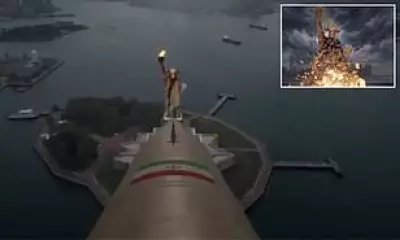
Irish political leaders have issued stark warnings about the potential for a broader regional conflict following coordinated missile strikes by the United States and Israel against Iran. The military action, described by the attacking nations as a pre-emptive measure against Iran's nuclear ambitions, has triggered immediate retaliation and drawn condemnation from across the Irish political spectrum.
Taoiseach's Grave Concerns Over Escalation
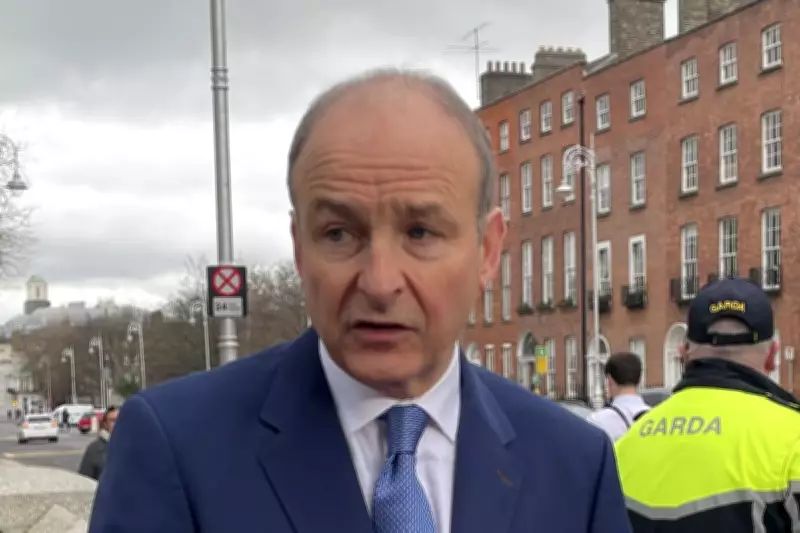
Taoiseach Micheál Martin stated he is "deeply concerned" about developments in Iran and the "real potential that exists for escalation and wider conflict in the region." In a formal statement, the Irish premier urged all parties to exercise maximum restraint and prioritize diplomatic solutions over military action.
"Ireland has always believed that conflict should be resolved through diplomacy and negotiation, in line with the principles of the UN Charter and international law," Mr. Martin emphasized. "That must apply in this situation as much as in any other."

Protection of Civilian Life Paramount
The Taoiseach stressed that protecting civilian lives in Iran, Israel, and neighboring countries must now be the foremost priority. While acknowledging Iran's government as "brutal and repressive," Mr. Martin maintained that military strikes were not the appropriate response to international concerns about nuclear proliferation.
"We have been clear that Iran must never be allowed to acquire nuclear weapons and we have supported international efforts to ensure its compliance with its obligations in international law," he stated. "But that goal should be pursued around the negotiating table."
Sinn Féin Leader Condemns 'Unprovoked Aggression'
Sinn Féin President Mary Lou McDonald delivered a blistering critique of the military action, describing the joint US-Israel strikes as "unprovoked military aggression" and a "frightening turn of events." She called for an immediate cessation of hostilities and a return to diplomatic negotiations.
"This is the second such action in just nine months, it is incredibly dangerous, lives are at stake, civilian lives," Ms. McDonald asserted. "There needs to be cessation of this action, there needs to be a return to the negotiating table and diplomacy needs to win out."
Human Cost and Regional Context
The opposition leader expressed particular concern for Iranian civilians, noting that "innocent Iranian families and civilians are terrified" and would bear the human cost of the conflict. She also contextualized the strikes within the broader Middle East situation, referencing what she termed "an ongoing genocide, unchecked, in Palestine."
"Young lives have been lost," Ms. McDonald added. "There is absolutely no conceivable justification for these actions."
Foreign Minister Calls for De-escalation
Minister for Foreign Affairs Helen McEntee echoed concerns about the escalating violence, stating she was "deeply concerned" about the decision to launch widespread armed conflict against Iran and "equally dismayed" at Iran's retaliatory response.
"Further conflict is profoundly unhelpful and presents challenges which only make already deep divisions more dangerous and unstable and put more lives in the region at risk," Ms. McEntee warned, drawing on insights from her recent visit to the Middle East.
Irish Citizens in the Region
The Foreign Affairs Minister confirmed that a small number of Irish citizens reside in Iran, most long-term residents, and assured that Irish embassies in the region are actively engaged in supporting affected citizens. Travel advisories have been updated, with Irish citizens advised against travel to both Iran and Israel and those already in the region instructed to shelter in place.
"I fully understand the concerns of Irish citizens in the region, and the concerns of their families and friends in Ireland and around the world," Ms. McEntee stated.
Political Pressure on Government Response
The crisis has prompted calls for stronger action from the Irish government, with People Before Profit TD Paul Murphy demanding that Taoiseach Martin cancel his upcoming St. Patrick's Day visit to the White House. Mr. Murphy described the coordinated attack as having "no justification" and called for immediate condemnation of both the United States and Israel.

"It is unthinkable that the Taoiseach would go to the White House shortly to give shamrock to Trump," the TD argued. "Our national day cannot be used to whitewash Trump and his wars of aggression. It would be a travesty and a national embarrassment."
Diplomatic Framework and International Coordination
Minister McEntee noted Ireland's longstanding support for the Joint Comprehensive Plan of Action (JCPOA) agreed in 2015 and subsequent diplomatic efforts concerning Iran's nuclear program. She called on all regional states to exercise restraint, warning that "a wider conflict will increase regional instability."
The Taoiseach confirmed that Irish embassies and missions are coordinating closely with international partners to ensure citizen safety and that Ireland will remain in close contact with EU and UN partners as the situation evolves. The Irish government's response emphasizes diplomatic channels, international law, and multilateral cooperation as the preferred mechanisms for resolving the escalating crisis.