Iran's Assembly of Experts Selects New Supreme Leader Amid Escalating Conflict
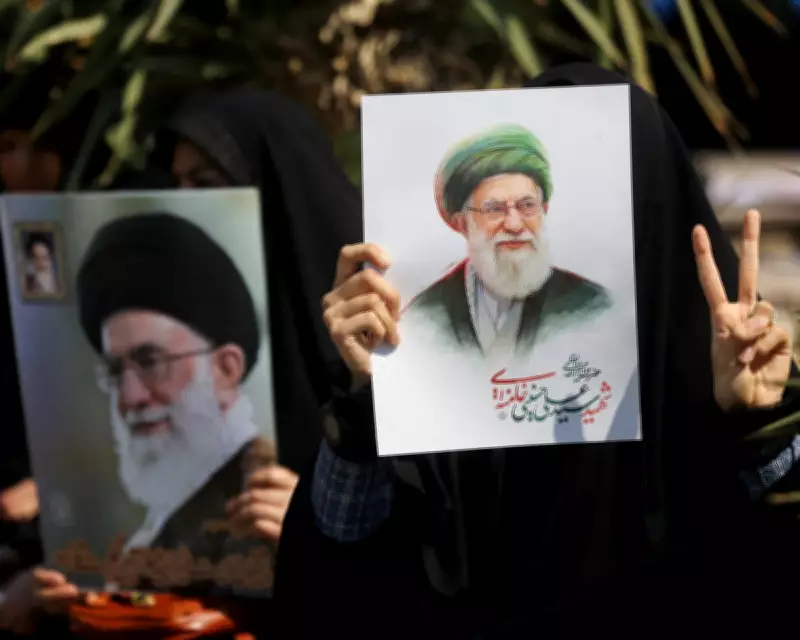
The body responsible for appointing Iran's supreme leader, the Assembly of Experts, has announced that it has reached a decision on a successor to the late Ali Khamenei, who was killed in a joint US-Israeli strike on Tehran on February 28th. The announcement was made on Sunday, although the identity of the chosen candidate was not immediately disclosed to the public.
Israeli Military Issues Stern Warning Over Succession
In a stark development, the Israeli military has issued a warning that it will target any figure selected to replace Khamenei, who had ruled Iran for 37 years. The warning was communicated via a post on X in Farsi, stating that Israel would pursue every successor and anyone involved in the appointment process. This threat underscores the heightened tensions in the region, as fighting between Israel and Iran has intensified over the weekend.
Mohsen Heydari, a member of the Assembly of Experts, confirmed the decision, stating, "The most suitable candidate, approved by the majority of the Assembly of Experts, has been determined." Another member, Mohammad Mehdi Mirbagheri, supported this in a video, noting that "a firm opinion reflecting the majority view has been reached." The assembly, comprising 88 members, is constitutionally mandated to select the supreme leader, a role that holds ultimate authority in Iran's political and religious spheres.

Potential Candidates and Internal Divisions
In the days leading up to the selection, Mojtaba Khamenei, the 56-year-old son of the deceased leader, emerged as a frontrunner. However, his appointment is considered uncertain due to significant opposition. Critics argue that such a move would entrench a regime accused by human rights groups of killing at least 7,000 people in recent months. Additionally, a father-to-son succession is generally frowned upon within Iran's Shia clerical establishment, particularly in a republic that originated from the overthrow of a monarchy in 1979.
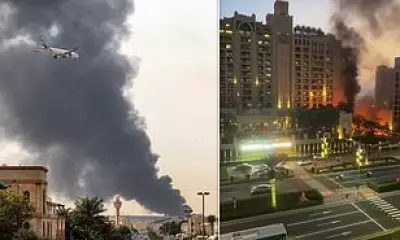
The selection process occurred against a backdrop of escalating military actions. Iranian strikes have targeted energy infrastructure across the Gulf, while Israeli attacks have focused on oil storage and fuel facilities within Iran. On Sunday, a fresh wave of Iranian strikes hit Gulf states, including Saudi Arabia, the United Arab Emirates, Qatar, Bahrain, and Kuwait. Saudi Arabia reported intercepting 15 drones, and strikes in Bahrain caused material damage to a critical desalination plant.
Internal Rifts and Regional Implications
These attacks appear to highlight internal clashes within Iran's leadership, contradicting recent statements by President Masoud Pezeshkian. On Saturday, Pezeshkian apologised to countries on the Arabian Peninsula and suggested that strikes against them would cease, provided their airspace and US bases were not used against Iran. Analysts note that this pledge exposed rare public rifts within the ruling elite, with conservative factions reportedly angered by the president's words.
Despite this, Iranian military actions continued, with overnight US and Israeli strikes hitting five oil facilities around Tehran. An Iranian official reported that the sites were damaged, but fires were brought under control. Meanwhile, Israel's war on multiple fronts persisted, with intense strikes on Lebanon targeting Hezbollah, an Iran-backed armed group. These assaults resulted in four deaths in a hotel blast in Beirut and 12 more in southern Lebanon, with Israel claiming it was targeting key commanders in Iran's Quds Force.
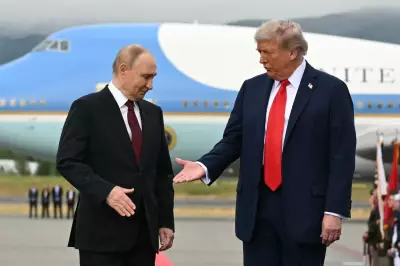
Lebanon's health ministry reported at least 339 fatalities in the conflict, and the Norwegian Refugee Council estimated that about 300,000 people have fled their homes. Reports from US media, such as the Washington Post and Fox News, suggest that Russia has been providing Iran with intelligence to target US military assets in the region, though this remains unconfirmed by independent sources.
The selection of Iran's new supreme leader marks a pivotal moment in the ongoing Middle East crisis, with regional stability hanging in the balance as threats and military actions escalate.