
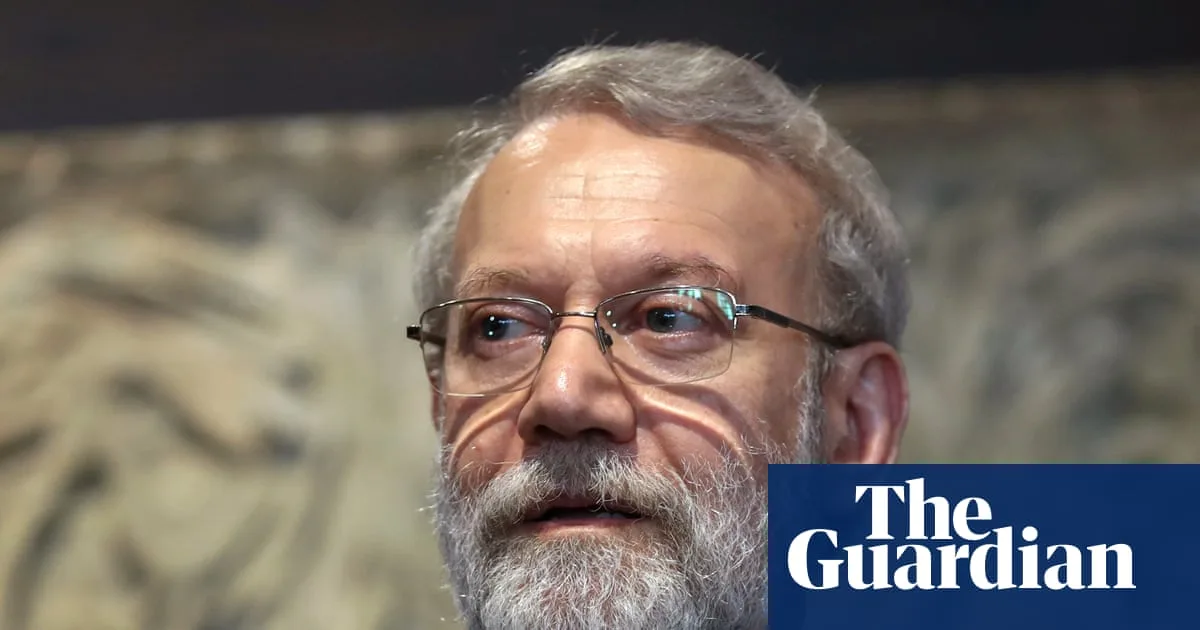
Iran's supreme national security council has confirmed the death of its chief, Ali Larijani, following an Israeli airstrike. In a statement on Tuesday evening, the council said Mr Larijani, his son and his bodyguards had been killed, describing him as a martyr.
Israel earlier announced it had killed Mr Larijani, who was a central figure in Iranian politics. The Israeli defence minister, Israel Katz, said a separate strike had also killed the commander of the Basij paramilitary force, Gholamreza Soleimani, along with other senior Basij figures. Mr Soleimani's death was subsequently confirmed by Iranian state media.
Iran's army chief, Amir Hatami, threatened a "decisive and regrettable" retaliation for the killing. The deaths come as the US-Israeli war on Iran enters its third week, with at least 2,000 people killed and the Strait of Hormuz largely closed off. The US president, Donald Trump, hailed the reported killing, saying of Iran's clerical leadership: "Their leaders are gone."
Mr Larijani had been seen days earlier at the annual Quds day rally in Tehran. He was appointed secretary of the supreme national security council in August, following earlier US-Israeli attacks in June 2025. He had played a key diplomatic role before the war, and had also issued a statement appealing to Muslims worldwide to support Iran.
The Turkish foreign minister, Hakan Fidan, condemned the political assassinations, saying they were "illegal acts contrary to the laws of war". The office of the Israeli prime minister, Benjamin Netanyahu, said he had ordered the elimination of senior Iranian officials. Mr Larijani was regarded as one of the more pragmatic faces of Iran's establishment, having helped steer nuclear negotiations with the west, though his image hardened after the killing of the supreme leader, Ali Khamenei, on the first day of the war.




