Iranians Express Defiance and Disappointment After Failed US Peace Talks
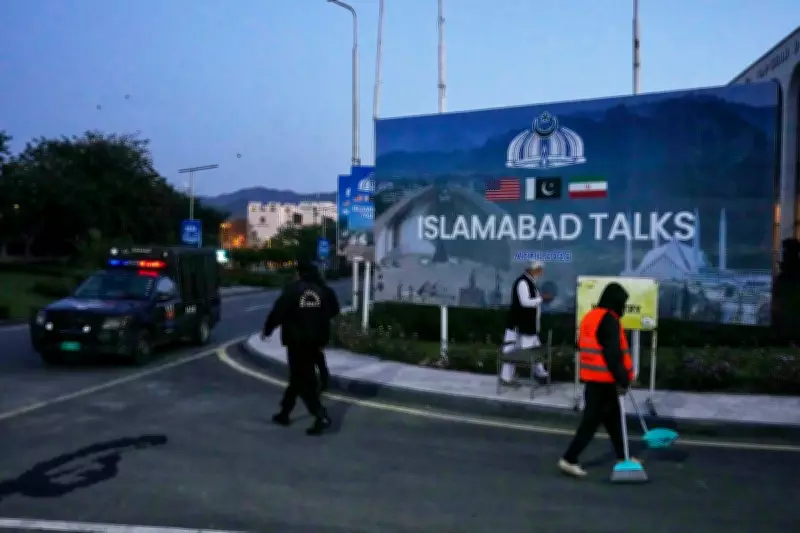
Iranians have reacted with a potent mixture of disappointment and patriotic defiance following the collapse of peace talks with the United States on Sunday. The high-stakes negotiations, held in Pakistan, failed to reach an agreement after a marathon 21-hour session, casting serious doubt over the future of a fragile two-week ceasefire set to expire on April 22.
Blame and Sticking Points
U.S. officials attributed the breakdown to what they described as Iran's refusal to commit to abandoning its nuclear program. In contrast, Iranian officials placed the blame squarely on the United States for the failure to secure a deal, though they did not specify the precise sticking points that prevented an agreement.
The streets of Tehran reflected the national mood, lined with large Iranian flags and giant billboards glorifying the country's leaders and military achievements. One prominent illustration depicted uniformed Iranian men hauling a fishing net from the sea, its catch consisting of miniature U.S. military aircraft and warships, accompanied by the bold declaration: "The Strait Remains Closed."

Public Sentiment in Tehran
Speaking to The Associated Press outside a newsstand in the capital, Farhad Simia, 43, expressed his initial hope for successful negotiations and an end to hostilities. "I'm against war. I think negotiation is the better path," Simia stated. However, he stood firmly with Iran, blaming "inappropriate demands" by the U.S. for the diplomatic failure.
Mehdi Hosseini, also 43, echoed this sentiment, highlighting a concern among some Iranians about potential concessions. "Considering the advantage Iran seemed to have on the battlefield, there was a real concern that we might lose all those gains in the negotiations," Hosseini said. "Whether the talks succeed or not is one matter, but the fact that the Iranian negotiating team managed to preserve what it achieved in the war, while refusing to back down and surrender, gives reason for hope."
Strategic Concerns and Resolve
The strategic Strait of Hormuz emerged as a central point of contention. Hamid Haghi, 55, cited "America's overreach" as the reason for the talks' failure. "The U.S. wants 'to come to the Strait of Hormuz, which is a legacy from our fathers,'" he asserted. "'We can oversee it ourselves.'"
This resolve was further emphasized by 60-year-old Mohammad Bagher, who believes Iran must continue to stand strong against the U.S. in a conflict he views as of American making. "We are a nation of dialogue and negotiation as long as our interests are respected. We have never sought war," he declared. "We will stand firm to the end, we are ready to sacrifice our lives, and will not give them one inch of our land."
Wider Conflict and Impact
The failed talks occur against the backdrop of a devastating regional conflict initiated by the U.S. and Israel on February 28. The war has resulted in significant casualties, killing at least 3,000 people in Iran, 2,020 in Lebanon, 23 in Israel, and more than a dozen in Gulf Arab states. It has also caused lasting damage to infrastructure across half a dozen Middle Eastern countries.
Furthermore, Iran's tightened control over the Strait of Hormuz has largely severed the Persian Gulf and its crucial oil and gas exports from the global economy. This strategic move has sent international energy prices soaring, underscoring the far-reaching economic consequences of the ongoing geopolitical standoff.