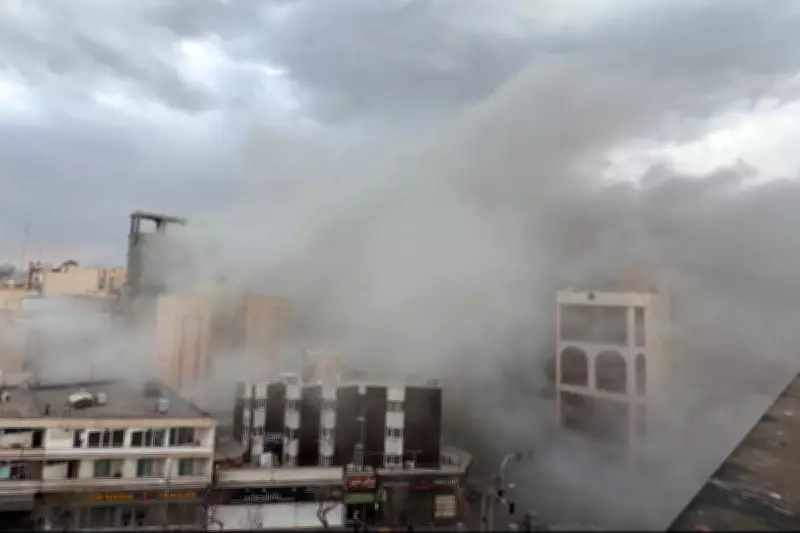
US Embassy in Riyadh Targeted by Iranian Drone Attack as Regional War Escalates
The United States embassy in Saudi Arabia's capital, Riyadh, came under direct attack from Iranian drones early Tuesday morning, marking a significant escalation in the ongoing Middle Eastern conflict now entering its fourth day. According to Saudi Arabia's Defence Ministry, the strike caused a limited fire and minor structural damage, though further operational details remain classified. This assault follows a similar attack on the US embassy in Kuwait just one day earlier, demonstrating Iran's expanding retaliatory campaign across the Gulf region.
Widespread Attacks Target Critical Infrastructure and Energy Routes
Iranian forces have launched coordinated strikes against multiple strategic targets, including two Amazon data centers in the United Arab Emirates and a facility in Bahrain, causing significant operational disruption. Energy infrastructure in Qatar and Saudi Arabia has also been hit, alongside attacks on commercial vessels navigating the Strait of Hormuz. This critical maritime passage handles approximately one-fifth of globally traded oil, and the assaults have triggered a sharp increase in worldwide oil and natural gas prices, creating economic ripple effects across international markets.
The United States and Israel have responded with intensive airstrikes against Iranian positions, with US President Donald Trump indicating that military operations could extend for four to five weeks, or potentially longer. Secretary of State Marco Rubio emphasized that the most severe impacts from US military action are still forthcoming, briefing Congress about the ongoing campaign objectives.

Humanitarian Crisis Deepens with Mounting Civilian Casualties
Civilian casualties continue to rise dramatically across the conflict zone. The Iranian Red Crescent Society reports at least 555 fatalities from US-Israeli operations, while Israeli officials confirm 11 deaths from Iranian missile strikes within their territory. In Lebanon, Israeli retaliatory actions against Hezbollah have resulted in dozens of fatalities, with the country's Health Ministry documenting at least 52 deaths and 154 injuries from overnight strikes in Beirut suburbs and southern regions.
Amy Pope, Director General of the International Organisation on Migration, warned that further military escalation would displace additional families and severely impact civilian populations. Millions are already displaced throughout the region, creating a growing humanitarian emergency that requires immediate international attention and de-escalation efforts.
Nuclear Tensions and Conflicting Claims Heighten Global Concerns
The conflict has intensified longstanding nuclear tensions, with Iranian officials reporting airstrikes targeting the Natanz nuclear enrichment facility. Reza Najafi, Iran's ambassador to the International Atomic Energy Agency, denied allegations that Iran seeks to develop nuclear weapons, calling such claims a deliberate falsehood. However, Israeli Prime Minister Benjamin Netanyahu asserted in a televised interview that Iran is secretly reconstructing underground facilities for atomic bomb production, though he provided no substantiating evidence.
Satellite imagery analysis conducted by The Associated Press revealed limited activity at two Iranian nuclear sites prior to the conflict, with analysts suggesting Tehran was likely assessing damage from previous US strikes and attempting salvage operations.
Regional Spillover and Military Confusion Complicate Conflict Dynamics
The warfare has expanded beyond direct Iran-US-Israel engagements, with Hezbollah launching missile attacks against Israel from Lebanese territory. Israel retaliated with airstrikes targeting what it described as Hezbollah command centers and weapons storage facilities in Beirut. Brigadier General Effie Defrin, an Israeli military spokesman, stated that all options remain under consideration, including a potential ground invasion of Lebanon.

Confusion and tragic errors have emerged within the conflict, as US Central Command confirmed that Kuwaiti defenses mistakenly shot down three American fighter jets during an Iranian assault. All six pilots successfully ejected and survived the incident. Meanwhile, the US military acknowledged six American service member fatalities in Kuwait, all Army soldiers from the same logistics unit.
As the conflict enters its most dangerous phase yet, with diplomatic compounds directly targeted and critical infrastructure under fire, international calls for de-escalation grow increasingly urgent while military operations show no signs of abating.