Iran Selects New Supreme Leader as Conflict with US and Israel Escalates
Iran has formally announced the selection of a new supreme leader, a critical decision made as the nation grapples with the devastating aftermath of sustained US-Israeli military strikes. The move comes just over a week after the death of Ayatollah Ali Khamenei, who was killed in the initial airstrikes that ignited the current widespread conflict across the Middle East.
Assembly of Experts Reaches Decision Amid Ongoing Violence
The clerical Assembly of Experts, the body constitutionally tasked with appointing Iran's supreme leader, has concluded its vote and chosen a successor. Ahmad Alamolhoda, a prominent member of the assembly, confirmed to Iran's Mehr news agency that 'the vote to appoint the leader has taken place and the leader has been chosen.' However, the identity of the new leader remains undisclosed, with the assembly's secretariat set to make a formal announcement at a later time.
Several assembly members have indicated that the successor is likely to be the son of the late Ayatollah Khamenei, suggesting a continuation of the existing clerical leadership lineage. This development occurs against a backdrop of severe military aggression, as Israel issued a stark warning that it would not hesitate to target the new supreme leader and the members of the Assembly of Experts involved in his confirmation.

Expanding Warfront and Military Operations
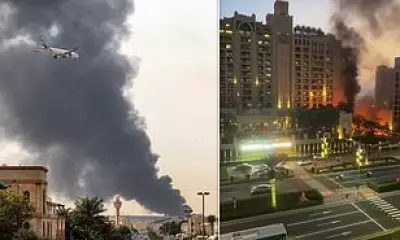
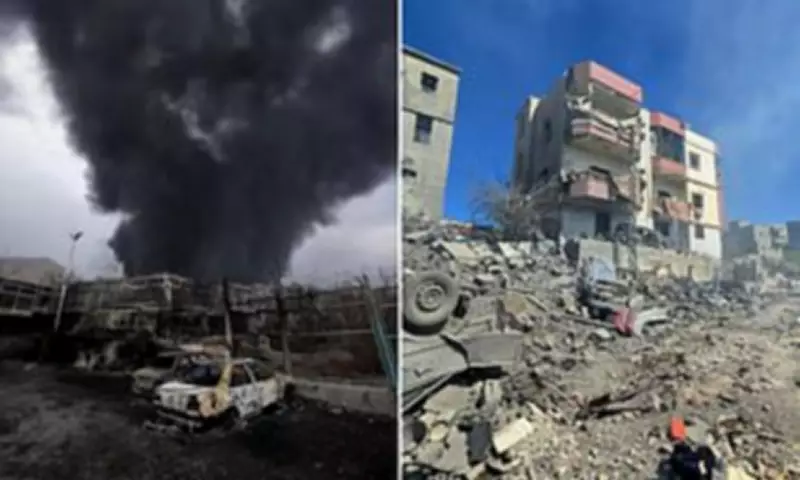
The conflict has now entered its ninth day, with no signs of abatement. Overnight, Israeli forces conducted two significant operations: a series of airstrikes targeting fuel storage facilities in and around Tehran, and an attack on a hotel in central Beirut, Lebanon, aimed at suspected Iranian commanders. These actions underscore the expanding geographical reach of the hostilities.
In response, Iran's Revolutionary Guards declared they possess sufficient supplies to sustain their campaign of aerial drone and missile attacks across the Middle East for up to six months. Spokesman Ali Mohammad Naini revealed that Iran has so far deployed only first- and second-generation missiles, but warned that 'advanced and less-used long-range missiles' would be utilized in the coming days.
Regional Impact and Civilian Toll
The war's repercussions are being felt widely across the region. Saudi Arabia reported intercepting a wave of drones directed at targets including the diplomatic quarter in Riyadh. Kuwait confirmed an attack that struck fuel tanks at its international airport, while Bahrain disclosed damage to a critical water desalination plant. Inside Iran, the capital Tehran is enveloped in a dark haze of acrid smoke from the bombed fuel dumps, with residents describing a persistent smell of burning and significant disruptions to fuel distribution.
Civilian casualties are mounting alarmingly. Iran's health ministry stated that at least 1,200 civilians have been killed and approximately 10,000 wounded, though these figures have not been independently verified. In Lebanon, the health ministry reported at least 294 deaths from Israeli airstrikes over the past week, prompting Prime Minister Nawaf Salam to warn of an impending 'humanitarian disaster.'
International Stances and Diplomatic Reactions
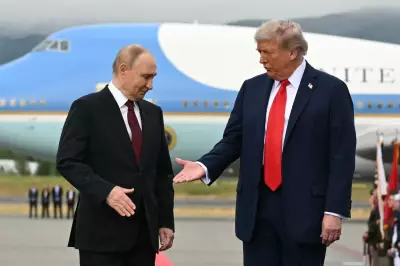
US President Donald Trump has reiterated his refusal to rule out deploying American ground troops into Iran, while maintaining that the war is nearly won despite ongoing Iranian assaults. He attended the repatriation of six American service members killed in a drone strike on a US base in Kuwait, highlighting the human cost of the conflict. Trump has also suggested that Iran's economy could be rebuilt if a leader 'acceptable' to Washington assumes power, a proposal Tehran has firmly rejected.
Global powers have responded cautiously. China and Russia, despite their close ties with Iran, have largely remained on the sidelines. China's top diplomat, Wang Yi, commented that the war 'should never have happened,' emphasizing that 'a strong fist does not mean strong reason. The world cannot return to the law of the jungle.'

Analyst Warnings and Future Outlook
Military analysts caution that there is currently no clear path to de-escalation, with US and Israeli officials estimating the conflict could persist for a month or longer. The combination of strategic airstrikes, Iran's vowed retaliation against US assets in the region, and the unresolved leadership transition creates a volatile scenario with profound implications for regional stability and global security.