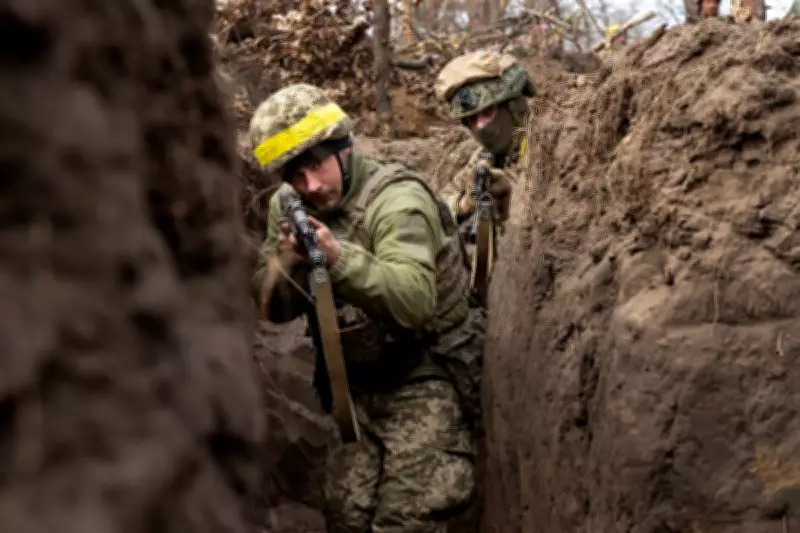
The Global Reach of the Ukraine-Russia War
As the conflict in Ukraine enters its fourth year, it has evolved into a war with increasingly international dimensions, drawing in combatants from across the globe. Both Russia and Ukraine have turned to foreign recruitment to bolster their military forces, with thousands of individuals from diverse nations now entangled in the fighting. This expansion reflects a strategic shift as casualties mount and domestic resources are strained.
Russia's Growing Dependence on Foreign Troops
Russia has become heavily reliant on foreign fighters to sustain its war effort in Ukraine, with an estimated 20,000 men from overseas joining its invasion forces. Many of these recruits have been lured under false pretences, promised lucrative employment away from the frontlines only to find themselves thrust into combat. This reliance serves a dual purpose: alleviating the strain on Russian forces and delaying another round of politically contentious mobilisation at home, which would likely spark public anger.
British defence minister John Healey recently highlighted this trend, noting that Russia's military is increasingly dependent on foreign fighters as losses mount faster than Moscow can replenish its frontlines. He described these troops as often recruited under false pretences and press-ganged into service without realising they're destined for what he termed "the Russian meat machine" in Ukraine.

North Korea's Significant Contribution
North Korea emerged as a major player in the conflict in late 2024, committing approximately 17,000 troops to support Russian forces. This intervention helped set back a bold Ukrainian counteroffensive into Russian-held territory, particularly in the Kursk region where North Korean soldiers from the elite 'Storm Corps' - trained for infiltration and sabotage operations - assisted Russia in recovering control of its own territory.
Recent British estimates suggest Pyongyang has likely sustained more than 6,000 casualties fighting Ukraine, representing over a third of its deployed forces. Military analyst Emil Kastehelmi notes that after their involvement in Kursk, North Korean forces have taken a less active role against Ukrainians, with no similar force transfers to the contested Donetsk region. Meanwhile, North Korea has been glorifying its troops sent to Kursk with new memorial complexes and housing districts for families of slain soldiers, a move analysts say aims to curb public discontent.
Kenya's Unwilling Participants
The recruitment of Kenyan nationals has sparked particular outrage, especially after harrowing footage emerged showing the abuse of African soldiers by Russian troops. Francis Ndung'u Ndarua, a 35-year-old Kenyan, was filmed with a land mine strapped to his chest as a Russian speaker hurled racial slurs at him, saying he would be used as a "can opener" to assault Ukrainian positions.
His mother, Anne Ndarua, revealed that Francis had travelled to Russia to become an electrical engineer and was surprised to learn he was being forced into military training. He was sent to the front after just three weeks of preparation. A Kenyan intelligence report this month found that around 1,000 Kenyans have been recruited to fight in Ukraine so far, with nearly 90 on the frontlines this month, one confirmed death, and several returning home injured or traumatised. The Kenyan government has recently attempted to ban the conscription of its citizens.
Colombia's Battle-Hardened Veterans
Both Russia and Ukraine have recruited soldiers from Latin America, with Colombian veterans considered among the most valuable foreign fighters due to their experience from decades of civil war and familiarity with Western equipment. Estimates suggest between 3,000 and 7,000 Colombians have fought in Ukraine on both sides since 2022, though recruitment often occurs through informal channels.

Security expert Mario Urueña-Sánchez notes that casualty rates remain high as Colombians encounter a very different conflict from what they experienced at home. One Colombian Army veteran now fighting in Ukraine explained the stark contrast: "In Colombia, you can patrol for six months and there isn't as much risk involved. Here, with every entry into combat you know you might not come back or you might come back wounded." In 2024, Colombian fighters were offered between $3,000 to $4,000 per month to join existing Ukrainian units on six-month contracts.
India's Deceived Citizens
India has reported that more than 200 of its citizens have been recruited into the Russian armed forces since the invasion began, with at least 26 confirmed deaths and seven missing as of December. Dozens of families gathered in New Delhi in November to call on authorities to bring their relatives home, reporting that they had been duped into travelling to Russia for paid work only to be forced into military roles.
Among the casualties are Ajay Godara, 22, and Rakesh Kumar Maurya, 30, who had travelled to Russia separately on student visas before taking up non-combat roles as cleaners and helpers, according to their families. Their bodies were returned to India last year, highlighting the tragic consequences of this deceptive recruitment.
The Human Cost and Global Implications
The human toll of this expanded conflict remains staggering. Ukrainian estimates indicate approximately 55,000 Ukrainians have been killed in bitter fighting on the frontlines since February 2022. Russia has suffered an estimated 1.2 million casualties, including at least 325,000 deaths, according to recent analysis. These figures underscore the devastating scale of a conflict that Ukrainian President Volodymyr Zelensky declared on the eve of its fourth anniversary had already become World War Three.
As the war continues, the internationalisation of combatants raises complex questions about global security, recruitment ethics, and the expanding geographical footprint of what began as a regional conflict. With both sides offering professional soldiers fixed contracts paying rates higher than what they could earn at home, the economic incentives continue to draw participants from nations far removed from the immediate theatre of war.