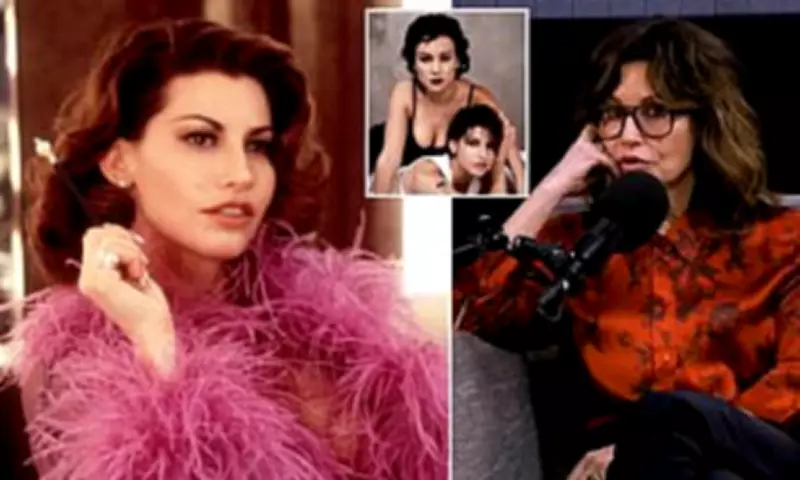
Veteran actress Gina Gershon has candidly revealed the significant professional sacrifices she made throughout her career by steadfastly rejecting Hollywood's notorious casting couch culture. During a recent appearance on the Juicy Scoop with Heather McDonald podcast, the 63-year-old star detailed how she had to navigate numerous uncomfortable situations while pushing back against the advances of powerful men in Tinseltown.
A Calculated Career Cost
Gershon estimated that her principled stance likely cost her at least thirty-five percent of potential acting roles. "I'm sure I've lost at least thirty five per cent of roles because I didn't play along," she admitted frankly. The actress described how she would often be invited to what she initially believed were business meetings with influential figures like agency heads, only to discover their intentions were more personal than professional.
"I always just said that I had a boyfriend, but these are choices," Gershon explained, reflecting on her consistent approach to such situations. She emphasized personal accountability in career decisions, stating: "If all of a sudden I was like, 'Oh my god, I wanna be famous, I wanna make money, I wanna do this and that.' And if that was a way to get what I wanted, you know what, that's between me and me and I just have to own up to it."

A Warning to Fellow Actors
Gershon offered a clever analogy to caution other performers navigating Hollywood's treacherous landscape. "I'm very good with animals and yet I wouldn't walk through a jungle after dark by myself, because animals are animals," she said. "Don't put yourself in a situation that could potentially be very dangerous."
While refusing to judge others' choices, the actress stressed the importance of clarity: "I don't judge anyone for their choices. But be clear with what your choices are and if you don't want to do that and you're not comfortable..."
Early Career Principles
Gershon's commitment to her boundaries manifested early in her career when she turned down what would have been her first on-screen role in Friday the 13th Part 2. Despite the excitement of the opportunity, she rejected the part due to what she perceived as excessive and exploitative nudity requirements.
"I was offered a lead in that movie," Gershon told Fox News Digital. "And of course I was so excited to act in movies, but it definitely felt kind of exploitative to me and a little silly that right before she gets killed, her top has to come off."
In her new memoir, Alphapussy, she elaborated: "At the time, those kinds of slasher movies always had girls dying with their breasts exposed. My character would be killed by a stake through the heart, blood dripping down her t**s. That seemed pretty lame to me: exploitation 101."
Nuanced Approach to Nudity
Gershon clarified that her objection wasn't to nudity itself, but to its gratuitous use. "Not that I had anything against nudity — I grew up on European films — but only if it makes sense for the character and the story," she wrote. "But when it just seems silly, I don't know. It just felt like it was something that wasn't for me."
This principled stance didn't prevent her from taking on racy roles when they served artistic purposes. She famously went topless in Paul Verhoeven's Showgirls and performed a memorable lesbian love scene with Jennifer Tilly in 1996's Bound.
Trauma and Reappraisal of Showgirls
Gershon previously revealed she experienced what she described as "a little bit of PTSD" following her role in the infamous stripper drama Showgirls. The backlash was so severe that she couldn't watch the film for years after its 1995 release.
"No disrespect to real PTSD, but I would get very tense and anxious when I thought about certain things and stories and so I never really watched it again," she confessed on The Julia Cunningham Show.
The actress particularly objected to a brutal gang-rape scene in the film, recalling: "I remember when I saw that rape scene, I'm like, 'Are you insane? You have to take this scene out!' I was so offended by it."

Critical Reassessment
Over time, Gershon has developed a more nuanced perspective on Showgirls, which was initially panned by critics and performed poorly at the box office due to its NC-17 rating.
"When I saw it from afar, it's really a comment on ugly America and on capitalism and on power struggles and dynamics and all those things," she explained. "Of course that rape scene has to be there. It's the grossest thing in there, and the powerful men, they're all protected."
She now recognizes the film as Verhoeven's commentary on American society: "I think his American films, now that I've studied it and stepped out of it, they're really interesting comments on America and fascism."
This reappraisal mirrors the film's cultural journey from critical failure to cult classic, with many now considering Showgirls a misunderstood masterpiece and sharp satire of American culture and show business.