The European Union faces a defining week of high-stakes diplomacy and internal reckoning, as a series of crises converge to test its geopolitical resolve. The bloc's leadership must navigate a major financial commitment to Ukraine, a provocative territorial claim from the United States, and violent unrest in Iran, all against a backdrop of profound self-doubt.
A Trio of Immediate Crises
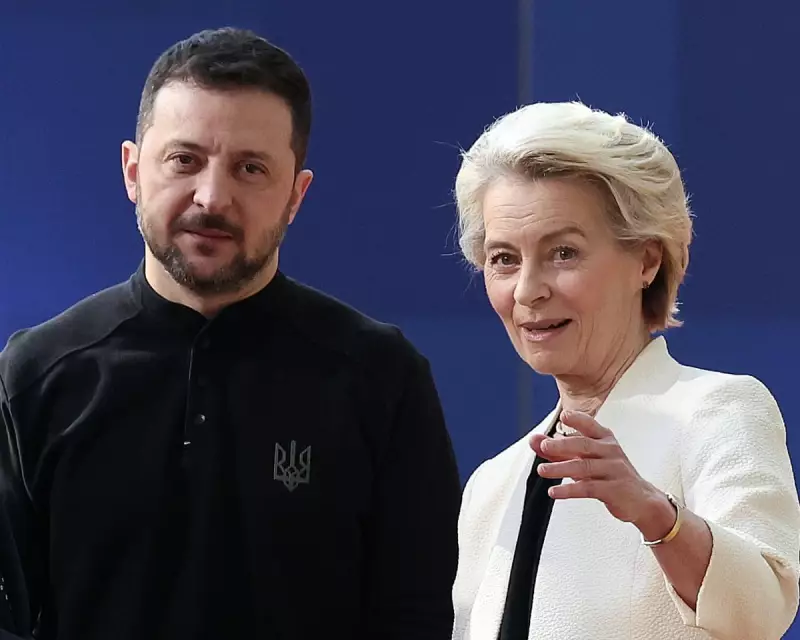
On Wednesday, Brussels is scheduled to unveil the specific terms of the €90 billion loan package it has pledged to Ukraine. This critical financial support is already mired in tension, with debates raging behind closed doors over whether the funds can be used by Kyiv to purchase weapons from the United States, or must be restricted to EU defence contractors.
Simultaneously, transatlantic relations face another strain as US Secretary of State Marco Rubio meets with ministers from Denmark and Greenland. This follows persistent assertions from former President Donald Trump that the US intends to acquire Greenland "one way or another," a stance that undermines European sovereignty and alliance norms.

Further afield, the EU is under growing pressure to escalate its response to the escalating violence in Iran, where the death toll among protesters is rising. European Commission President Ursula von der Leyen was criticised over the weekend for stating the bloc would merely "monitor" the situation, a response deemed inadequate by many.
The Deeper Crisis of Confidence
Beyond this frantic crisis management, the tumultuous start to 2026 has exposed a deeper, more existential problem for the European project. There is a glaring and unsustainable mismatch between the EU's status as an economic superpower and its current geopolitical weakness. This disconnect has been sharply highlighted barely a year into Donald Trump's second term, an era defined by an uncompromising "America First" doctrine.
As the US president flexes his muscle globally, EU leaders have often been relegated to reacting, seeking to appease Washington in a bid to salvage remnants of the transatlantic alliance. While this mitigating strategy is understandable given America's pivotal role in Ukrainian security, it is insufficient for an entity of the EU's size and economic strength, whose collective GDP utterly dwarfs that of adversaries like Russia.
Structural and Mindset Challenges
The obstacles are partly structural. The veto power held by each of the 27 member states frequently allows small minorities to paralyse decisive collective action, a system in urgent need of reform for a world demanding swift responses.
However, the core challenge is one of political mindset. For too long, the EU has been both too timid in facing external threats and too complacent about internal dangers. There is broad consensus on the need to rapidly invest in the hard military power it once outsourced to Washington. Europe's belated game of catch-up leaves it vulnerable in the interim.
Crucially, this bolstering of defence must not come at the expense of the European social model. The rise of national populism across the continent—actively encouraged by Trump and his supporters—is fuelled by disillusionment with inequality and austerity. Strengthening social solidarity is as vital as strengthening armies for Europe's future cohesion and resilience.
A Path Forward: Leveraging Collective Power
The Covid-19 pandemic proved the EU can mobilise its vast resources creatively and effectively in an emergency. That same flexibility and ambition is needed now to leverage the power of its 450 million citizens and stand up for liberal democratic principles.
This will likely necessitate "more Europe"—greater integration in security and economic policy. The alternative is a fragmented and dangerously weak union in an increasingly predatory global landscape. The time for a new, self-confident mindset is not tomorrow; it is today.