British Evacuees Return on First UAE Flight After Iran Attacks
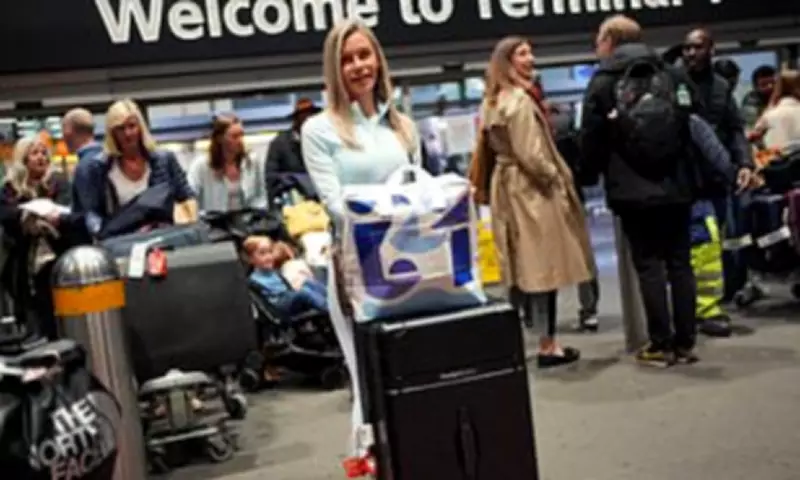
Relieved British citizens arrived back home tonight on the only flight to return so far from the United Arab Emirates since the recent Iran attacks. The Etihad Airways plane touched down at Heathrow Terminal 4 at 7:16pm, marking a significant moment in the ongoing evacuation efforts.
Personal Accounts of Terror and Relief
Among the passengers was Isabel Robertson, 29, from Windsor, who was greeted with a hug from her mother, Alba. Isabel had been staying with friends in Dubai, where she previously lived, and was due to fly home on Saturday before her flight was cancelled. 'I went to see my friends. I had such a great week,' she said. 'I had meant to have been leaving on Saturday. My friend was going to drive me to the airport. I was like 'Why has my flight been cancelled?' Ten minutes later I could hear an explosion. There were explosions this morning. It has been terrifying, like honestly, terrifying. People think because it's Dubai, it's not as bad as people are making out. It's worse. The noises, it was terrifying, the explosions. I used to live there and it was my first time back in three years.'
Her mother, Alba, 62, expressed her worry: 'When I watched the news, I was very worried.'

Another passenger, Amy Maguire, 23, was on the eight-hour flight back after holidaying in Abu Dhabi with her baby daughter Anabel and her parents, Rebecca and Jeff Moses from Barrow-in-Furness. Amy described the ordeal: 'It has been horrifying. It has been really difficult not knowing if your child is safe. The sounds have been horrendous. We had to go in this little room under the hotel.' The flight had been delayed by just over an hour. Jeff, 60, added: 'We should have flown to Manchester. But we would have flown anywhere to get home.'
Widespread Travel Chaos and Evacuation Plans
The flight's return comes as more than 100,000 Brits are scrambling to get home amid furious Iranian attacks across the Middle East. Approximately 102,000 British nationals trapped in the region have registered with the Foreign Office, prompting the UK to draw up plans for one of the largest peacetime evacuations of its citizens.
Airspace over the Gulf is largely closed following coordinated attacks by the US and Israel on Iran, with retaliatory strikes from Tehran hitting tourist and expat hotspots such as Dubai, Abu Dhabi, Qatar, and Kuwait. Flights from major hubs have been cancelled en masse, stranding tens of thousands of Brits who were working, holidaying, or transiting through the area.
Foreign Secretary Yvette Cooper revealed that around 300,000 British citizens are in Gulf countries targeted by Iran. She stated: 'We are setting up the support systems... That is, of course, extremely stressful for people who include holidaymakers and transit passengers at airports, people who have gone there for business trips, as well as those who live in the region. So we're saying to people, the most important thing at the moment is to follow the local advice, which in most places is around sheltering in place.'
Sir Keir Starmer and his ministers are understood to be developing contingency plans to evacuate citizens over land from the UAE, Bahrain, Kuwait, and Qatar to Saudi Arabia. When asked about evacuation plans, Cooper said: 'We are working on every possible option.'
Flight Cancellations and Safety Advisories
Emirates Airlines confirmed that all flights operating through Dubai have been grounded until at least 11am GMT on Tuesday, while Qatar Airways announced no flights will leave Doha until Tuesday morning at the earliest. This disruption has led to nearly 6,000 flights cancelled globally and almost 30,000 delayed since the conflict began, according to FlightRadar, marking one of the biggest travel disruptions since the pandemic.
The UK Government advises against travel to 21 countries in the Middle East and urges those already there to:
- Register their presence with the Foreign Office.
- Shelter in place immediately due to missile attacks.
- Stay away from security or military facilities.
- Keep departure plans under review and ensure travel documents are up to date.
Countries affected include Afghanistan, Iran, Israel, and Saudi Arabia, among others.

Military and Regional Impact
The situation escalated as Iran struck RAF Akrotiri in Cyprus with a 'kamikaze' attack drone, following Sir Keir Starmer's reversal on a US request to use British military bases for retaliatory strikes. A dispersal order was issued for non-essential personnel at the RAF's Cyprus hub, with families told to pack essentials for three to five days, though pets must be left behind with appropriate care.
Chaos has ensued at airports across the Gulf, with reports of at least one death and 11 injuries from strikes on airports in Dubai, Abu Dhabi, and Kuwait. Despite the danger, some influencers in Dubai have vowed to stay, claiming it is safer than London, even as Iranian missile and drone attacks target military sites, oil refineries, airports, and hotels.
As the crisis unfolds, the UK continues to coordinate efforts to ensure the safe return of its citizens, emphasizing the importance of following local advisories and preparing for potential evacuations.