Belfast Rally Condemns US-Israeli Military Strikes on Iran
A significant gathering at Belfast City Hall on Monday evening has issued a strong condemnation of recent military attacks against Iran, describing the actions as fundamentally anti-democratic. The emergency rally, organised under the banner Stop Bombing Iran, drew speakers and attendees who voiced outrage at the escalating violence in the Middle East.
Political Leaders Denounce Western Involvement
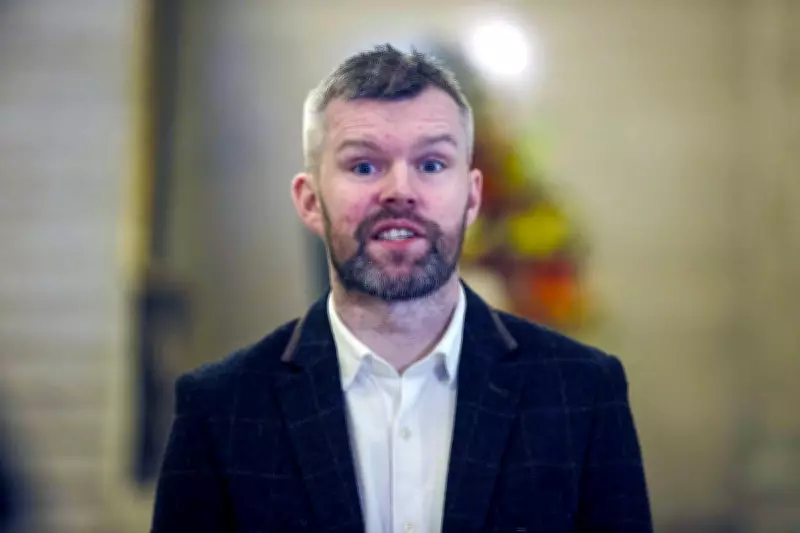
People Before Profit MLA Gerry Carroll was among the prominent figures addressing the assembled crowd. He delivered a scathing critique of the United States and Israel-led assault, which reportedly resulted in the death of Iranian Supreme Leader Ayatollah Ali Khamenei. In response, Tehran and its allied forces have launched retaliatory strikes against Israel and several neighbouring Gulf states.
"People in Iran are being blown to bits, and at least 160 children have been killed – in my eyes, and in the eyes of most people across the world, that is not democracy, human rights, or dignity," Mr Carroll stated emphatically. "We are here to stand against that clearly and loudly."

The MLA extended his criticism to European governments, accusing them of complicity. "We are also here today to call out the disgraceful role of the French, the German, and the British governments – shame on them," he declared. "Rather than calling out Donald Trump and the gangster thuggery he represents, they pour more petrol on the fire, ramping up tensions and keeping the war narrative going."
Condemnation of International Warmongering
Mr Carroll further lambasted a broad spectrum of political leaders for their perceived indifference to human suffering. "Shame on Benjamin Netanyahu and Trump for their warmongering, but also shame on Sir Keir Starmer, Emmanuel Macron, and all those European leaders who do not give a damn about democracy, human rights, or how many dead bodies are piled up in the Middle East," he asserted.
He emphasised the principle of self-determination, arguing that true liberation cannot be achieved through external military intervention. "It is up to the people of Iran to decide their government and to protest against it. You cannot have liberation delivered through bombs dropped by the Americans. We support self-determination, but it cannot happen when people are being bombed from the sky," he concluded.
Personal Testimony from Iranian Academic
Academic Azadeh Sobout, originally from Iran, provided a poignant personal perspective, holding a banner that read "Begin your regime change at home." She expressed gratitude to the attendees for their solidarity and detailed the devastating human cost of the attacks.
"In just twenty-four hours, over 1,200 bombs were dropped on Iran, killing more than 550 people and wounding hundreds more," Ms Sobout revealed. "Tehran, the city I come from, has been bombed more than 400 times just today. Hospitals have been hit, schools have been hit, and families are burying their dead. This occurs as south Lebanon is bombarded relentlessly, and genocide in Gaza continues under the illusion of a ceasefire."
Identifying as an Iranian woman who opposes both current and previous rulers, she challenged the binary narrative often presented. "We are constantly told we must choose between a dictator and a bombing campaign, between repression and destruction, between submission and annihilation. This is coercive, and it erases our political agency. It assumes that Iranians cannot imagine or build a future beyond the options imposed on us by empires and dictators," she argued passionately.
Contrasting Demonstrations in Belfast
The rally followed a separate gathering at the same location just one day prior, where a group of Iranians celebrated the death of Ayatollah Ali Khamenei with chants of "Thank you Mr Trump and Netanyahu." This juxtaposition highlights the deeply divided opinions within the Iranian diaspora and the international community regarding the conflict and the methods employed.

The Belfast event underscores growing local concern over international military interventions and their humanitarian consequences, positioning the city as a forum for vocal dissent against foreign policy actions perceived as unjust and destructive.