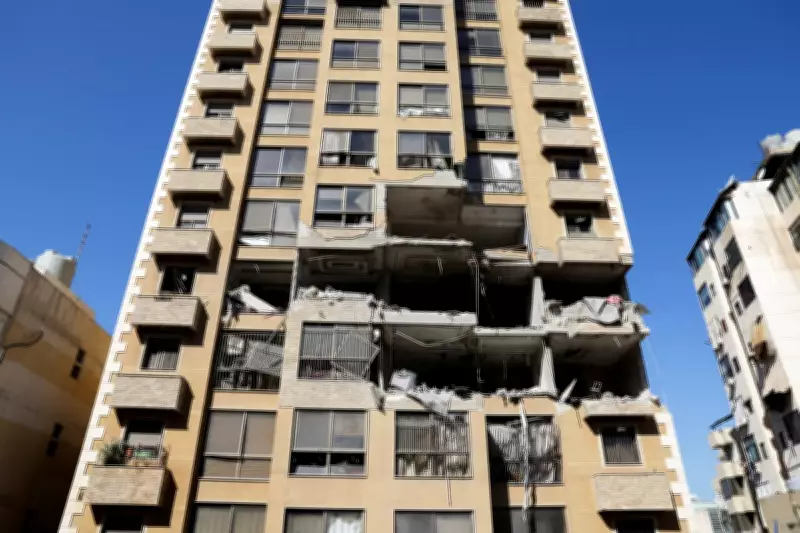
An Israeli strike reportedly targeted an apartment block in central Beirut on Wednesday, according to Lebanon's state news agency. This incident significantly widens the scope of attacks in the capital, which had previously been concentrated in Hezbollah-controlled southern suburbs where heavy strikes persist.
Extensive Damage and Ongoing Strikes
Footage from the Aicha Bakkar neighbourhood revealed extensive damage to two floors of the building, with visible smoke billowing from the site. The Israeli military has not provided an immediate comment, and initial reports indicate no casualties from this specific strike.
This event represents the second Israeli strike in the heart of Beirut within just four days. On Sunday, a hotel in the seafront Raouche neighbourhood was similarly targeted. The Israeli military stated that the earlier attack aimed at five senior members of Iran's Revolutionary Guards Quds Force.

Escalating Conflict and Displacement
Israeli forces maintained heavy strikes on the southern suburbs, known as Dahiyeh, overnight. The military has issued orders for residents of the predominantly Shi'ite Muslim Dahiyeh to evacuate, along with those in a broad swathe of southern Lebanon and parts of the east.
Lebanese authorities report that nearly 570 people have been killed by Israeli strikes since Iran-backed Hezbollah initiated fire to avenge the killing of Supreme Leader Ayatollah Ali Khamenei on 2 March.
The United Nations has reported that approximately 700,000 people have been displaced in Lebanon, constituting more than a tenth of the population. Hundreds of thousands of residents from southern Lebanon, the eastern Bekaa valley, and Beirut’s southern suburbs have fled their homes following Israeli warnings that their areas would be targeted.
Historical Context and Public Sentiment
This new round of fighting emerges as Shiite communities, which bore the brunt of the last conflict, are still recovering. The previous Israel-Hezbollah war resulted in more than 4,000 deaths in Lebanon and caused an estimated $11 billion in damage, according to the World Bank.
In a shift from past dynamics, some Lebanese Shiites are now openly blaming Hezbollah for their current hardships. Unlike earlier periods when many feared public criticism of the militant group, individuals find themselves living on streets, in public squares, or with relatives amid cold weather and Ramadan fasting, leading to increased vocal discontent.
The conflict escalated on 2 March when Hezbollah fired missiles and drones into Israel for the first time in over a year, marking a significant intensification in hostilities that continues to unfold with devastating consequences for civilian populations and infrastructure across Lebanon.