
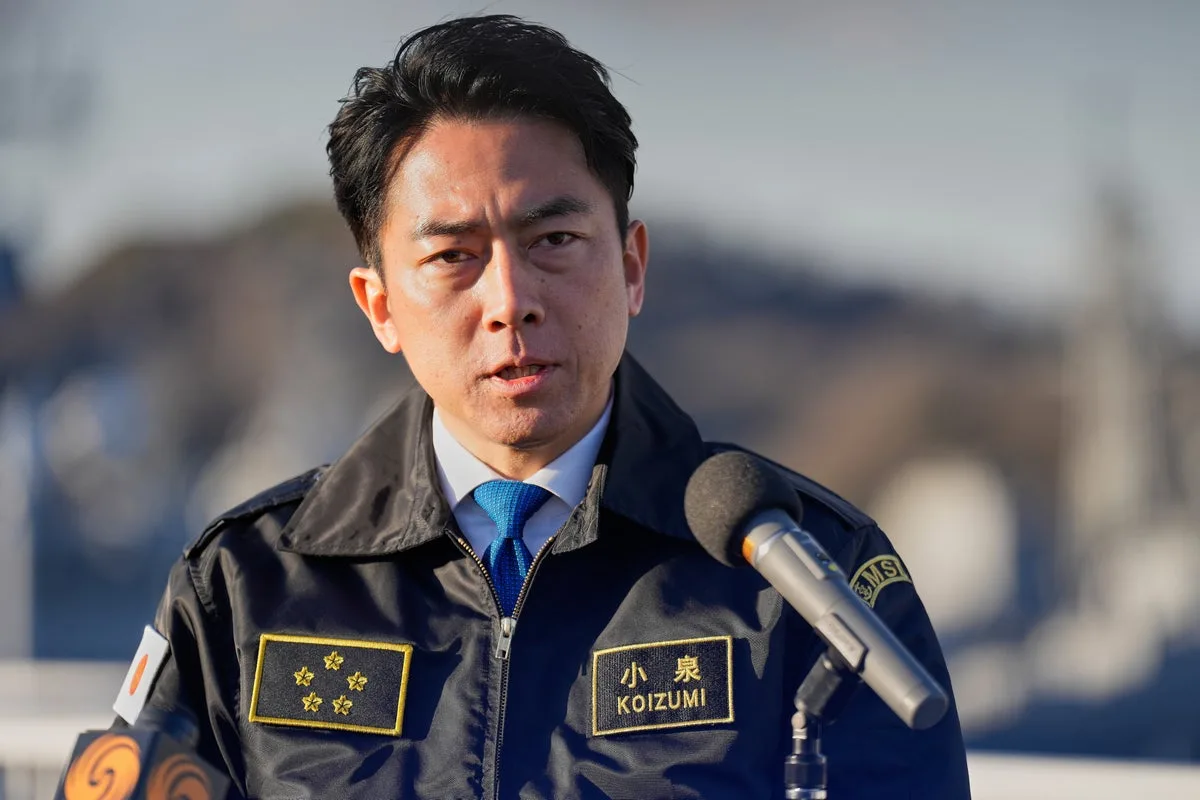
Japanese Defense Minister Shinjiro Koizumi arrived in the Philippines on Tuesday to witness an international combat drill and hold talks with President Ferdinand Marcos Jr. aimed at broadening defence ties between the two nations, officials said. The meeting in Manila may include discussion of a possible transfer of used Japanese destroyers to the Philippines.
The Philippines and Japan, both treaty allies of the United States, signed a pact in 2024 allowing their forces to stage large-scale combat drills. The Reciprocal Access Agreement paved the way for Japan to deploy 1,400 military personnel to become regular participants in the exercises called Balikatan, which also involve U.S., Filipino and other allied forces annually to deter China’s increasing assertiveness in the region.
Koizumi will be among representatives from 16 countries, including India and Australia, expected to travel Wednesday to the northwestern town of Paoay to witness a key Balikatan exercise. During the exercise, Philippine, U.S., Japanese and Canadian forces will use firepower in a mock attack on a ship about 40 kilometres from the coast. Japanese forces will fire two volleys of Type 88 missiles to help sink a decommissioned World War II-era Philippine navy warship.
Before reaching the Philippines, Koizumi visited Jakarta and signed a defence cooperation agreement with Indonesian Defense Secretary Sjafrie Sjamsoeddin. In a recent news conference in Tokyo, Koizumi said, “As Japan faces the most severe and complex security environment in the postwar era, it is important to establish a multilayered network of allies and like-minded countries, while expanding it and strengthening the deterrence.”
Japan has bolstered its offensive capability with long-range missiles and scrapped a ban on lethal weapons exports in April, marking a major shift in its postwar pacifist policy in response to growing Chinese aggression. The Philippines shares that concern following a spike in territorial spats with Beijing in the South China Sea. The lifting of the ban allows Japan to consider transferring up to six used Abukuma-class destroyers to the Philippines, though details have not been disclosed.
While allies such as the U.S. and Australia welcomed Japan’s updated policy, China criticised the change. Chinese Foreign Ministry spokesperson Guo Jiakun said last month that the global community will “resolutely resist Japan’s reckless moves toward a new type of militarism.”




