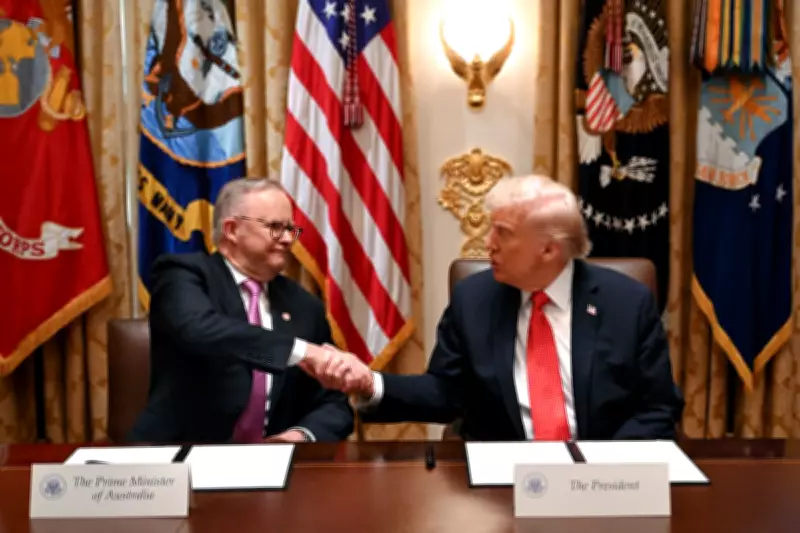
Australia's Strategic Dilemma: Self-Reliance Versus US Alliance in the Trump Era
In a world where global alliances are increasingly tested, Australia faces a critical balancing act. According to Arthur Sinodinos, a former Australian ambassador to the United States, the nation must bolster its self-reliance in economics, defence, and security. However, it cannot afford to discard the foundational role of the American alliance system in ensuring Indo-Pacific stability.
The Transactional Nature of Trump's Foreign Policy
Donald Trump's approach to international relations is characterised by a zero-sum mindset, where he views alliances not as mutual partnerships but as competitive arenas. This perspective has led to tariff impositions and security policies that often alienate traditional allies, including Australia. Trump's recent criticisms of allies for their perceived lack of support in conflicts underscore his frustration with coalition coordination, preferring unilateral actions that avoid the complexities of joint operations.
His administration's focus is sharply transactional, prioritising American interests above collective security frameworks. This shift demands that Australia adapt its diplomatic strategies to appeal to mutual benefits, as demonstrated in the critical minerals deal during Prime Minister Anthony Albanese's visit. Such initiatives are key to securing US commitment in an era where alliances are no longer taken for granted.

The Indo-Pacific Security Imperative
Despite Trump's scepticism towards alliances, the American system remains pivotal for Indo-Pacific security. Joint endeavours like Aukus, military posture activities in northern Australia, and decades of intelligence cooperation are essential for regional stability. These efforts help counterbalance China's growing influence, which poses a threat not only to Australia but also to US interests in East Asia.
Trump's ambivalence on geopolitical issues, such as Taiwan's fate, presents additional challenges. While he focuses on trade and technological competition with China, the potential for Chinese aggression in Taiwan could have far-reaching regional consequences. Australia must persistently remind the US that such actions could empower China beyond the first island chain, destabilising neighbours and undermining America's strategic position.
Navigating Global Power Dynamics
The emergence of an axis involving Russia, China, Iran, and North Korea complicates global security. Trump's transaction-based approach may overlook this systemic threat, requiring allies like Australia to advocate more forcefully for collective action. Simultaneously, Trump's strategies in regions like Iran and Venezuela, aimed at controlling global oil resources, reflect tactical moves rather than long-term plans. China's push for energy independence could accelerate in response, highlighting the need for a robust alliance network to create asymmetric advantages.
In this evolving landscape, Australia's path forward involves building diverse partnerships with like-minded democracies while maintaining engagement with the US. As Sinodinos emphasises, throwing out the US alliance entirely would be detrimental, but enhancing self-reliance provides crucial flexibility. The key lies in smoothing engagement processes and staying committed to joint initiatives that reinforce mutual security interests.
Ultimately, Australia's foreign policy must be agile, recognising that the global order has irrevocably changed. By appealing to shared benefits and reinforcing alliance structures, Australia can navigate the complexities of Trump's transactional world without sacrificing its security or sovereignty.