BAFTA Host Alan Cumming Condemns Racial Slur Broadcast and Censorship Decisions
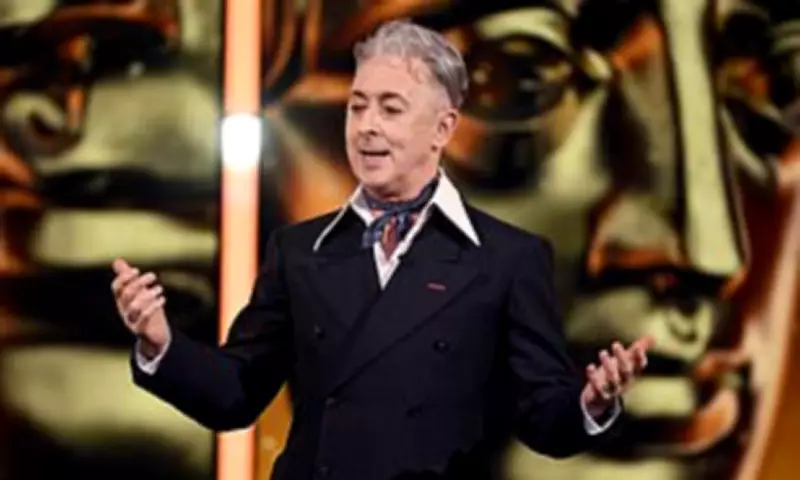
BAFTA host Alan Cumming has spoken out forcefully about the racial slur controversy that marred the February 22 awards ceremony, describing the event as a "trauma triggering sh*tshow" in a lengthy Instagram statement. The Scottish actor and presenter expressed deep regret over the incident, which saw a racial slur uttered by John Davidson, a man with Tourette's Syndrome, broadcast during the televised edit on the BBC.
Ceremony Overshadowed by Controversial Incidents
The controversy unfolded as actors Michael B. Jordan and Delroy Lindo presented the first award of the evening at London's Royal Festival Hall. Davidson, whose life with Tourette's is chronicled in the film I Swear, involuntarily uttered the racial slur as a result of a tic. Despite a two-hour delay before broadcast, the offensive language was included in the televised version that aired on BBC.
Cumming addressed the audience during the ceremony, apologizing if the slur "caused offence" and explaining that Tourette's syndrome is a disability where tics are involuntary. However, his subsequent statement revealed deeper concerns about the night's events.

Cumming's Comprehensive Statement on Instagram
"What should have been an evening celebrating creativity as well as diversity and inclusion turned into a trauma triggering sh*tshow," Cumming wrote. "I'm so sorry for all the pain Black people have felt at hearing that word echoed round the world. I'm so sorry the Tourettes community has been reminded of the lack of understanding and tolerance that abounds regarding their condition."
The presenter emphasized that "the only possible good that could come of this is a reminder that words matter, that rushing to judgment about things of which we are not fully cognisant is folly, that all trauma must be recognised and honoured."
Additional Censorship Controversy
Cumming's statement also referenced the BBC's decision to edit out "Free Palestine" from filmmaker Akinola Davies Jr's acceptance speech after My Father's Shadow won the BAFTA for outstanding British debut. "We were all let down by decisions made to both broadcast slurs and censor free speech," Cumming stated. "Congratulations to all the artists whose work was overshadowed by the night's events."
Reactions and Investigations
The BBC has apologized for the incident, with its Executive Complaints Unit (ECU) announcing a "fast-tracked investigation." The Culture, Media and Sport Committee (CMS) has written to outgoing BBC director-general Tim Davie seeking an explanation for how the racial slur ended up in the broadcast despite the time delay.
CMS Committee chairwoman Dame Caroline Dinenage referenced previous incidents in Glastonbury Festival coverage, stating that "the latest incident raises questions about the extent to which lessons have been learned and about the controls and systems you have in place to prevent such incidents."
John Davidson's Perspective
Scottish campaigner Davidson, who developed Tourette's at age 12 and attended the BAFTAs representing the film about his life, described feeling "mortified" by what happened. In an interview with Variety, he questioned why he had been seated near a microphone and said the BBC should have "worked harder" to ensure his racial slur was not broadcast.
"I have made four documentaries with the BBC in the past, and feel that they should have been aware of what to expect from Tourette's and worked harder to prevent anything that I said ... from being included in the broadcast," Davidson explained. He revealed he shouted multiple offensive words during the ceremony, not just the racial slur, including an insult directed at Cumming.
Delroy Lindo Breaks Silence
Actor Delroy Lindo, who was on stage when the incident occurred, addressed the controversy at the NAACP Image Awards in California. "We appreciate – I appreciate – all of the support and love we have been shown in the aftermath of what happened last weekend, it means a lot to us," Lindo told the audience. "And it's a classic case of something that could've been very negative becoming very positive."

Saturday Night Live Faces Backlash
In the wake of the BAFTA controversy, Saturday Night Live has come under fire for a sketch that depicted celebrities attributing past controversies to Tourette syndrome. The segment, which did not air during NBC's live broadcast but was uploaded online, featured cast members portraying public figures including Mel Gibson, Armie Hammer, Bill Cosby, J.K. Rowling and Kanye West claiming to have Tourette's as an explanation for their scandals.
Emma McNally, CEO of Tourette's Action, condemned the sketch: "Mocking a disability is never acceptable. It would not be tolerated for any other condition, and it should not be tolerated by people with Tourette's. Tourette's is a complex neurological condition, of which there is no cure. It is not a joke. It is not a personality trait. It is not a source of entertainment."
Piers Morgan weighed in on X, writing: "Hollywood continuing to mock John Davidson over his Tourette's condition is one of the most despicable things I've witnessed in a long time." British journalist Lewis Goodall called the sketch "genuinely shameful," noting that "the joke is basically nothing more sophisticated than 'people with serious disabilities make it up.'"
The controversy has sparked broader conversations about disability representation, broadcast standards, and the balance between free speech and responsible editing in live television events.