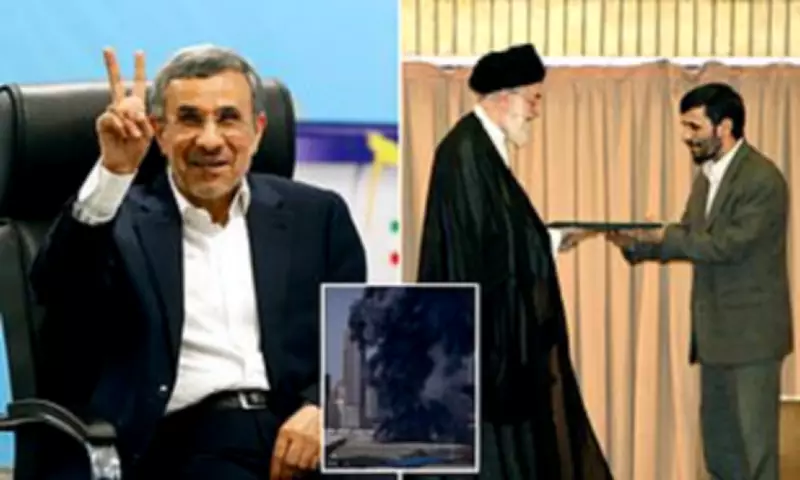
Former Iranian President Mahmoud Ahmadinejad Reportedly Killed in Israeli Airstrike
Former Iranian President Mahmoud Ahmadinejad, the hardline leader who served from 2005 to 2013, has reportedly been killed by an Israeli airstrike during Saturday's attacks inside Iran. According to Israeli media outlet Ma'ariv, the 69-year-old was killed in his home in Tehran, where he was under house arrest at the time of the strike.
Background and Political Context
Ahmadinejad, a supporter-turned-critic of Supreme Leader Ayatollah Ali Khamenei, had attempted to run for the presidency again in 2024 following the death of President Ebrahim Raisi in a helicopter crash. However, his bid was blocked by Khamenei, who was also killed in the airstrikes on Saturday. The former president gained a notorious reputation in the West for his Holocaust denial and anti-Israel rhetoric, including calls for Israel to be 'wiped off the map.'
Casualties and Escalating Conflict
The death of Ahmadinejad adds to more than 40 top Iranian officials who were eliminated in US and Israeli strikes, as reported by the Israeli Defense Force (IDF). Other notable casualties include Iran's chief of staff, Abdolrahim Mousavi; Minister of Defense and Armed Forces Logistics, Aziz Nasirzadeh; and Mohammad Pakpour, Commander of the Islamic Revolutionary Guard Corps (IRGC) Ground Forces.

On Sunday, US Central Command announced that three US servicemembers were killed in action in Iran as part of President Donald Trump's strikes. The command stated, 'Several others sustained minor shrapnel injuries and concussions and are in the process of being returned to duty.' They added that major combat operations continue, with the response effort ongoing, and withheld additional information out of respect for the families.
Iranian Retaliation and False Claims
Following the death of Supreme Leader Khamenei, Tehran has responded by launching a barrage of attacks against US military bases across the Middle East. Iran raised its so-called 'Red Flag of Revenge' and vowed to hit the US and Israel with a 'force never experienced before.'
Iranian military officials claimed on Sunday that they had successfully struck the USS Abraham Lincoln aircraft carrier with four ballistic missiles, but US officials quickly debunked this as false. US Central Command said reports of the attack were fabricated, noting that the missiles 'didn't even come close' and that the Lincoln continues to launch aircraft in support of operations.
Ongoing Tensions and Regional Impact
The situation remains fluid, with escalating tensions between Iran, the US, and Israel. The strikes have led to significant casualties on both sides, including the loss of high-profile Iranian leaders and US troops. Iranian state media has propagated unverified claims, while US authorities emphasize their commitment to defending against threats from the Iranian regime.
This conflict marks a severe escalation in Middle Eastern geopolitics, with potential long-term implications for regional stability and international relations. The deaths of key figures like Ahmadinejad and Khamenei could reshape Iran's political landscape, while the ongoing military engagements signal a protracted and volatile confrontation.