Tragic Tank Explosion Claims Three Lives at Japanese Training Ground
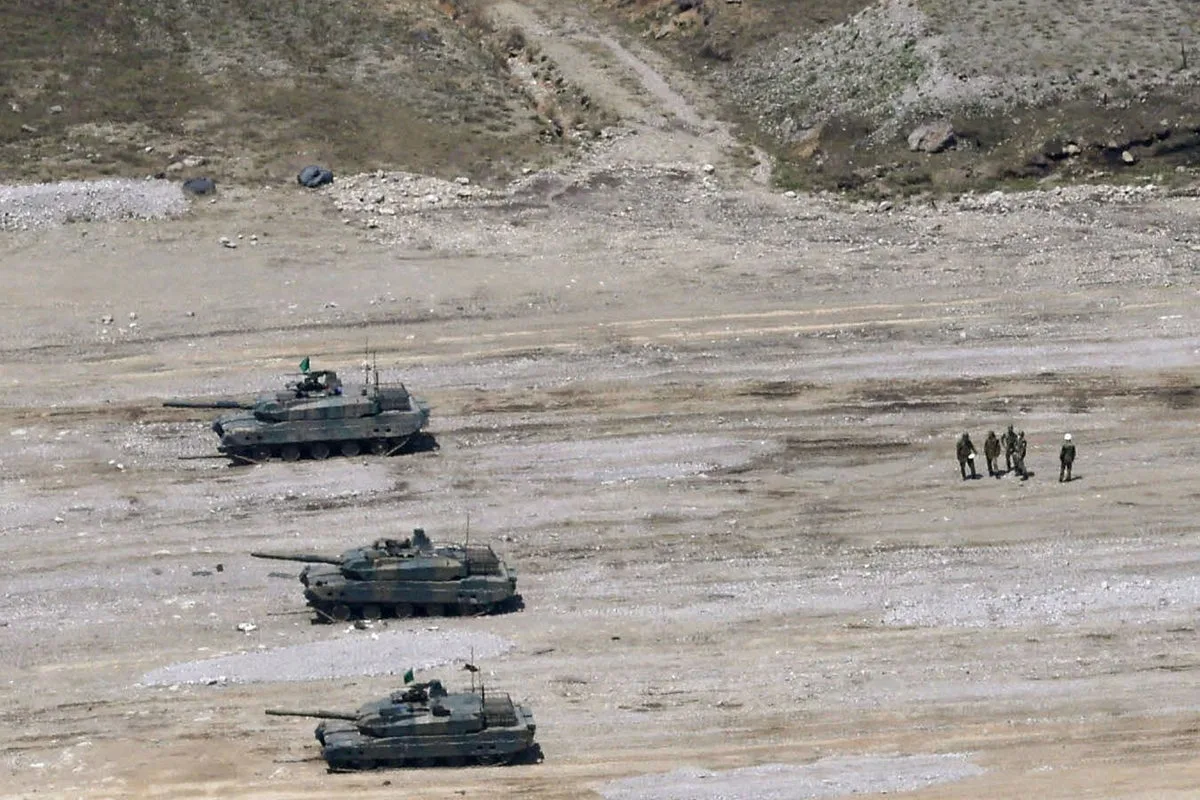
A devastating incident has struck the Japan Ground Self-Defense Force during a routine training exercise, resulting in the deaths of three soldiers. The fatal accident occurred when a shell detonated inside the gun turret of a Type 10 main battle tank at the Hijudai Training Area in Oita, southern Japan, on Tuesday, April 21, 2026.
Details of the Catastrophic Blast
The explosion happened during a live-fire exercise involving three tanks. The three soldiers who lost their lives were positioned inside the tank's gun turret: the tank commander, the gunner, and the safety officer. A fourth soldier, the driver, survived the blast but sustained injuries and is receiving medical treatment. Officials have confirmed that all personnel were following standard safety protocols at the time of the incident.
Masayoshi Arai, chief of staff of the Japan Ground Self-Defense Force, announced an immediate suspension of all live-fire exercises utilizing Type 10 and Type 90 tanks, which employ identical ammunition. "We will promptly determine the cause so that we can take preventive measures," Arai stated, emphasizing the urgency of the investigation into the technical failure or procedural lapse that led to this tragedy.
Type 10 Tank: Japan's Premier Armored Vehicle
The Type 10 tank, introduced into service in 2011, represents Japan's most advanced main battle tank, designed for enhanced mobility and firepower. This incident marks one of the most severe accidents involving this modern military asset, raising serious questions about its safety mechanisms and maintenance procedures. The investigation will scrutinize the tank's ammunition handling systems and operational protocols to prevent future occurrences.
Broader Context: Japan's Shifting Defense Policy
This tragic event unfolds against a backdrop of significant policy changes in Japan's defense strategy. On the same day as the explosion, Prime Minister Sanae Takaichi's Cabinet approved a landmark decision to lift the longstanding ban on lethal weapons exports. This move represents a dramatic shift from Japan's postwar pacifist stance, driven by escalating regional tensions, particularly concerning Chinese military expansion and North Korean aggression.
Chief Cabinet Secretary Minoru Kihara defended the policy change, asserting, "The government will strategically promote defense equipment transfers to create a security environment that is desirable for Japan and to build up the industrial base that can support fighting resilience." The new guidelines will facilitate exports of Japanese-developed warships, combat drones, and other advanced weaponry, attracting interest from allies like Australia and nations in Southeast Asia and Europe.
However, the policy shift has sparked controversy. Critics argue that it violates Japan's pacifist constitution and could exacerbate global tensions, potentially compromising national safety. China has openly criticized the decision, while domestic opponents warn that it may lead to increased militarization and instability in the region.
The juxtaposition of this fatal training accident with the major policy announcement highlights the complex challenges facing Japan's military as it navigates internal safety concerns and external strategic pressures. The investigation into the tank explosion will be closely watched, with implications for both operational safety and the future of Japan's defense industry.






