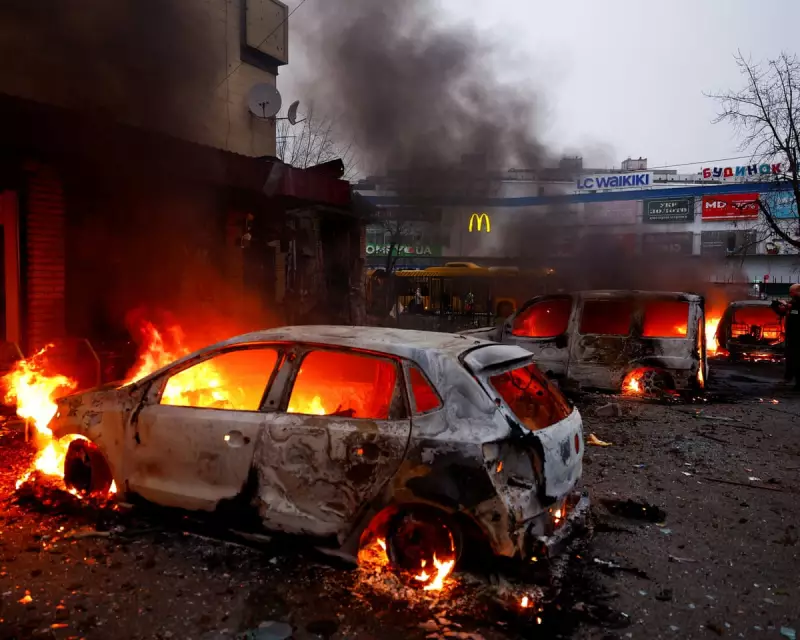
A devastating Russian drone and missile assault on Kyiv has left two people dead and cut power to half the Ukrainian capital, plunging approximately 500,000 residents into darkness amid Moscow's ongoing campaign to break civilian resistance through attacks on energy infrastructure.
Massive Overnight Assault on Ukrainian Capital
The attack involved nearly 600 drones and 36 rockets fired across Ukraine, with the capital experiencing two distinct waves of bombardment. The first assault began around 1am, followed by a second wave at approximately 7am, before an all-clear was given nearly nine hours later at 9.30am.
Ukrainian President Volodymyr Zelenskyy immediately highlighted the urgent need for Western assistance, stating: "We must work without wasting a single day to ensure that there are enough missiles for our air defence systems, and that everything necessary for our protection and for pressure on Russia is in place."

The human cost continues to mount, with officials confirming two fatalities in Kyiv and 37 injured, while a third person was killed in the surrounding Kyiv region.
Ukraine's Retaliatory Strike and Political Turmoil
In response to the assault, Ukraine's military struck back, targeting the Afipsky oil refinery in Krasnodar Krai, one of southern Russia's largest refineries. The attack caused significant fire damage at the plant, which crucially supplies diesel and jet fuel to Russian forces engaged in Ukraine.
The military escalation comes amid domestic political challenges for Ukraine, with President Zelenskyy's administration facing its most serious corruption scandal since the war began. Andriy Yermak, the president's chief of staff, was forced to resign after anti-corruption officials searched his flat as part of an investigation into an alleged kickback scheme.
The scandal has already seen two other ministers dismissed, while the scheme's alleged architect, described as an old friend of Zelenskyy, has fled the country.
Diplomatic Manoeuvres and Winter Energy Crisis
Russia's systematic targeting of Ukraine's energy infrastructure represents a clear strategic effort to break civilian morale as the conflict approaches its fourth year. The timing coincides with delicate diplomatic negotiations, following a White House release of a 28-point plan demanding Ukrainian withdrawal from Donetsk province and Western sanctions relief for Russia.
Ukraine has submitted a 19-point counter proposal shared with Moscow, while a Ukrainian delegation led by Rustem Umerov, secretary of the country's national security council, has departed for Washington to continue discussions.
Meanwhile, Ukraine faces potential financial challenges, with hopes dimming for a €140 billion loan secured against Russian central bank assets due to opposition from Belgium, where most of the frozen funds are held.
The political reshuffle continues within Ukraine, with speculation mounting about potential leadership changes. One opposition MP has called for the appointment of Valerii Zaluzhnyi, Ukraine's ambassador to the UK and former head of the armed forces, though allies express uncertainty about whether he would accept such a role.