
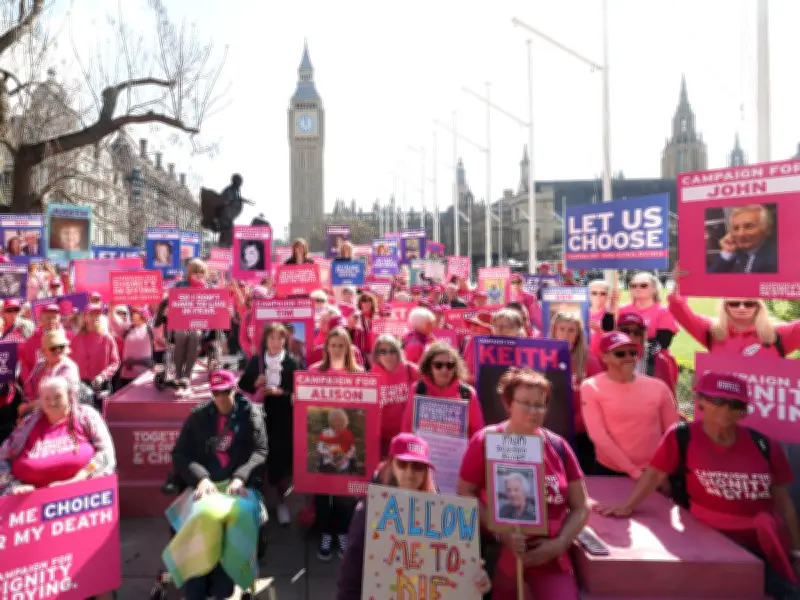
Labour MP Lauren Edwards will tomorrow publish a new law attempting to legalise assisted dying, vowing to resolve Parliament's "unfinished business." The MP for Rochester and Strood, who is introducing the legislation to allow terminally ill people to end their lives, told The Mirror politicians "cannot let them down again."
Historic Commons Vote and Lords Delay
MPs last year passed plans to legalise assisted dying in an historic vote in the Commons, but the bid to allow terminally ill people to end their lives collapsed this May in the House of Lords. Supporters of the law change, originally spearheaded by Labour MP Kim Leadbeater, accused peers of purposely tabling hundreds of amendments to ensure it ran out of time.
Ms Edwards said: "This is unfinished business for parliament. When a small minority of peers in the House of Lords prevented the bill from passing earlier this year it came as a huge disappointment to all those terminally ill people and their families who are depending on parliament to give them the safe and compassionate choice they deserve. We cannot let them down again. MPs have already voted in favour of this long-overdue change to the law."
Returning the Bill to the Lords
Ms Edwards explained that by publishing the bill again, she is simply asking colleagues in the elected chamber to return it to the Lords so they can finish their proper task of scrutinising and revising it in the usual way. She noted it is not "unusual" to ask the Lords to look at a piece of legislation for a second time. "It is almost invariably the case that when they do so, agreement is reached between the two Houses and any amendments are agreed in the usual way," Ms Edwards said. "That is what I and Lord Falconer hope and believe will happen with this bill. The Parliament Acts are just there as a back stop or insurance policy against another undemocratic filibuster that would thwart the will of the elected chamber. Like any insurance policy, nobody wants to have to use it."
Lord Falconer's Support
Lord Charlie Falconer, who will sponsor Ms Edwards's bill in the Lords, said: "Earlier this year, over 200 peers wrote to MPs asking for this bill to be returned to us as soon as possible so we can finish the job that was interrupted at the end of the last session of parliament. Along with so many of my fellow members of the House of Lords, I am delighted that Lauren Edwards is giving us the opportunity to do that. The bill is well-drafted, robust and safe."
Details of the Terminally Ill Adults (End of Life) Bill
The Terminally Ill Adults (End of Life) Bill published tomorrow is the same as Ms Leadbeater's legislation, with the addition of amendments agreed in the Lords without a vote. Her bill would allow terminally ill people in England and Wales with fewer than six months to live to seek an assisted death, subject to approval by doctors and legal professionals. The new bill is expected to be debated in the Commons on September 11. If MPs pass the bill through a series of Commons votes, it will go back to the House of Lords where peers can continue to scrutinise it and decide if they want to amend it.
Support from Former Minister Jess Phillips
Former Minister for Safeguarding and VAWG Jess Phillips MP expressed her support, stating she would not be backing the bill if she believed it put vulnerable people at greater risk. "I back it because the opposite is true," she said. "We all know that abuse thrives in dark corners, away from scrutiny. At the moment, too many end-of-life decisions take place in the shadows, where it is too late to detect or prevent abuse." She highlighted that currently, people may travel to Dignitas in Switzerland if they can afford it, refuse life-sustaining treatment, or voluntarily stop eating or drinking to control their death, with no system to establish if they acted freely or under duress. Four former Directors of Public Prosecution agree that the current ban on assisted dying is wholly unfit for purpose, lacking upfront safeguards and with oversight applied only after death.
Safeguards in the Bill
In contrast, the bill introduces proper scrutiny and accountability from the start. Anyone seeking an assisted death would have repeated checks by two independent doctors who must be certain that the individual is over 18, terminally ill with six months or less to live, and fully mentally competent. If there is any doubt about capacity, a specialist must be brought in, and all applications would be scrutinised by a multidisciplinary panel comprising a lawyer, a psychiatrist, and a social worker. All panel members must be trained in domestic abuse, coercive control, and financial abuse. If any one of them is not satisfied, the application fails. The bill also creates new, specific criminal offences for dishonesty, coercion, or pressure, acting as a far more robust deterrent for potential abusers than the current law.
Next Steps
The publication of the bill for a second time gives parliament the opportunity to complete the task it started when the legislation ran out of time in the Lords earlier this year. It will next be debated by MPs on September 11. If passed, it will be sent back to the Lords for further scrutiny and potential amendments. Jess Phillips concluded: "Terminally ill people have waited long enough for a serious and compassionate response to the failures of the ban on assisted dying. We are proud to support this bill, and we stand with many of our colleagues from across both Houses of Parliament in believing that protecting the most vulnerable in our society comes from regulated scrutiny, not from maintaining a status quo that is proven to be failing them."




