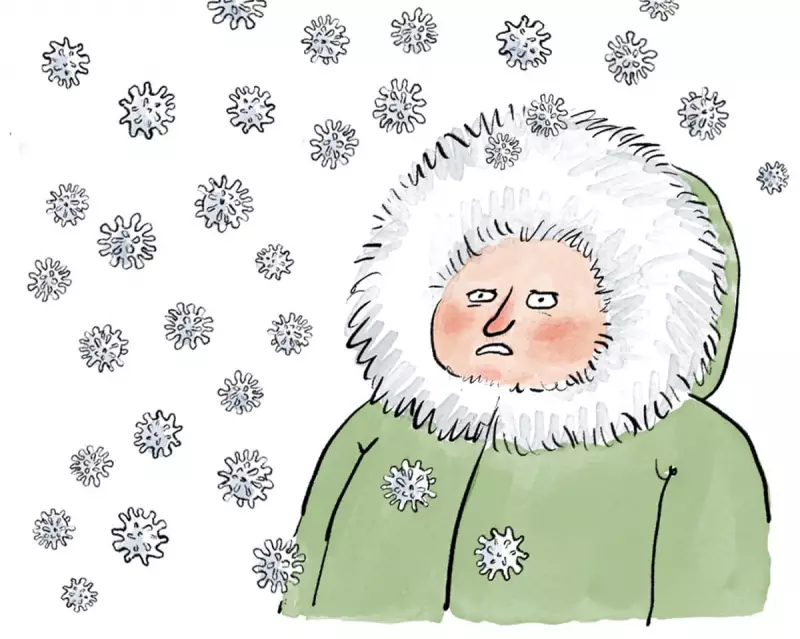
As the temperature drops and winter sets in, the familiar chorus of coughs and sneezes returns. For generations, a common piece of advice has been to wrap up warm to avoid 'catching a chill'. But does braving the cold weather actually cause you to get a cold? The science suggests a more nuanced story, where our behaviour, not the temperature itself, plays the starring role.
The Behavioural Driver of Winter Illness
According to Professor John Tregoning, an expert in vaccine immunology at Imperial College London, the seasonal spike in colds is "almost certainly correlation, not causation." While respiratory infections are undeniably more common in the colder months, the primary reason is not the chill in the air but the change in our social habits.
"In colder months, we spend more time indoors with poorer ventilation and in closer contact with others," explains Tregoning, author of the book 'Live Forever? A Curious Scientist's Guide to Wellness, Ageing and Death'. This creates the perfect environment for viruses to spread from person to person. Different viruses have their own seasonal peaks. For instance, rhinovirus often surges when children return to school, mixing in classrooms, while RSV (Respiratory Syncytial Virus), which can be serious for babies and the elderly, typically peaks around the new year.

What Role Does Cold Weather Actually Play?
This is not to say that cold weather has no influence at all. Scientific studies indicate that some viruses, like rhinoviruses, may replicate slightly better in cooler temperatures. Furthermore, the body's initial immune defences in the nasal passages can be marginally less effective in cold air.
There is also a marginal environmental factor: UV light from sunlight can deactivate viral particles. A sneeze outside in summer exposes droplets to this deactivating light and faster evaporation. In winter, this natural sanitising effect is greatly reduced. Professor Tregoning also notes that extreme, prolonged cold which leads to exhaustion and calorie loss could make an individual more susceptible to infection overall.
The most compelling evidence for the 'human contact' theory comes from recent history. Data from the Covid-19 pandemic showed that many common viruses, including one strain of flu, drastically declined or even became extinct during lockdowns, precisely because people were not mixing and spreading germs.
The Most Effective Protection: Vaccination
So, if staying indoors is the problem, what is the solution for staying healthy in winter? Professor Tregoning points to vaccination as the most effective protection against seasonal viruses like flu and RSV.
"Vaccines don't just prevent infection – they also have wider benefits, like reducing the risk of heart attacks," he states. This underscores the significant public health value of seasonal vaccination programmes, particularly for vulnerable groups.
The key takeaway is that while wrapping up warm is sensible for comfort, avoiding winter colds is more about managing our indoor environments and contact with others. Ensuring good ventilation, practising good hygiene, and getting recommended vaccinations are far more impactful strategies than simply fearing the fresh, cold air outside.