

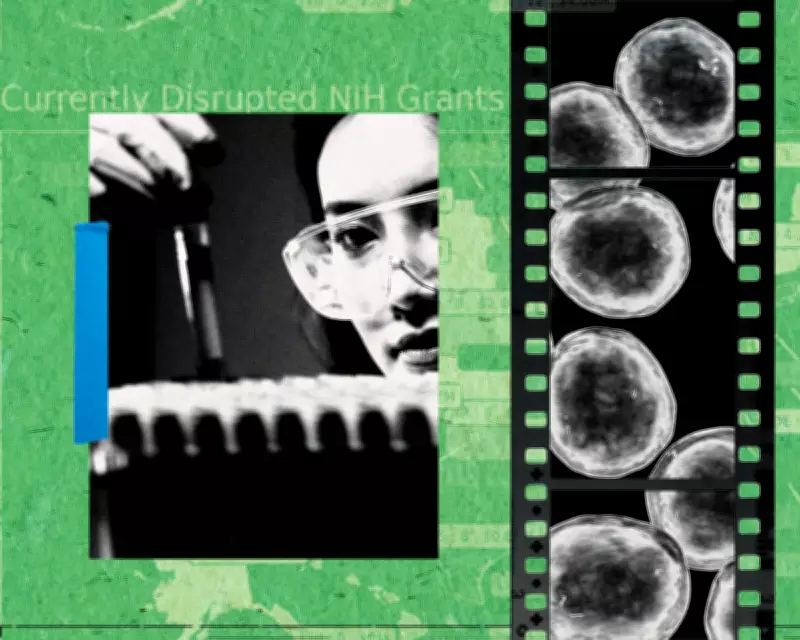
Trump's War on Science Sparks Exodus of Young Researchers
As the Trump administration slashes federal science budgets, a concerning brain drain is unfolding across American research institutions. Young scientists, faced with cancelled grants and hiring freezes, are increasingly seeking opportunities abroad, threatening the United States' dominance in global biomedical innovation.
The Battle Against Superbugs at Risk
In April 2025, the Centers for Disease Control and Prevention issued a stark warning about antibiotic-resistant "superbugs," responsible for over 3 million infections and up to 48,000 deaths annually in the US. Globally, these pathogens contribute to nearly 5 million deaths each year, with projections suggesting they could become a leading killer by 2050.
Ian Morgan, a 33-year-old postdoctoral fellow at the National Institutes of Health, is on the frontlines of this war. "We're making progress, we have a lot of really cool new innovations that could defeat the infections," Morgan stated. "But if we stop doing the work, we lose the war."

However, Morgan's research has been severely disrupted by multibillion-dollar cuts to NIH contracts, making it impossible for labs to maintain essential equipment. With an ongoing hiring freeze at NIH, his prospects of establishing his own laboratory are dim. "Right now there's no way even to apply to start your own lab at NIH, no matter how good you are, or how critical your work," he lamented.
Young Scientists Flee Amid Funding Chaos
The turmoil extends beyond Morgan. Over the past year, billions have been wiped from research budgets, nearly 8,000 grants cancelled at NIH and the National Science Foundation, and more than 1,000 NIH employees fired. According to Science magazine, more than 10,000 post-doctoral experts left the federal workforce last year, with departures outstripping new hires by 11 to one.
Emma Bay Dickinson, a 27-year-old infectious disease researcher, exemplifies this trend. Discouraged by funding uncertainties and Trump's animus against diversity initiatives, she redirected her job search abroad, securing a position in Barcelona. "It's important for me to feel I can be myself in my science, and that's just not possible right now in the US," Dickinson explained.
European universities have capitalised on this exodus, with institutions like Aix-Marseille University inundated by applications from American researchers seeking "scientific asylum."
Training Programs Gutted, Immigration Crackdown Intensifies
The brain drain is exacerbated by deep cuts to NIH training programs, which serve as a breeding ground for future top scientists. At least 50 such programs have been shut down under the Trump administration. An anonymous NIH program officer warned, "If you delay and terminate training grants, it's like a snowball effect. Eventually you start wiping out our next generation of scientists."
Compounding the issue, Trump's immigration policies are stifling the influx of foreign talent. A $100,000 fee on H-1B visa applications and suspensions for applicants from 75 countries have made the US less attractive. Jennifer Jones of the Union of Concerned Scientists noted, "We are no longer attracting top talent from around the world. Why would you want to come to a place where you know you could be threatened with deportation at any moment?"
Economic and Health Consequences Loom
The long-term implications are severe. NIH funding underpins basic biomedical research that fuels the nearly trillion-dollar US pharmaceutical industry. A 2018 study found that all 210 new drugs approved by the FDA from 2010 to 2016 originated from NIH-funded early research.
Donna Ginther, an economics professor at the University of Kansas, cautioned, "We are leaving discoveries on the table. Those discoveries are the ones that in 10, 20 years will contribute to economic growth, improved health, human longevity. That's what we are choking off."
Despite these concerns, Emily Hilliard, press secretary for the Department of Health and Human Services, defended the administration's approach, asserting that NIH remains committed to attracting top talent and strengthening the biomedical workforce.

However, with young researchers like Morgan and Dickinson facing uncertain futures, the US risks ceding its leadership in science and public health to other nations, potentially undermining global efforts to combat deadly diseases and innovate for a healthier future.





