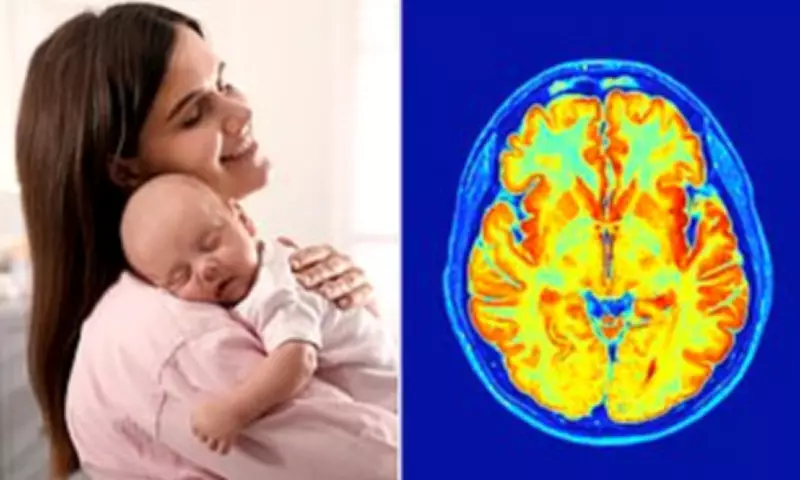
Pregnancy Triggers Profound Brain 'Rewiring' for Parenthood Demands
A groundbreaking scientific investigation has fundamentally challenged the long-standing concept of 'baby brain', revealing that pregnancy initiates a substantial structural transformation within the maternal brain rather than merely causing temporary memory lapses. The comprehensive research, published in the prestigious journal Nature Communications, demonstrates that a mother's brain undergoes a deliberate 'rewiring' process specifically designed to prepare for the complex demands of parenthood.
Largest Study of Its Kind Reveals Physical Transformation
The Be Mother project, representing the most extensive research initiative of its kind, meticulously monitored 127 women through a series of advanced MRI scans and detailed hormone assessments conducted before, during, and after pregnancy. The results unveiled a striking and consistent physical metamorphosis within the brain's architecture. Expectant mothers experienced an average reduction of nearly five percent in their grey matter volume, the crucial neural tissue responsible for processing emotions, interpreting information, and facilitating empathy.
Lead researcher Professor Susana Carmona of the Gregorio Marañón Health Research Institute provided a compelling analogy for this phenomenon. She likened the process to the careful pruning of a tree, explaining that 'some branches are cut to make it grow more efficiently'. This perspective reframes the grey matter loss not as a sign of cognitive decline, but as a strategic optimisation. While the study observed that grey matter partially regenerated within six months following childbirth, the initial, pronounced shift strongly indicates the brain is actively 'priming' itself to enhance maternal instincts and caregiving capabilities.

From 'Brain Fog' to Specialised Function
For decades, the term 'baby brain' has been colloquially synonymous with 'brain fog' and perceived intellectual shortcomings during pregnancy. However, this pioneering research posits a revolutionary alternative: the maternal brain is not becoming less intelligent but is instead undergoing a process of sophisticated specialisation. The investigation found that pregnancy triggers a profound neural reorganisation to meet the unique challenges of parenthood.
Study participant Tania Esparza articulated this shift in understanding during an interview with the BBC, stating, 'I'm tired of pregnant women being infantilised'. She emphasised the study's core finding, adding, 'Rather than becoming dumber, we are becoming more specialised for the job'. Another participant, new mother Ana Mudrinic, shared a relatable anecdote, recounting a moment during her pregnancy when she momentarily forgot her boss's name while attempting to send an email. Such experiences, the research suggests, may be side effects of this intensive neural restructuring.
Scientific Comparison and Hormonal Drivers
The research team, co-led by Professor Oscar Vilarroya, established a rigorous scientific control by comparing the brain scans of the pregnant participants against a control group of 52 women who had never experienced pregnancy. While the brain structures of the control group remained stable and consistent throughout the study period, the pregnant women exhibited clear, measurable, and consistent neural remodelling. This transformation is driven by powerful hormonal fluctuations alongside significant changes to cerebral blood vessels and intricate nerve networks.
It is important to note that this particular study did not directly examine specific memory changes associated with pregnancy. However, a smaller 2016 study conducted by Professor Carmona's team, involving 25 women, found no notable negative impact on memory function, further supporting the idea that cognitive changes are part of a functional specialisation rather than a deficit. The collective evidence paints a picture of the maternal brain as a dynamic organ that strategically adapts its structure to excel in the new role of caregiving, fundamentally redefining what it means to experience 'baby brain'.