Archaeologists in Egypt have made a stunning breakthrough, successfully excavating an ancient temple dedicated to the sun god Ra that had eluded detailed study for over a century.
A Monument Revealed by Receding Waters
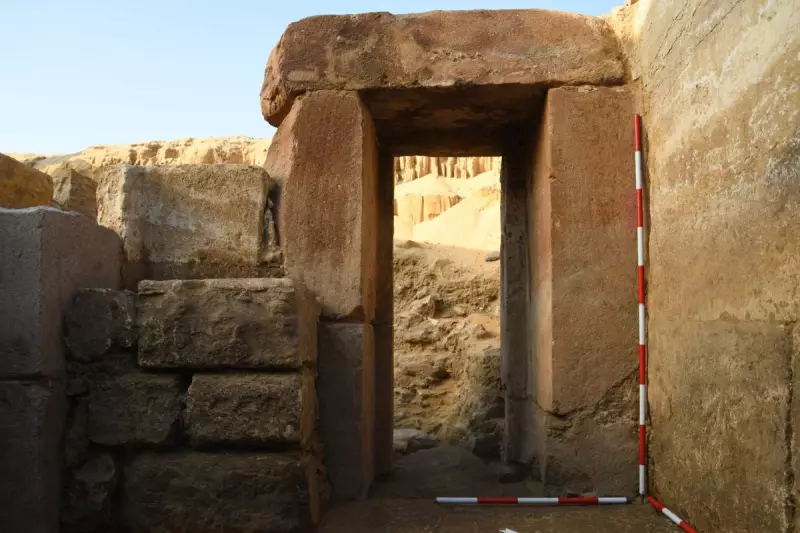
The significant find was made at the site of Abu Ghurab, located roughly 16 kilometres southwest of Cairo. While the temple's location was first pinpointed by researchers back in 1901, high groundwater levels at the time made thorough exploration impossible. Now, with the water table having lowered, scientists have been able to uncover nearly half of the structure, revealing a vast complex exceeding 1,000 square metres.
Dr Mohamed Ismail Khaled, Secretary General of Egypt's Supreme Council of Antiquities, hailed the discovery. "This temple is one of the well-known temples of the sun in ancient Egypt until now," he stated, adding that its unique architectural plan marks it as "one of the largest and most prominent temples of the valley."

From Royal Worship to Residential Living
Built around 4,500 years ago during the Old Kingdom, the temple was commissioned by Pharaoh Niuserre, who ruled from approximately 2420 BC to 2389 BC. Inscriptions bearing his name were found on dozens of stone blocks at the site. The temple featured two main sections positioned near the Nile River and included a columned entrance.
Intriguingly, preliminary studies suggest the sacred site's purpose changed dramatically after about a hundred years. Evidence indicates it was converted into a residential area for local inhabitants, shifting from a place of exclusive royal worship to everyday use.
Astronomy, Games, and Religious Calendars
The excavations have yielded a wealth of artefacts and features that shed light on ancient Egyptian life. Among the most significant finds is a public calendar of religious events, carved onto stone blocks. This calendar mentions festivals honouring deities like Sokar, the falcon-headed god of Memphis, and Min, the god of fertility, as well as a procession for Ra.
The temple also had a clear astronomical function. A staircase leading to the roof was discovered, which researchers believe was used for observing the sky. Furthermore, a slope on the premises likely connected the temple directly to the Nile or one of its branches.
Among the artefacts recovered were two wooden pieces from the ancient Egyptian board game "Sennet" (often spelled Sunnat), a precursor to modern chess. While many such game pieces have been found, the exact rules remain a mystery, offering a tantalising glimpse into ancient leisure.
Ongoing work at Abu Ghurab continues, with archaeologists hopeful that further excavation will provide even deeper insights into the daily lives and spiritual practices of those who lived and worshipped there millennia ago.