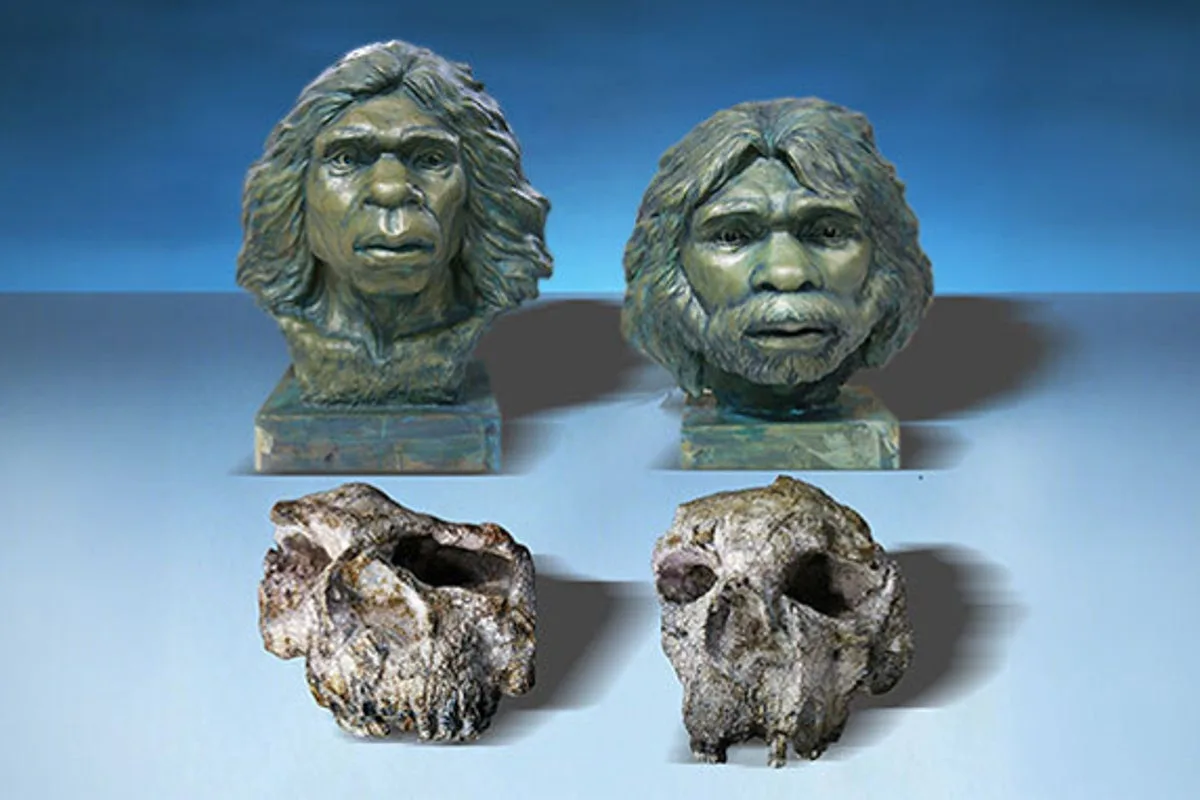
Ancient Humans Reached East Asia 600,000 Years Earlier Than Previously Believed
Ancient Humans in East Asia 600,000 Years Earlier Than Thought

Ancient human ancestors arrived in East Asia hundreds of thousands of years earlier than scientists previously estimated, according to a groundbreaking new fossil study from China. The research fundamentally alters our understanding of early human dispersal across the Asian continent.

Rewriting the Timeline of Human Migration

Homo erectus, a direct ancestor of modern humans who originated in Africa before spreading into Eurasia, has long been a subject of intense archaeological debate. The precise timing of their arrival in eastern Asia has remained particularly contentious among researchers.

The oldest Homo erectus fossil previously discovered in this region came from Yunxian, China, with an estimated age of approximately 1.1 million years. However, the new study published in the journal Science Advances confirms these hominins actually appeared at the Yunxian site 1.7 million years ago.

Advanced Dating Techniques Reveal Ancient Presence

"Using the combination of the Yunxian Homo erectus fossils and burial dating data, we have now been able to recreate a fairly robust dating reconstruction of when these hominins appeared in eastern Asia," explained Christopher Bae, one of the study's authors.

The research team employed sophisticated radioactive dating methods that assessed aluminium and beryllium isotopes within soil sediments at the fossil discovery level. These radioactive forms are generated when cosmic rays interact with quartz minerals, and once buried underground, they begin decaying at predictable rates.

"By using aluminium's and beryllium's known decay rates, and comparing the ratio of the two types of atoms left in sediment samples surrounding a fossil, researchers can calculate how long a fossil has been buried," detailed Hua Tu, another author of the study.

Challenging Established Assumptions

While carbon dating techniques can typically trace samples back approximately 50,000 years, this radioactive methodology enables researchers to accurately date materials as ancient as five million years. The application of this technology has produced startling results that challenge long-held scientific assumptions.

"A much older age assignment to Yunxian supports the model of rapid dispersal and widespread distribution of early Homo erectus," Dr. Bae emphasized. "These findings challenge long-held assumptions regarding when the earliest hominins are thought to have moved out of Africa and into Asia."

The discovery suggests human ancestors spread across Asia earlier, faster, and potentially more successfully than conventional scientific wisdom had previously acknowledged. This revelation opens new questions about the migration patterns and adaptability of early human species.

Unanswered Questions and Future Research

The study acknowledges that significant questions remain regarding the complete timeline of Homo erectus presence in the region. Researchers noted particular interest in determining exactly when this species first appeared and eventually disappeared from East Asian territories.

"Questions remain as to when and where Homo erectus initially appeared and could they have been among the earliest occupants at some of these sites in China and elsewhere," the study explicitly stated. This finding establishes a new foundation for future archaeological investigations across Asia.

The revised timeline indicates that early human migration occurred with greater speed and geographical reach than previously documented, suggesting these ancient ancestors possessed remarkable adaptability and mobility that enabled them to traverse vast continental distances much earlier in human evolutionary history.