Ancient Beer Tab Reveals 4,000-Year-Old Payday Tradition
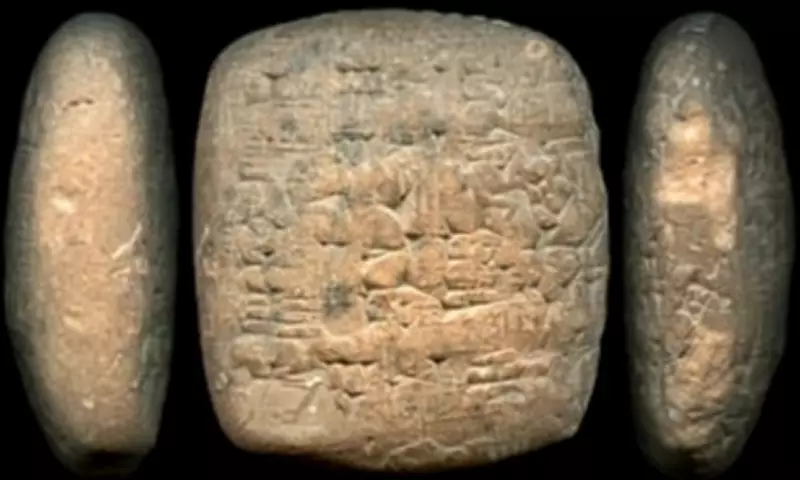
The modern tradition of celebrating payday with a drink has roots stretching back millennia, as revealed by a remarkable archaeological discovery in Denmark. Scientists have deciphered one of the earliest known beer tabs, a 4,000-year-old clay tablet from the ancient city of Umma in what is now southern Iraq. This artifact, housed in the National Museum of Denmark, provides a fascinating glimpse into how beer served as a form of currency in early urban societies.
Beer as Payment in Ancient Mesopotamia
For over a century, the National Museum of Denmark has curated a vast collection of inscribed tablets from the Middle East's earliest civilizations, written in now-extinct languages. Recently, experts from the University of Copenhagen have successfully deciphered these texts, uncovering records of magic, kings, and alcohol transactions. One tablet, dating back 4,000 years, documents beer being used to compensate workers in Umma.
The tablet lists payments supplied by an individual named 'Ayalli', including 16 litres of 'high quality beer' and 55 litres of 'ordinary beer' for distribution among labourers. Dr Troels Arbøll from the University of Copenhagen explained to the Daily Mail, 'There are several texts at the National Museum of Denmark included in our volume that mentions beer being used as payment to workers. They are therefore administrative documents or receipts.'

Beer was not merely a recreational beverage but a nutritional staple and integral component of daily life in these early urban populations. Its use as payment highlights the sophisticated administrative systems that supported Mesopotamia's advanced societies.
The Taste and Texture of Ancient Beer
Around 4,000 years ago, beer would have tasted distinctly different from modern brews. It likely had a sour, tangy, and fruity flavour, with a flat, thick, milky texture and notes of sediment or clay. Instead of hops, it was often brewed using fermented bread and sometimes sweetened with honey or dates. The alcohol content was relatively low, estimated between 3.5 to 6.5 per cent, and it was typically sipped through long straws to avoid floating grain remnants.
Tate Paulette, an assistant professor of history at North Carolina State University, noted on The Conversation, 'If you could travel back in time to one of the bustling cities of ancient Mesopotamia (c. 4000–330 B.C.), for example, you would have no trouble finding yourself a bar or a beer. Beer was the beverage of choice in Mesopotamia. In fact, to be a Mesopotamian was to drink beer.'
Mesopotamian literature also reveals that excessive beer consumption could lead to confusion, loss of control, poor judgement, hangovers, and even sexual dysfunction, showing that some aspects of drinking culture have changed little over millennia.
Cuneiform Tablets and Bureaucratic Systems
Approximately 5,200 years ago, people in ancient Iraq and Syria began carving characters onto clay tablets, developing cuneiform writing. This innovation enabled the creation of complex administrative systems that tracked goods, personnel, and transactions. Dr Arbøll stated, 'A great many of the cuneiform tablets we have today bear witness to a highly developed bureaucracy. There was a need to keep track of the advanced societies that were being built, and we have found a large number of cuneiform tablets containing practical information, such as accounts and lists of goods and personnel.'
The beer receipt tablet is part of a broader collection that includes accounts, letters, medical treatments, and magical incantations. One notable text from Hama, Syria, contains an anti-witchcraft ritual used to ward off political instability, involving the burning of wax and clay figures during an all-night ceremony. Another document is a copy of a famous regnal list describing both mythical and historical kings.
Mesopotamia: The Cradle of Civilization
Mesopotamia, meaning 'between two rivers' (the Tigris and Euphrates), is renowned as the cradle of civilization for its groundbreaking innovations. This region, encompassing modern-day Iraq and parts of Syria and Turkey, gave the world:

- The invention of the city as we know it today
- The development of writing systems
- The wheel and early farming techniques
- Mass domestication of animals
- Early tools and weaponry
- The origins of wine, beer, and time measurement
Remarkably, women in Mesopotamia enjoyed nearly equal rights, including the ability to own land, file for divorce, run businesses, and engage in trade contracts. The fertile land between the rivers allowed hunter-gatherers to settle, leading to the agricultural revolution and the rise of urban societies.
Researchers from the National Museum of Denmark and the University of Copenhagen have analysed, identified, and digitised numerous ancient tablets, uncovering a wealth of historical information. This beer tab discovery not only illuminates ancient economic practices but also connects modern payday celebrations to a tradition that has endured for thousands of years.