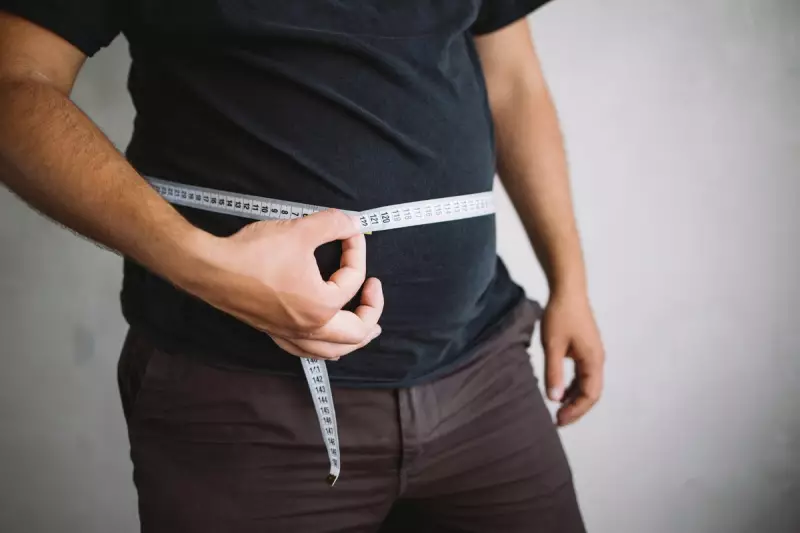
Health experts are urging a fundamental rethink of how we measure obesity and predict serious illness, following a landmark new study. The research suggests that the traditional Body Mass Index (BMI) is routinely missing crucial health risks linked to 'hidden' fat around the waist.
The Tape Measure Triumphs Over the Scales
The analysis, published in the International Journal of Obesity, examined data from 120,024 individuals in England aged 11 to 89. It found that measures of 'central obesity', such as waist circumference and waist-to-height ratio, consistently outperformed BMI in flagging early warnings for cardiovascular and cardiometabolic diseases.
Researchers concluded that a simple tape measure could be of more value than bathroom scales for individual health assessments. The key guideline is that for good health, your waist measurement should be less than half your total height. This becomes particularly important as we age and body composition changes.

Why BMI Is Falling Short
Dr Laura Gray from the University of Sheffield, who co-authored the study, explained the core problem with BMI. "It does not take into account whether a person has higher levels of fat or muscle," she told The Independent. This means muscular athletes can be misclassified as overweight, while individuals with low muscle mass and high body fat can show a deceptively healthy BMI.
The study warns that BMI could be misclassifying 10% of the UK population as having obesity when they do not, and, more alarmingly, that 25% of people with a healthy BMI may have undetected obesity-related health risks.
A Growing Public Health Challenge
Dr Gray highlighted the escalating crisis. "Obesity is already a substantial public health concern, but our research suggests that obesity is continuing to rise over time," she said. With an ageing population where obesity risk increases with age, the burden of related diseases is set to grow significantly.
While BMI remains a useful tool for measuring obesity trends across large populations, the researchers advocate for a shift in clinical practice for assessing individuals. They state that central obesity measures, "particularly" waist-to-height ratio, provide a more consistent and reliable reflection of health risks as people get older.
This aligns with current guidance from the National Institute for Health and Care Excellence (NICE), which recommends using waist-to-height ratio alongside BMI, especially for individuals with a BMI below 35.