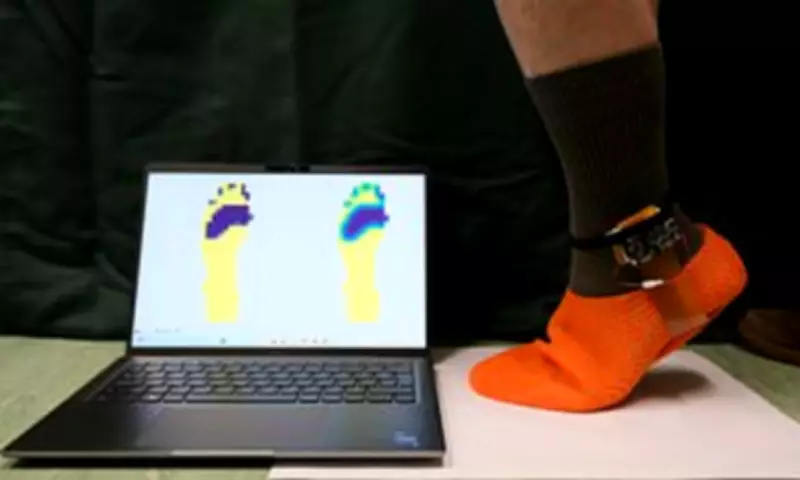
Smart Shoes with Advanced Sensors Could Revolutionise Fall Prevention for Elderly
Engineers at the University of Bristol have developed a groundbreaking pair of smart shoes designed to help elderly individuals maintain their balance and avoid potentially fatal falls. This innovation addresses a critical public health issue, as falls represent a major cause of disability and the leading cause of injury-related death among people aged 75 and older in the United Kingdom.
Alarming Statistics on Falls and NHS Costs
According to previous figures released by the National Institute for Health and Care Excellence (NICE), treating elderly patients who have suffered falls costs the National Health Service more than £2.3 billion each year. This substantial sum accounts for all aspects of care and recovery, including social care, community support, and acute hospital treatments over the twelve months following an incident.
Until now, effective fall prevention strategies have been limited, but Dr Jiayang Li, a lecturer in electrical engineering at the University of Bristol, hopes his invention will transform this landscape. The smart shoes gather real-time data to assist carers and medical professionals in preventing accidents before they occur.

Inspiration from a Personal Connection
Dr Li conceived the idea after observing his 89-year-old mentor, Peter Langlois, struggling with balance. "Peter has been a huge champion of my work since I started my PhD," Dr Li told The Independent. "One day, I noticed he was unsteady on his feet and almost lost his balance. It got me thinking this is very risky and could have terrible consequences if it resulted in a fall, especially for people who live alone."
This personal experience prompted Dr Li to explore whether semiconductor technology from his previous research could be adapted to monitor walking patterns. His earlier work involved developing advanced sensors to measure lung function accurately, and he realised similar techniques could be applied to gait analysis.
How the Smart Shoes Work
The innovative footwear features a built-in insole equipped with hundreds of tiny sensors that provide lab-quality, real-time data on the wearer's gait. This information is transmitted to a tablet or mobile phone, where it generates detailed images of foot pressure points and assesses whether the individual is walking in a balanced manner or at risk of falling.
To process data from all 253 sensors simultaneously, Dr Li's team created an advanced microchip, or semiconductor. The device is designed to be user-friendly, operating on a low-voltage battery that can be powered by small-screen devices such as mobile phones or even smart watches.
Addressing a Growing Public Health Challenge
People aged 65 and older face the highest risk of falling, with approximately half of those aged 80 and over experiencing at least one fall per year. "Fall prevention is a huge challenge for ageing populations," Dr Li emphasised. "The potential to anticipate and avoid that happening with our invention is really exciting."
When Dr Li explained the concept to his mentor, Peter Langlois was deeply moved and expressed hope that the shoes would eventually be manufactured to assist countless individuals. "He was really touched and is pleased it might one day be used to help so many people," Dr Li noted.
Broader Context of NHS Pressures
This development emerges against a backdrop of significant strain on the NHS, highlighted by recent revelations about joint replacement surgeries. A global shortage of bone cement, caused by a critical machine failure at the NHS's main supplier, has left only one week of supply remaining.
Consequently, hospitals have been instructed to prioritise emergency cases and cancel appointments for patients scheduled over the next two months. With 850,000 patients in England awaiting joint replacement surgery, experts warn that this disruption could lead to waiting times reminiscent of the Covid-19 pandemic era.
The smart shoes represent a proactive approach to mitigating such healthcare challenges by preventing injuries before they necessitate costly medical interventions.