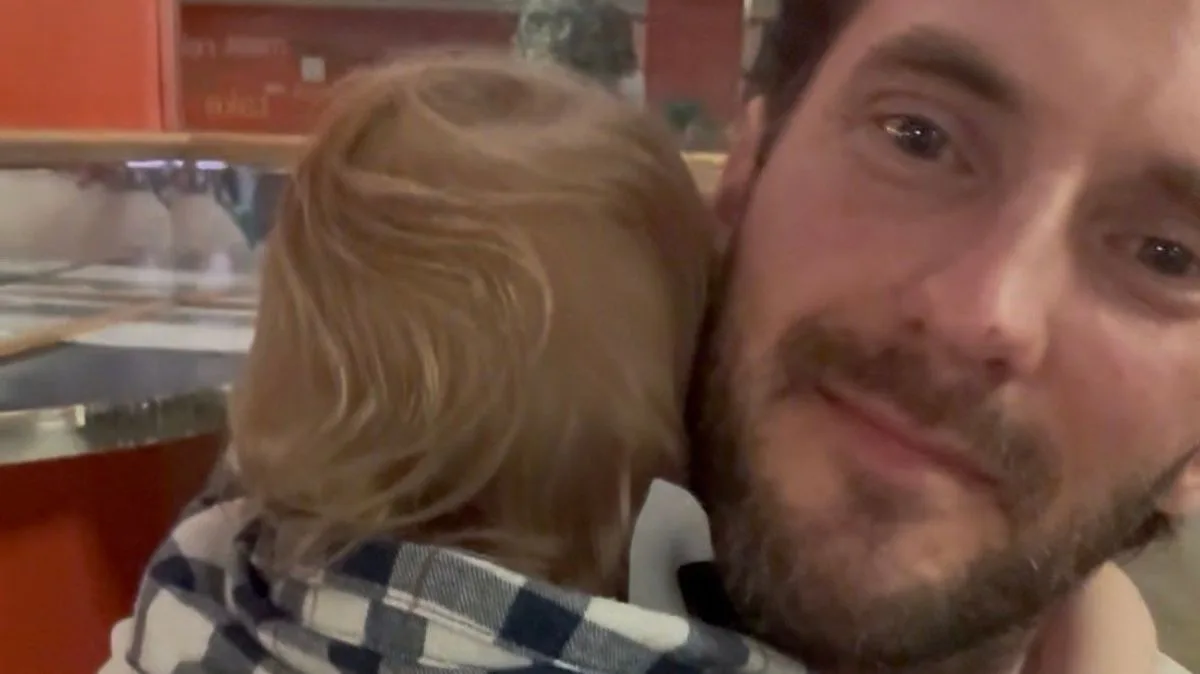
Father's Fatigue and Falls Revealed Rare Brain Tumour in Nottingham
Nottingham Dad's Falls Led to Rare Brain Tumour Diagnosis

Father's Exhaustion and Falls Revealed Rare Brain Tumour Diagnosis

Shane Crommer, a 35-year-old father from Nottingham, initially believed his persistent fatigue, headaches and blurred vision were simply signs he needed new glasses. The fitness influencer first noticed these troubling symptoms during autumn 2025 while juggling family life with his wife Laura and their 20-month-old son Elijah.

Dismissing Early Warning Signs

Shane explained his initial reasoning: "I was just tired all the time. But I explained it away. I told myself I'd be fine. I thought my vision problems were nothing serious, I assumed my prescription needed updating, as I'd worn glasses most of my life."

He attributed the tiredness and headaches to his hectic schedule as a new father and fitness professional. The memory lapses and feeling "less sharp" seemed insignificant individually, though looking back he recognises they were all connected symptoms of something far more serious.

Worsening Symptoms and Medical Journey

By October 2025, Shane's condition had deteriorated significantly. His balance became unstable and headaches evolved into relentless pressure behind his eye and ear. After visiting the urgent treatment centre at Queen's Medical Centre and receiving migraine medication, his symptoms persisted.

The turning point came when he fell while attempting to lift his son Elijah. When this happened again, his wife Laura insisted on an urgent GP appointment. "When it happened again, Laura knew it couldn't be ignored," Shane recalled.

Devastating Diagnosis and Treatment

Rushed back to hospital, a CT scan revealed a mass on his brain. Further imaging showed multiple tumours, and a biopsy confirmed a rare diffuse midline glioma - an aggressive tumour typically found in children rather than adults.

"The reality hit hard," Shane said. "The hardest part wasn't thinking about myself. It was thinking about Laura and Elijah and what it would mean not to be here for them."

In October 2025, Shane underwent endoscopic third ventriculostomy surgery to reduce pressure in his brain caused by blocked fluid. This was followed by thirty intensive sessions of radiotherapy to target the tumours.

Life After Diagnosis and Raising Awareness

Shane now faces significant daily challenges, particularly with fatigue. "After breakfast with Elijah, I'm shattered and need to lie down," he explained. "I've had to learn to listen to my body and rest, so I can still be present later in the day. It's frustrating because it's not the life I'm used to."

Currently, he is being evaluated for a clinical trial involving ONC201, an experimental drug aimed at mutant diffuse gliomas. He has also contributed tissue from his biopsy for genetic research, stating: "It may not help me directly, but if it helps someone else in the future, it matters."

Supporting Brain Tumour Research Initiatives

Shane and Laura are sharing their journey to raise awareness about brain tumours and encourage people to trust their instincts about health concerns. "If something doesn't feel right, speak up," Shane advised. "Trust the people close to you who notice changes. Ask questions and request further investigation."

He is actively supporting the launch of the Brain Tumour Research Centre of Excellence at the University of Nottingham. A £2.6 million investment from the charity Brain Tumour Research will enable researchers to embark on pioneering studies to understand and treat glioblastoma and other high-grade brain tumours.

"Knowing there will be a centre focused on high-grade brain tumours, that can back the work of researchers and raise awareness, is really meaningful," Shane said. "If telling our story helps raise awareness, encourages funding, or helps someone else get answers sooner, it's worth it."

Focusing on the Present

Shane has learned to concentrate on living in the moment rather than worrying about an uncertain future. "I used to push forward constantly," he reflected. "Now my focus is on enjoying time with my wife and my son and not letting my mind live too far into the future."

Dan Knowles, chief executive of Brain Tumour Research, commented on the significance of the new Nottingham centre: "Seeing patients, families, researchers, and supporters come together for the launch of the Nottingham Centre of Excellence is incredibly powerful. This centre represents exactly what our supporters' fundraising makes possible - world-class research with a clear focus on improving outcomes for patients."

The family's experience highlights how brain tumours can present with seemingly ordinary symptoms that are easily dismissed, emphasising the importance of persistent medical investigation when symptoms don't resolve with initial treatment.




