NHS Launches Unprecedented Campaign Urging Millions to Access Mental Health Therapy
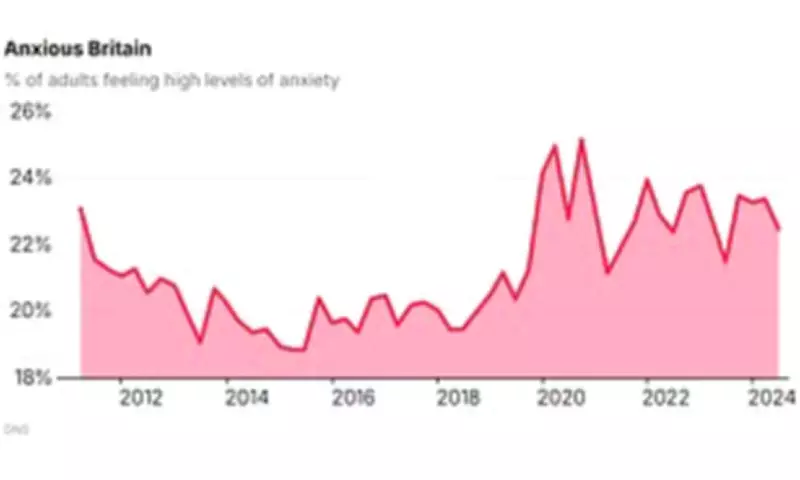
Health authorities have initiated a sweeping mass media campaign across social networks, search engines, and television, urging more than nine million Britons suffering from mental health conditions to seek therapy through the National Health Service. This unprecedented effort aims to address what officials describe as an 'anxiety epidemic' that is increasingly forcing individuals out of the workforce for extended periods.
The Growing Crisis of Worklessness Linked to Mental Health
Mental health has now emerged as the primary driver of long-term sickness in the United Kingdom, with more than half of the recent increase in disability benefits attributed to mental health claims. A report by the Institute for Fiscal Studies revealed that 55 per cent of the post-pandemic rise in disability benefits can be accounted for by claims primarily for mental health conditions.
New statistics underscore the severity of the situation. Unemployment among young people aged 16 to 24 has reached 16.1 per cent, marking a ten-year high. For those aged 25 to 34, the rate stands at 4.7 per cent, the highest since 2017. Overall, Britain's unemployment has climbed to 5.2 per cent for the three months to December 2025, affecting 1.9 million people and representing the highest level in almost five years. These figures do not include the 2.8 million people who are economically inactive due to long-term sickness.

Surge in Referrals and Millions Missing Out on Support
There has been a significant 26 per cent increase in the number of people referred to NHS talking therapies since 2018, with more than seven million referrals recorded in the three years leading up to the end of 2025. Despite this growth, NHS bosses estimate that 9.4 million individuals with common mental health conditions are currently 'missing out on available support'.
Britons are being encouraged to self-refer for talking therapies targeting six specific conditions: social anxiety, panic disorder, post-traumatic stress disorder, body dysmorphic disorder, and various phobias. Available treatments include cognitive behavioural therapy, counselling, and guided self-help programmes.
Official Statements and Treatment Statistics
Dr Adrian James, NHS England's national medical director for mental health and neurodiversity, emphasised that 'millions more could benefit from vital NHS talking therapies'. He stated: 'Through proven treatment and support available for free on the NHS, these conditions can be overcome to help people return to work, regain confidence or feel back to their old selves in social situations. Our message is clear, if you're struggling with your mental health, NHS talking therapies are here for you, and you can either self-refer or speak with your local GP practice.'
Recent data shows that over 670,000 people received talking therapy treatment last year. However, with approximately one in five adults in England now affected by a common mental health condition, health officials believe millions more could potentially benefit from these services.
Political Context and Rising Demand
The campaign follows political developments that saw the Labour government forced to abandon planned welfare cuts that would have made it more difficult for individuals to remain on sickness benefits. A substantial backbench rebellion last summer compelled Prime Minister Sir Keir Starmer to reverse this policy direction.
Health Secretary Wes Streeting told The Telegraph: 'We cannot sit back and ignore the rise in mental health problems in our society. Doing so would leave a generation of people to suffer alone, and leave our economy and society deprived of their talent and potential.'
NHS figures indicate that 4.1 million people were in contact with mental health services in England during 2024/25, up significantly from 2.6 million in 2016/17. Despite this substantial increase, officials express confidence in the system's capacity to handle growing demand.

Broader Implications and Expert Warnings
The latest NHS data reveals that one in four adults below the age of 45 now have a diagnosable mental health condition, representing a quarter increase over the past decade. Alan Milburn, former Labour MP and government work tsar, has warned that young Britons with 'normal' mental health conditions risk being 'written off', describing a 'lost generation' emerging in Britain.
This comprehensive campaign represents a significant escalation in the national response to mental health challenges, particularly their economic consequences. By encouraging widespread access to talking therapies, health authorities hope to mitigate the worklessness crisis while providing crucial support to millions of affected individuals across the country.