Mysterious Liver Disease Outbreak Claims Lives in Indian Village
A sudden and alarming outbreak of deadly liver disease has struck a remote village in northern India, claiming the lives of multiple children and young adults within days of symptoms appearing. The village of Chhainsa in Haryana state, approximately 100 kilometres from Delhi, has been plunged into grief and uncertainty as health workers scramble to identify the cause of the mysterious illness.
Sudden Deaths Leave Village Reeling
Eleven-year-old Huzzaifa was described by his family as a healthy child who spent his days laughing and playing during the cold winter months. In late January, he developed a fever one evening and was dead by the following night. His mother Shehnaaz, 32, recounts the devastating loss at their modest home in Chhainsa. "He had fever for only one day. On 27 January, the doctor said his liver had failed from kalapeeliya," she says, using a Hindi term that can refer to hepatitis B and C as well as black jaundice.
Huzzaifa's death follows a disturbing pattern that has emerged in the village. According to six grieving families interviewed by The Independent, each victim developed fever followed by stomach ache and vomiting, then died from liver failure within 48 hours. Mohammad Amruddin, a 52-year-old villager, describes the terrifying progression: "The patients are admitted to the hospital and within 36-48 hours of symptoms appearing their dead bodies return."

Conflicting Numbers and Rumours Spread
Public health officials have confirmed seven deaths from liver disease, with only four testing positive for hepatitis B. However, villagers claim at least twelve people have died, including children and young adults. The ongoing screening has identified seventeen suspected cases of hepatitis C, but the rapid deterioration described by families remains medically unexplained.
In the absence of clear answers, rumours have proliferated throughout the community. Many residents suspect contaminated water may be responsible, pointing to storage practices where water is kept for extended periods before consumption. Mohammad Islam, the 51-year-old elected village head, says alarm rose sharply at the beginning of February. "I was informed about the deaths about 25 days ago, but most cases came to light on 1 February. And we alerted the administration," he explains.
Heartbreaking Personal Stories Emerge
Ten-year-old Payal developed a fever on 3 February and was taken to doctors in nearby Hathin and Palwal cities. She died at 3am the following day. Her aunt Poonam, 22, recalls the sudden tragedy: "The doctor said she had kalapeeliya. We got her an injection for a mild fever on 2 February but her condition deteriorated the next day. She had no illness before. She was quite fit. Used to play a lot."
Payal's grandmother Mahendri, 65, remembers her final hours with heartbreaking detail. "She was intubated. I suppose they must have done some blood tests to try to diagnose her. She was crying a lot, screaming in pain, 'Mummy-papa'. The doctor gave her an injection and she stopped," she says, her eyes welling with tears.
In another part of the village, Arshad Hussain lost his 14-year-old nephew Sarik Khan in January. "He had fever on 26 January. We took him to a doctor nearby who gave him medicine and told us to take him to go to a bigger hospital. We got him admitted and they did his check-up and said he had kalapeeliya. And in 24 hours, he passed away," Hussain recounts.
Medical Investigation Underway
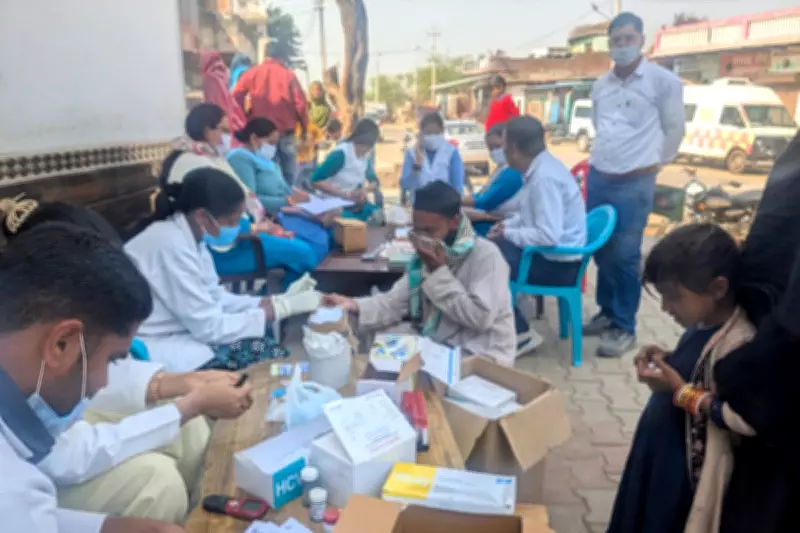
Healthcare workers are conducting door-to-door screenings of all eighty households in Chhainsa, with approximately sixty already assessed. Medical camps have been established as the village's primary health centre seldom has a doctor available according to locals.
Palwal deputy commissioner Harish Kumar Vashisht confirmed that no new deaths or hospital admissions have been reported since 11 February, but the exact cause remains unknown. Authorities are testing multiple possibilities, including analysing water sources for heavy metals. Chlorine tablets are being distributed, fogging carried out, and villagers advised to drink boiled water.

Public health officials are attempting to educate residents about hepatitis transmission. Dr Rakesh, a district medical officer, explains: "It is transmitted through unsafe sexual contact or use of syringes by drug users or by contact with infected blood. Or it's transmitted from mother to child during birth. Mainly, it is a chronic infection that stays in the body for a long time. But when the immunity goes down, the infection can flare up."
Medical Professionals Puzzled
Doctors express confusion about the clinical presentation of cases in Chhainsa. Dr Sanjay Sharma, deputy civil surgeon in Hathin, notes the unusual pattern: "Deaths from hepatitis B and C don't typically happen like this. It is a long process. It will cause liver cirrhosis. It will damage your liver. Then, after a few years, if there is a secondary infection, death may occur. But here, according to what the families are saying, within two-three days of fever they are admitted and the next day they die."
Dr Sharma suggests incomplete medical histories or additional factors may be involved. Testing has yielded mixed results, with four of the seven confirmed cases being hepatitis B and others showing coincidental findings of acute hepatomegaly (liver infection).
Families Seek Answers Amid Grief
Mohammad Hakimmudin lost his 24-year-old son Dilshad on 11 February. "A few days before, he had a fever. We took him to a local doctor. And on the third day, I took him to Hathin," he recalls. "We got his blood tested and doctors said he had kalapeeliya. I got him admitted in a hospital at midnight, and 48 hours later he passed away. The doctor said his liver was completely damaged."
Nearby, Pervaiz mourns his 17-year-old niece Huma, who died despite negative tests for hepatitis C and E. "She had a sudden stomach ache. We took her to hospital, and she died. Doctor said her liver had failed," he says. "The doctor said that liver damage takes time. So, even they could not understand how it happened overnight."
As healthcare workers continue their investigation, the village remains gripped by fear and sorrow, with families desperate for answers about why their healthy children and young relatives are dying so suddenly from liver failure.