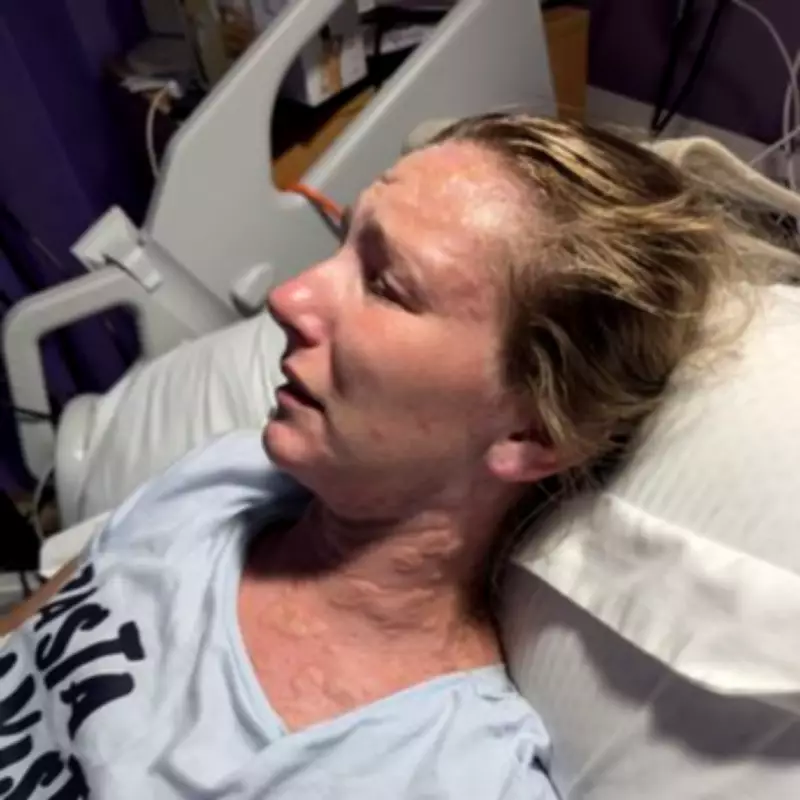
Mum Left Permanently Paralyzed After Slipping While Doing Washing
A mother from Lancashire has been left permanently paralyzed after a seemingly minor accident while performing a mundane household chore, sparking urgent calls for greater awareness of a rare spinal condition.
The Fateful Fall
Tara Stovold, a 34-year-old autism behavioural analyst and mother of four from Chorley, Lancashire, was bringing in washing from the rain in July 2025 when she slipped on wet decking and landed on her backside. Initially, Tara brushed off the incident, assuming she had merely pulled a muscle. However, the next morning, she woke up with numbness in her left leg and saddle area, prompting immediate concern.
She visited the hospital, where she claims doctors diagnosed her with a broken coccyx, advising that it would take eight to twelve weeks to heal without ordering an MRI scan. Over the following three weeks, Tara's pain intensified dramatically before she suddenly lost feeling on the right side of her body and became incontinent, forcing her to return to hospital in August 2025.

Diagnosis and Devastating Outcome
Upon her return, Tara was shocked to be diagnosed with Cauda Equina Syndrome (CES), a serious condition involving compression of the spinal nerves at the tail end of the spinal cord. According to the NHS, CES requires emergency surgery, as delays in treatment can lead to permanent paralysis and incontinence. Tara underwent multiple surgeries in August and September 2025, but tragically, the damage was irreversible.
She was left paralyzed and informed that she would never walk again or regain bladder and bowel function. The surgeries were further complicated by infections, including E-coli, sepsis, and staphylococcus, which exacerbated her paralysis. Tara now requires a catheter, her feet have permanently turned inwards, and she faces the possibility of her knees locking in place, leaving her bedbound and in constant pain.
Emotional Toll and Advocacy
Tara describes feeling "empty" and grieving her former life, as she adjusts to a new reality with her partner and four children. She has set up a GoFundMe page to raise funds for an accessible bungalow and a specialist wheelchair, as her current home is unsuitable for her needs. More importantly, Tara is bravely sharing her story to spread awareness about CES and urge others to advocate for themselves in medical settings.
She emphasizes that CES is a life-threatening condition requiring an MRI and surgery within 24 to 48 hours, yet she went nearly three weeks without proper diagnosis. Tara encourages people to trust their instincts and not be intimidated by medical professionals, highlighting the importance of having a supportive advocate.
Hospital Response and Moving Forward
A spokesperson for Lancashire Teaching Hospitals stated that while they cannot comment on individual cases, they advise anyone with concerns about their care to contact their Patient Advice and Liaison Service for a full investigation. Tara's experience underscores the critical need for timely medical intervention and patient self-advocacy in the healthcare system.
As Tara and her family navigate this challenging new chapter, her story serves as a poignant reminder of how quickly life can change and the vital role of awareness in preventing similar tragedies.