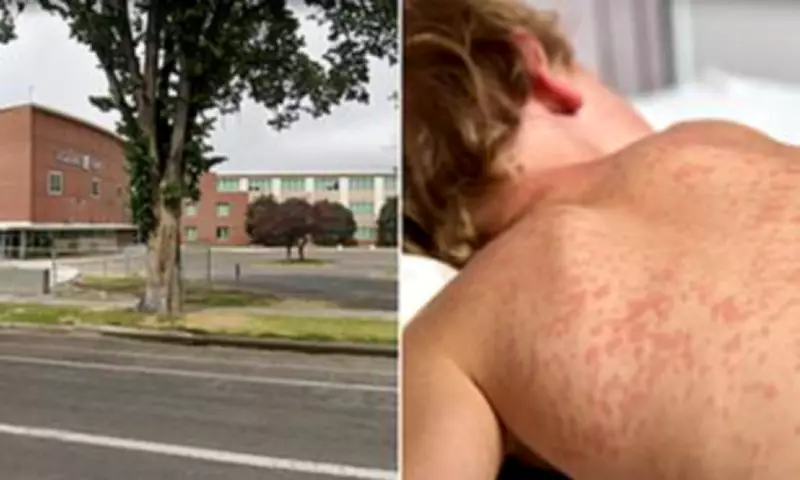
Health authorities in Utah have issued a critical public health warning after a confirmed measles case at a local high school potentially exposed thousands of students to the highly contagious virus. The Salt Lake County Health Department revealed on Wednesday that an infected student attended Highland High School on February 6 and continued attending classes throughout the entire week from February 9 to February 13 while actively infectious.
Vaccination Status and High Infection Risk
The affected student had not received both required doses of the measles, mumps, and rubella (MMR) vaccine, according to health officials. This vaccination gap has raised significant concerns, with authorities warning that unvaccinated individuals who were exposed face a staggering 90 percent probability of contracting the disease. The student likely became infected during a high school activity within the three weeks preceding symptom onset, though specific details about the exposure source remain undisclosed to protect privacy.
Widespread Notification and Public Health Response
The health department has implemented a multi-tiered notification system to alert the school community. General notifications were sent to all 2,000 students at Highland High School, while more targeted alerts were distributed to families whose children likely had direct contact with the infected individual. A third, specific notice was issued to families with unvaccinated students, emphasizing the heightened risk they face.

Nicholas Rupp, Communication Director for the Salt Lake County Health Department, emphasized the diagnostic challenges posed by measles. "Early measles symptoms can closely resemble a common cold or influenza," Rupp explained. "This similarity makes vigilance about potential exposure absolutely crucial for preventing further spread."
Measles Symptoms and Transmission Patterns
Measles presents with distinctive symptoms including persistent cough, high fever, and a characteristic blotchy rash that typically begins on the face before spreading downward across the body. The infection also produces tiny white spots inside the mouth known as Koplik spots. The virus spreads through direct contact with infectious droplets or through airborne transmission in enclosed spaces, with patients remaining contagious from four days before the rash appears through four days after its emergence.
"If you're not feeling well, especially if you may have been exposed to measles through other situations in the state, it's critically important to stay home," Rupp advised. "Since we have measles circulating throughout Utah, staying home when ill prevents potentially infecting others."
Statewide Measles Context and Vaccination Rates
This school exposure incident occurs against a concerning backdrop of rising measles cases across Utah. Since fall 2025, the state has confirmed 300 measles cases, with 194 concentrated in Southwest Utah. Vaccination data reveals troubling patterns: 255 cases occurred in unvaccinated individuals, 22 had unknown vaccination status, and only 23 affected people had received both MMR doses.
Utah's kindergarten vaccination rates further complicate the public health picture. Only 89 percent of kindergarteners have received both MMR vaccine doses, falling significantly below the Centers for Disease Control and Prevention's 95 percent threshold necessary for maintaining herd immunity and preventing widespread outbreaks. CDC data indicates that one in ten Utah kindergarteners holds either a medical or religious exemption from vaccination requirements.
Health Complications and Historical Context
Beyond its immediate symptoms, measles can cause severe health complications. Approximately six percent of otherwise healthy children develop pneumonia, with higher rates among malnourished children. Though rare, brain swelling occurs in about one in 1,000 cases, proving fatal in 15 to 20 percent of those affected and leaving approximately 20 percent with permanent neurological damage including brain injury, deafness, or intellectual disability.

The virus also inflicts significant damage to children's immune systems, rendering them vulnerable to other bacterial and viral infections they previously resisted. Historically, before MMR vaccines became available in the 1960s, measles caused devastating global epidemics with up to 2.6 million annual deaths. Vaccination efforts have dramatically reduced this toll to approximately 107,000 deaths by 2023.
Hospitalization Statistics and National Comparison
Among Utah's current measles cases, 25 patients have required hospitalization, with 185 infections occurring in individuals under 18 years old. Nationally, 92.5 percent of kindergarteners are fully vaccinated against measles, while 3.6 percent hold exemptions. The MMR vaccine demonstrates 97 percent effectiveness in preventing infection when administered according to standard protocols: first dose between ages 12 and 15 months, followed by a second dose between ages four and six.
Health officials continue to monitor the situation closely, urging vaccination for unprotected individuals and heightened awareness of symptoms among potentially exposed populations. The incident underscores the ongoing challenges public health systems face in maintaining vaccination coverage and responding promptly to infectious disease threats in educational settings.