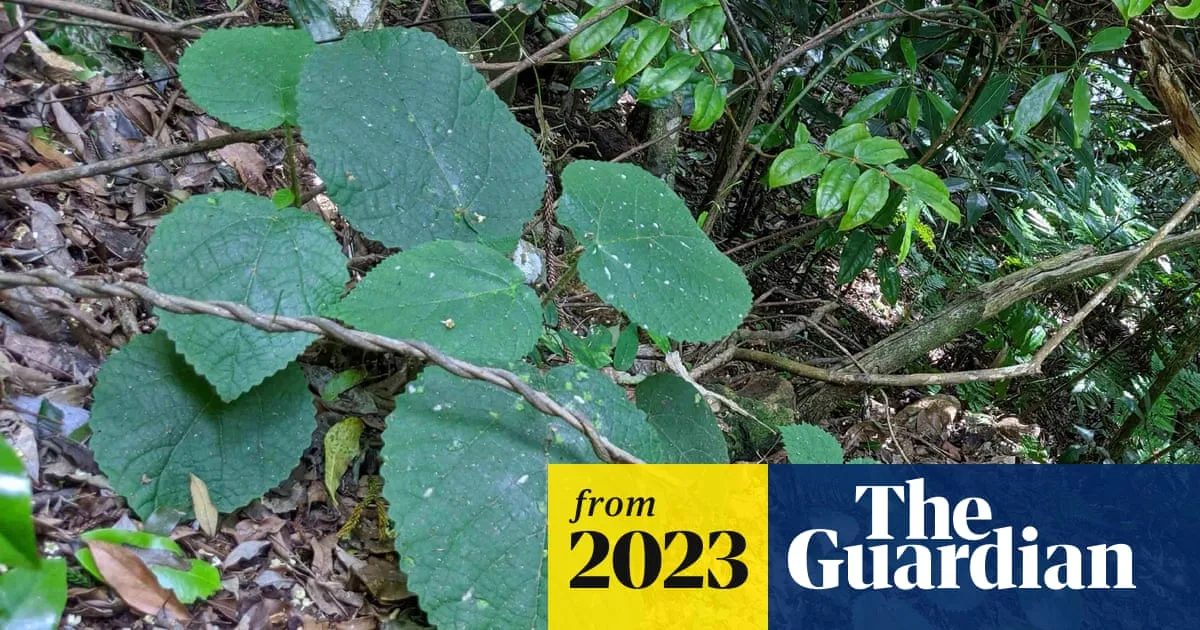
Woman Endures Four Years of Relentless Pain After Encounter With Australia's Notorious 'Suicide Tree'
A South African woman living in Brisbane has shared her harrowing story of how a single, brief encounter with a plant known as the 'suicide tree' has left her battling relentless, daily pain for over four years. The Dendrocnide moroides, commonly referred to as the 'Gympie-Gympie' or the 'giant stinging tree', is a plant native exclusively to Queensland and northern New South Wales in Australia.
The Plant's Potent and Painful Defence Mechanism
The plant inflicts its excruciating sting by injecting a powerful neurotoxin through thousands of microscopic silica hairs that function like hypodermic needles. These hairs directly target pain receptors in the skin, causing immediate and severe pain that can persist for weeks, months, or even reappear sporadically over years. Victims have described the sensation as akin to being simultaneously burned with hot acid and electrocuted.
Hermes, the Brisbane woman, brushed against the plant four years ago while assisting her husband with clearing a property in Queensland. 'The plant is widely considered one of the most painful plants in the world,' she stated in one of numerous videos documenting her ordeal. 'This seemingly ordinary green plant hides a natural defence system that can cause intense long-lasting pain as I found out. That one moment turned into years of suffering.'
Visible Scars and Ongoing Treatment
Raised red welts now mark both of Hermes's arms, shins, right thigh, back, groin, chest, lips, and chin. 'The plant mapped its way across my body, leaving scars that are still visible today. I'm choosing to see hearts instead of pain,' she remarked. In a recent video, she demonstrated removing microscopic needles from her arm, four years after the initial contact. 'When I rub my skin, some thorns come out and it feels like I'm rubbing glass shards out of my skin,' she explained.
Scientific research has revealed that the toxin is similar to venom found in cone snails and spiders. Like those venoms, it can overstimulate nerves, which explains why the pain can endure for extended periods. Hermes has undergone chemical peels in an attempt to extract the needles but continues to endure daily pain.
Characteristics and Safety Advice for the Gympie-Gympie Plant
The Gympie-Gympie plant can grow to heights of four to five metres but is most frequently encountered as a smaller shrub along Australia's east coast. If stung, experts advise against rubbing the affected area, as this can cause the tiny hairs to break, making them more difficult to remove. Treatment recommendations include applying diluted hydrochloric acid to neutralise the plant's peptide coating and using wax strips to extract the hairs from affected areas.
To minimise the risk of being stung, individuals should walk on designated paths and wear enclosed shoes and long trousers when in areas where the plant is known to grow. Australians have expressed profound sympathy for Hermes in comments on her social media posts. One user wrote, 'Four years is an insane amount of time to be dealing with anything,' while another added, 'You're one of the toughest people out here. I admire your strength and perseverance through unimaginable pain.'