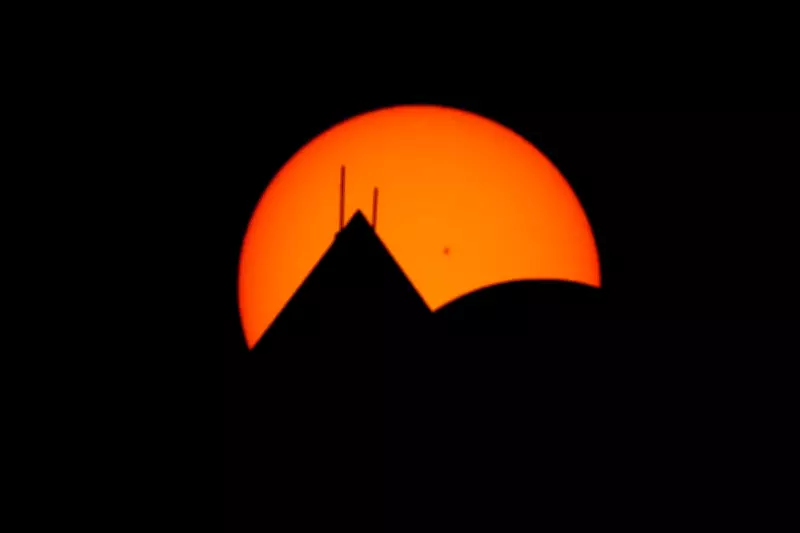
Scientists have uncovered mysterious and unexpected behaviour in the Sun after listening to its 'heart', according to a new study. The research indicates that something has changed in the Sun's internal rhythm over the past four decades, a rhythm that governs space weather and can impact life on Earth. The findings call for urgent investigation to understand what is happening to our star.
Solar Cycles and Their Importance
The Sun operates on an 11-year cycle, alternating between periods of high and low activity. During active phases, the Sun is more prone to releasing solar flares and coronal mass ejections, which can produce dangerous solar storms. These storms have the potential to disrupt satellites, power grids, and communications on Earth.
Listening to the Sun's Sound Waves
Scientists analysed tiny sound waves within the Sun to gain insights into its interior structure and behaviour. This technique allowed them to detect changes that are not visible on the surface. The findings suggest that the Sun may be entering a 'different mode of behaviour', with long-term structural changes beyond the usual 11-year cycle.

The study reveals that solar magnetic activity is being pushed into a layer just below the visible surface, and this layer is becoming progressively shallower over time. 'The Sun has its own active biorhythm creating rising and falling magnetic activity that shapes space weather,' said Bill Chaplin from the University of Birmingham, lead author of the study. 'However, traditional surface measures don't capture the full story – that the Sun may be entering a different mode of behaviour unfolding over decades.'
Evidence of Systematic Changes
Chaplin added: 'We have uncovered evidence of systematic changes in the solar activity cycle. Crucially, magnetic activity is becoming more tightly confined near the surface with each cycle. This is the first such discovery and would have been impossible without the long BiSON observations.'
The researchers emphasise the need for further study to better understand the Sun's current cycle and the internal changes driving it. 'We discovered that the relationship between internal solar oscillations and surface activity has evolved over the past few cycles,' said Sarbani Basu from Yale University. 'This trend cannot be explained simply by weaker magnetic fields. Instead, it indicates a structural reorganisation of how the Sun's magnetic activity is stored beneath the surface.'
Understanding these changes is crucial for predicting space weather and mitigating its potential impacts on technology and human activities. The study highlights the importance of continuous monitoring of the Sun's interior to anticipate future behaviour.