Endometriosis Investigation Delay Leads to Shocking Cancer Discovery
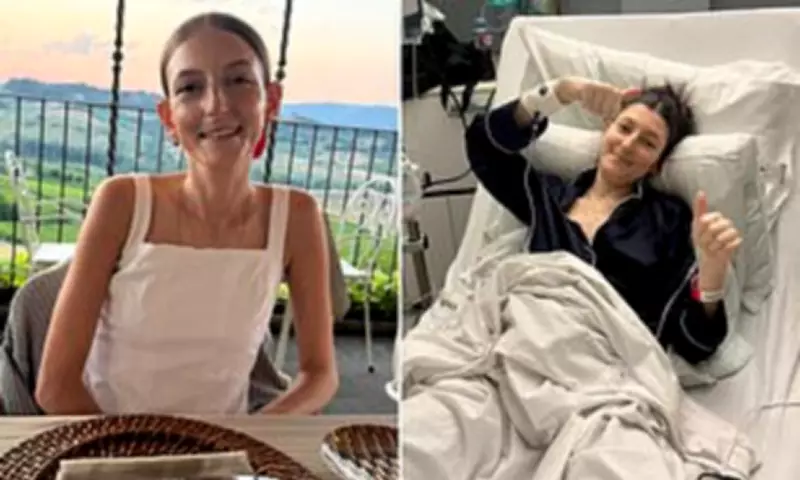
Tamara Mulley endured nearly a year of uncertainty, grappling with debilitating bloating and hip pain that severely impacted her daily life. Suspecting endometriosis, she anxiously awaited a specialist appointment. However, before that crucial consultation could occur, a severe cough prompted an emergency visit that unveiled a far more dire reality. In December 2023, at just 27 years old, Ms Mulley received a devastating diagnosis: stage 4 cholangiocarcinoma, commonly known as bile duct cancer.
A Cough That Changed Everything
'I got a really bad cough and the symptoms from that really floored me, more than I'd ever been impacted by a cough before,' Ms Mulley recounted. 'Normally, you can get on with your life, but I was feeling really fatigued. I couldn't stand up for a long period of time at work and if I was going to someone else's desk, I would have to sit down. And I just thought, 'this isn't normal'.'
Her general practitioner had no available appointments, but when she mentioned breathlessness, they urgently directed her to accident and emergency. During that Friday night visit, doctors conducted an X-ray revealing a 'little shadow', scheduling a follow-up CT scan for Monday. Subsequently, she was referred to The Cancer Centre at Guy's Hospital in London for a PET scan, with staff reassuring her it did not automatically indicate cancer.

Endometriosis Versus Cancer: A Crucial Intersection
Simultaneously, Ms Mulley, a London resident working at Heathrow Airport, finally received her long-awaited gynaecology appointment to investigate suspected endometriosis—ten months after her initial request. Endometriosis involves endometrial tissue growing outside the uterus, causing pain, heavy periods, fatigue, and increased infertility risk. Endometriosis UK estimates 1.5 million women live with this condition, roughly one in ten of reproductive age, yet diagnosis often takes over eight years.
Choosing to prioritise the cough investigation, Ms Mulley learned on December 23 that she had stage 4 cancer. '[The scans] showed that the cancer had already spread to my hip, my spine, my collarbone, multiple tumours in my lungs and quite a large tumour in my liver, among other places,' she said. 'When I saw [the scans], it lit up like a Christmas tree. It was just kind of everywhere.'
Facing an Incurable Diagnosis with Resilience
Initially, doctors could not determine the cancer's origin, delaying treatment until a lung biopsy on December 27. Ms Mulley described the wait as the 'hardest time' of her journey, filled with anxiety about progression. In January 2024, she learned it was cholangiocarcinoma, deemed incurable, with doctors stating, 'you'll be lucky if you're sitting here in two years.'
According to the NHS, symptoms include fatigue, jaundice, appetite loss, and abdominal pain, but Ms Mulley experienced only weight loss and fatigue. Cancer Research notes around 3,100 annual UK diagnoses, with just two to nine percent surviving beyond five years. Late diagnosis and limited treatment awareness mean over half of patients receive no cancer-specific care.
Defying Odds Through Treatment and Hope
Ms Mulley began immunotherapy and responded well to chemotherapy, extending her initial eight rounds to fifteen, gaining an extra six months. When chemotherapy ceased effectiveness, she enrolled in the First-308 clinical trial, a targeted therapy that shrunk some tumours. Despite severe fatigue requiring blood transfusions, she maintained her hair and continued working and socialising to stay occupied.
Reflecting on her prognosis, she said, 'Passing that two-year mark was a real moment for me and one that I'm really proud of achieving. It goes to show that, although there's still a huge amount of work to be done with cholangiocarcinoma – because it's under researched and underfunded – there is hope. My ultimate hope is for a cure to be found.'

She added, 'I like to say that, within my bubble of unluckiness, I am the luckiest person in the world. I'm so thankful for the amazing medical teams who've been in charge of my care and that I have outlived that initial expectation. My focus now is just to continue with that.'
Advocacy and Support for Cholangiocarcinoma Research
Ms Mulley is supported by AMMF, the UK's sole registered charity dedicated to cholangiocarcinoma research funding. She emphasised, 'Too many people with cholangiocarcinoma are diagnosed (when) it's already stage four, and at that point it is too late. However, if it is found at stage one or stage two, it is survivable.' Her story underscores the critical need for early detection and increased research into this rare, aggressive cancer, while highlighting personal resilience in the face of overwhelming odds.