
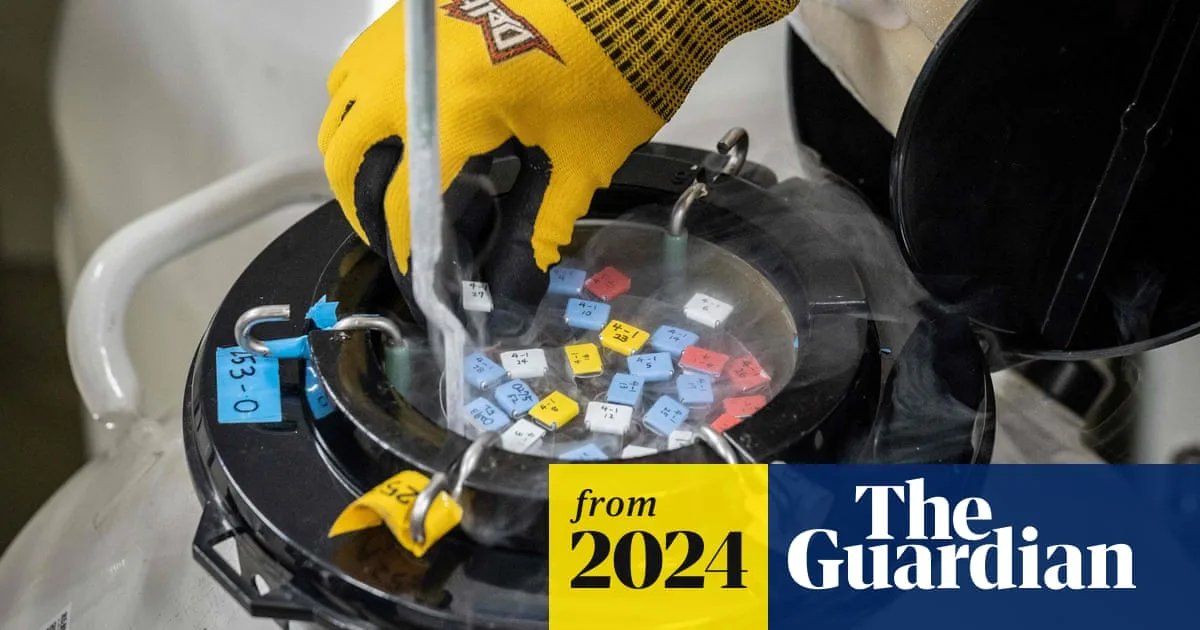
Experts have raised concerns over a legal loophole that allows sperm donated in the UK to be exported and used to create large numbers of children across multiple countries, contradicting the strict 10-family limit that applies within UK fertility clinics. While a single donor can be used for no more than 10 families in the UK, there are no restrictions on companies making sperm or eggs available for additional fertility treatments abroad.
With the lifting of donor anonymity and the ability to track genetic relatives via DNA testing sites, this raises the prospect of donor-conceived children navigating relationships with dozens of biological half-siblings across Europe. Prof Jackson Kirkman-Brown, chair of the Association for Reproductive and Clinical Scientists (ARCS), is among those calling on the Human Fertilisation and Embryology Authority (HFEA) to tighten restrictions. "If you believe that it's necessary to enforce the 10-family limit in the modern world then logically that should apply wherever the sperm are from," he said.
Data from the HFEA shows that from 2019 to 2021, 7,542 straws of sperm were exported from the UK. The European Sperm Bank, which accounted for 90% of exports, applies a worldwide limit of 75 families per donor and estimates its donors help an average of 25 families. Cryos, the world's largest sperm and egg bank, which opened a donation unit in Manchester in April, said it "aims for 25-50 families per donor" worldwide.
Prof Lucy Frith of the University of Manchester, who researches donor-conceived experiences, noted that while contact with half-siblings is often viewed positively, "when numbers of siblings began to grow [it] felt unmanageable." The potentially open-ended number of future siblings is another challenge, as frozen sperm can be used over years or decades, leading to scenarios where donor siblings could be older than one's parents.
Prof Nicky Hudson, a medical sociologist at De Montford University, highlighted the increasing commercialisation of the market, contrasting it with the altruistic basis for donation. "It's presented to donors as a beautiful gift to help someone create a family, not as, 'We're going to maximise the number of births from your gametes and make as much money as we can from that,'" she said. Hudson noted that egg donors strongly rejected the idea of their eggs being shipped abroad, with one describing it as akin to human trafficking.
The HFEA stated that the rationale for the 10-family limit is based on consultation suggesting this number is comfortable for donors and donor-conceived people. However, as the HFEA has no remit over donation outside licensed clinics, there would be no monitoring of exports.




