Pennsylvania Church's Viral 'Loud Kids Welcome' Policy Ignites National Conversation
A small church in Pennsylvania has unexpectedly found itself at the centre of a nationwide debate after embracing a policy that actively welcomes so-called 'loud kids' during worship services. The message, which has spread rapidly across social media platforms, has provoked intense discussion about religious inclusivity, parenting norms, and the nature of worship itself.
The Viral Memo That Started It All
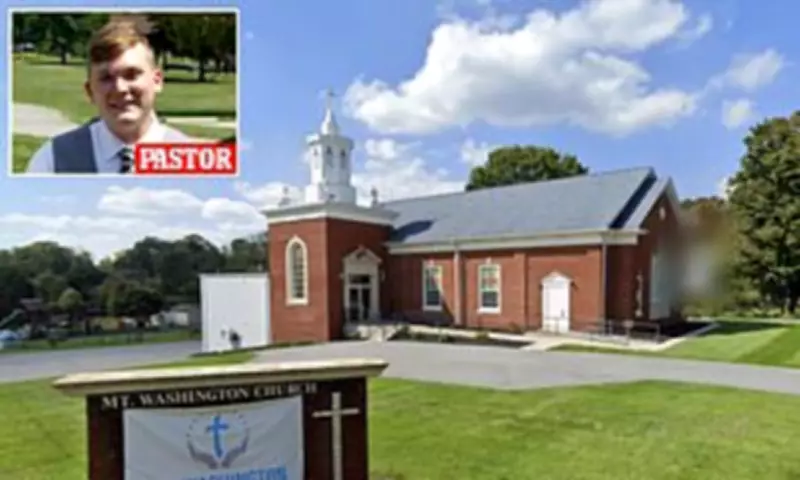
The controversy began when Mt. Washington United Brethren Church in York, Pennsylvania, reposted a memo originally created by First Baptist Union in Mississippi. The document gained explosive national attention after New York Times columnist David French shared the image on X, where it quickly amassed an astonishing 1.4 million views. French expressed his admiration for the policy, writing simply: 'I love this so much.'
The note begins with a tongue-in-cheek assurance of 'transparency and accountability' before outlining what it calls 'comprehensive procedures regarding loud children in worship.' The policy presents four distinct options for families considering visiting the church:

- The family should bring the kid.
- The family should make sure they bring the kid.
- The family is to see that the child is brought to church.
- The kid is absolutely welcome and expected.
The memo makes the church's position unequivocally clear, stating that children's noise is not a distraction but rather 'evidence of life, growth, and the future of the church.' It concludes with a powerful declaration: 'If your child makes noise, you are not bothering us. You are blessing us. Policy enacted. No exceptions.'
Widespread Support from Religious Leaders and Parents
Many religious leaders and parents have enthusiastically applauded the message as a necessary correction to what they perceive as churches that shame tired families away from attending services. The policy has resonated deeply with those who believe churches should be more welcoming to families with young children.
Politician Christopher Hale invoked the authority of Pope Francis, quoting the pontiff's remarks during a 2020 baptism in the Sistine Chapel: 'Let the children cry. It is a beautiful homily when a child cries in church.' Francis had humorously noted that babies aren't accustomed to the chapel environment and shortened his homily to prevent their discomfort, reminding parents that baptism represents an act of justice because it imparts the Holy Spirit.
Other supporters referenced biblical scripture, particularly Mark 10:14's instruction to 'let the little children come to me.' A widely circulated phrase captured the same sentiment: 'If your church services aren't crying, they're dying.' One churchgoer shared his own parish's welcoming message: 'Parents, relax. Children wiggle,' adding that 'the sound of children in church is actually the sound of obedience' because it demonstrates parents bringing their children to worship even when challenging.
Facebook commenters on the original Mississippi post shared emotional personal stories. One recalled a pastor being called to pray over a terminally ill newborn who suddenly began crying during the prayer. 'Every time he hears a baby cry during a sermon, he immediately thinks about what a beautiful sound it truly is,' the commenter wrote.
Concerns About Practical Implementation and Reverence
Despite the overwhelming positive response, significant concerns have emerged about the practical implementation of such policies and their potential impact on worship reverence. Critics argue that the viral policy goes too far, particularly regarding older children who might be capable of understanding appropriate behaviour.
Tax Foundation senior fellow Jared Walczak wrote that while he agrees churches should welcome families, he has witnessed situations where children aged six to ten 'play noisily' during services while parents ignore the disruption. 'That's distracting for other worshippers,' he cautioned, 'and it's also bad for the kids, because they're being taught that church isn't really all that important.'

Other critics were more direct in their objections. 'If your kid is disrupting a social gathering: get them to stop. If they won't stop, take them outside,' one commenter insisted. Another added: 'Adults need to show them when and where it is appropriate to act this way. Church, weddings, restaurants, any formal gatherings are NOT an appropriate place.'
Some argued that failing to teach children appropriate boundaries contributes to broader cultural decline. 'At what point did society decide kids shouldn't be held accountable for anything at all?' one user questioned pointedly. Several commenters noted that some worshippers come to church 'at the end of their rope,' needing to hear sermons without interruption. Others maintained that reverence in worship must be preserved: 'Mass is beautiful… the sounds of children can be lovely, but screaming and tantruming is not appropriate.'
The Middle Ground and Practical Solutions
A third perspective has emerged suggesting that modern churches already possess practical solutions that balance inclusivity with consideration for all worshippers. Many contemporary churches offer cry rooms, soundproof family lounges, or children's Sunday School programs, and advocates urge parents to utilize these resources when appropriate.
Turning Point USA spokesperson Andrew Kolvet, a father of three, argued that the viral memo confuses tolerance for occasional noise with embracing chaos. 'Children should be taught to be respectful of mixed spaces like movies, restaurants, and church. It's called good parenting,' he stated.
Church Leadership Responds to the Controversy
Mt. Washington UB Church Pastor Alan Harbold told Fox News Digital he is 'thrilled' the policy is drawing national attention to their congregation. 'Some detractors said parents should make sure their children are quiet… and we would wholeheartedly agree,' Harbold clarified. 'But the most important part is getting the kids to church in the first place. We want to welcome families without fear of being 'annoying.''
At First Baptist Union in Mississippi, where the memo originated, Senior Pastor Michael Wilbanks explained he posted it primarily to reassure embarrassed young parents. 'There are mothers who get really embarrassed when their children cry,' he revealed. 'We wanted to let them know they are welcomed and we love them.'
The debate continues to unfold across social media platforms, with thousands of comments reflecting diverse perspectives on parenting, religious practice, and community norms. What began as a simple church policy has evolved into a national conversation about what it means to create truly welcoming religious spaces in contemporary society.