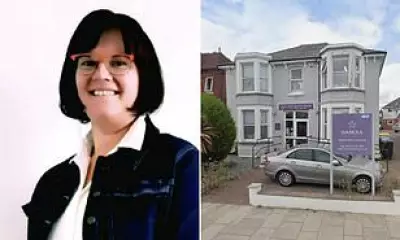
Coroner Rules BGT Dancer's Death as Suicide Following Arrest
A coroner has officially recorded that a former Britain's Got Talent contestant died by suicide just three days after being arrested on suspicion of child sexual offending. Kerri-Anne Donaldson, who reached the semi-finals of the ITV show in 2014 with her dance group Kings and Queens, was found deceased at her residence in Farnborough, Hampshire, on June 7, 2023.
Arrest and Subsequent Events
The inquest held at Winchester Coroner's Court heard that the 38-year-old dancer was taken into custody on June 4 and questioned at Basingstoke police station regarding a sexual offence, which she vehemently denied. Following her release, she was reported missing and discovered at a hotel in Woking, Surrey, on June 5, having consumed an overdose. She was promptly admitted to St Peter's Hospital in Surrey.
Prior to this incident, Ms Donaldson had spent the night sleeping in a garage after drinking a bottle of Malibu. Despite being placed under a high-risk care plan on June 5, she was discharged from hospital on June 6 into the care of a home treatment team after an assessment deemed her condition as settled. Tragically, she was found hanged at her home the following morning.

Mental Health Assessments and Coroner's Findings
Coroner Jason Pegg concluded that Ms Donaldson's death was a result of suicide. The inquest revealed conflicting assessments of her mental state. Psychiatric liaison nurse Serina Juru, who evaluated Ms Donaldson on the evening of June 5, assessed her as being at a high and imminent risk of suicide, rating the risk as 10 out of 10.
However, a subsequent Mental Health Act assessment conducted by three mental health professionals on June 6 determined she was suitable for release. Consultant psychiatrist Dr Martin Williams testified that they considered the possibility she was masking her true risk level, but all indications suggested she was settling and the risk had markedly reduced from the previous day.
Dr Williams noted that Ms Donaldson refused to disclose details of the alleged offence but expressed that she no longer believed she was definitely going to prison. The coroner highlighted that the second assessment was hindered by three incorrect assumptions made by Dr Williams and the failure to review Ms Juru's full notes.
Assumptions and Oversights
The erroneous assumptions included:
- Believing Ms Donaldson had raised the alarm herself after the overdose.
- Assuming she was intoxicated during Ms Juru's assessment.
- Concluding the alleged offence was unlikely to be a sexual violence offence or lead to a custodial sentence based on her bail conditions.
Mr Pegg stated, "The incorrect assumptions downplayed the risk presented by Kerri. In the comments made 14 hours earlier, Kerri was clearly and eloquently asserting a wish to end her life." He added that her engaging personality and intelligence likely enabled her to mask her true intentions to return home and end her life without interruption.
Personal Tributes and Final Moments
The inquest heard that Ms Donaldson's sister, Cara Donaldson, took her home from the hospital but left her alone after receiving reassurances that she was okay. Cara discovered her sister's body the next morning, with the song You Are So Beautiful playing on repeat.
Describing her sister, Cara said, "Heart of gold, full of fun, brought happiness to life, career driven, adored her family, adored her friends, fantastic dance teacher, everyone loved her." She emphasized that her sister's main passion was choreographing dance, having appeared on television multiple times.
The coroner's ruling underscores the complexities of mental health assessments and the tragic outcome in this case, highlighting the need for thorough evaluations and communication among healthcare professionals.