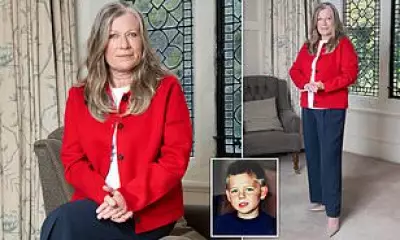
Britain's social care system has been described as 'horrendous' by Whitehall's top 'fixer', who warns it depends on an 'exploited' workforce receiving low wages with poor terms and conditions. Baroness Louise Casey, chairing an independent commission on reforms, delivered a withering assessment of the current state of social care across the UK.
Political Failure and Systemic Neglect
Baroness Casey was scathing about all political parties for avoiding the issue over previous decades, noting only minor tinkering has occurred as a result. She stated that the country 'hadn't really caught up with the fact' that Britons are living longer due to medical advancements, creating urgent needs that remain unaddressed.
'We've had no political backing from any political party to actually sustain the type of changes that will be needed,' she told BBC Radio 4's Today programme. 'You've had bits and pieces around the edges.'

Call for a 'Beveridge Moment'
The cross-bench peer called for a 'Beveridge moment' for social care, referencing the pivotal 1940s report by William Beveridge that led to the founding of the welfare state. This bold vision aims to transform the sector fundamentally rather than applying superficial fixes.
Baroness Casey was appointed by Prime Minister Sir Keir Starmer in January last year to head an independent taskforce charged with reforming adult social care. However, the Prime Minister faced immediate criticism for kicking the issue 'into the long grass' when it was revealed a final report is not expected until 2028.
Current Disastrous State of Care
Ahead of a speech on Thursday, Baroness Casey outlined the dire situation facing social care in Britain. 'I think it's horrendous actually,' she said. 'I know so many people of my generation, including myself, who are trying to work out how they make sure their parents are able to be okay in their own homes and, if they can't, into a care home.'
She highlighted the bureaucratic nightmare many families face: 'I know so many people that are dealing with all sorts of issues, from the multiple different letters, the multiple different assessments, the multiple different financial assessments. It's quite a myriad.'
This complexity stems from a fundamental lack of national stocktaking. 'This comes back to the fact that, fundamentally, we haven't had a stock take in the country about where we are and what we now need to do,' she added.
Workforce Exploitation and Fair Pay
When challenged that Sir Keir had 'done nothing' on social care since becoming PM in July 2024, Baroness Casey replied: 'I'm not here to defend the Government.' However, she praised Labour's establishment of a fair pay agreement for social care workers as a positive step.
'I think there are things, for example, the fair pay agreement and making sure that we don't continue, in my view, to exploit the workforce,' the peer explained. 'The truth of the matter is people in care situations, we've still got these people earning less than the minimum wage, they are often not paid for travel, they're not paid for holidays.'
Baroness Casey warned that 'even the lowest rung in the NHS is paid better and has better terms and conditions than a care worker', underscoring the stark inequalities within the healthcare sector.
Dismissal of Downing Street Role Speculation
During the radio interview, Baroness Casey also dismissed speculation that she could become Sir Keir's new Downing Street chief of staff. Following the resignation of Morgan McSweeney last month amid the Peter Mandelson scandal, rumours suggested she was being lined up for the position.
But Baroness Casey clarified: 'I have never gone political, and I don’t intend to go political now, and I don’t think the PM necessarily wants me to be the chief of staff.' This statement reinforces her independent stance while continuing her critical work on social care reforms.
Baroness Casey, who recently completed a 'rapid audit' into grooming gangs for the Prime Minister, remains focused on addressing the deep-seated issues in social care, urging comprehensive action rather than incremental changes.