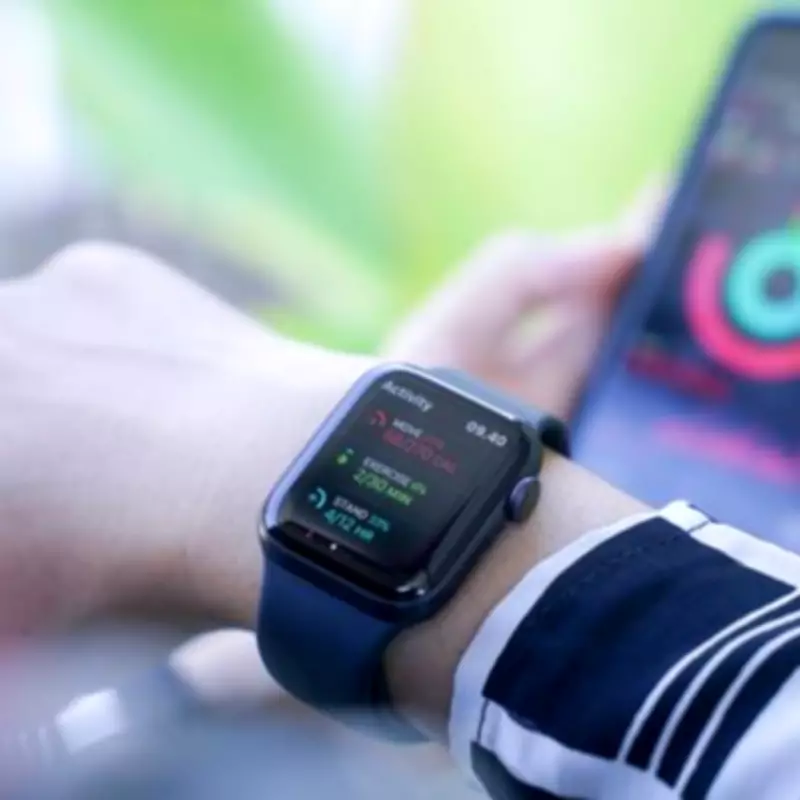
Apple Watch Blood Pressure Feature Falls Short as Diagnostic Tool, Study Reveals
A groundbreaking new study has issued a stark warning to Apple Watch users: the device's hypertension notification feature should not be used as a substitute for conventional blood pressure screening tests. Researchers from the University of Utah Health and the University of Pennsylvania have determined that relying on the smartwatch for blood pressure monitoring could lead to dangerous false reassurance and missed diagnoses.
Significant Limitations in Detection Accuracy
The research, published in the prestigious Journal of the American Medical Association, analysed Apple's own performance data to assess the real-world implications of this widely-used health technology. The findings reveal concerning gaps in the system's detection capabilities.
According to the study's analysis of Apple's reported test performance:

- 41.2% of individuals with undiagnosed hypertension would receive an alert for potentially having the condition
- 58.8% of those with undiagnosed hypertension would receive no alert at all
- Among people without hypertension, 92.3% would correctly not receive an alert
- 7.7% of those without hypertension would receive an inappropriate false alert
The researchers concluded that the feature provides "moderate evidence to rule in hypertension" but only "weak evidence to rule out hypertension," making it unsuitable for reliable large-scale screening.
Age-Related Reliability Concerns
The study uncovered particularly worrying patterns regarding age-based reliability. The absence of an alert proved more dependable for younger adults but was considerably less reliable for older adults, who face significantly higher risks of elevated blood pressure and related complications.
This age-related discrepancy raises serious concerns, given that hypertension prevalence increases with age and older individuals typically face greater cardiovascular risks.
Manufacturer's Cautions and Medical Community Response
Apple has consistently maintained that the hypertension notification feature is "not intended to diagnose, treat or aid in the management of hypertension or other conditions such as blood clots, stroke, atrial fibrillation, congestive heart failure or high cholesterol." The company clarifies that the watch cannot detect heart attacks and that not all individuals with high blood pressure will receive notifications.
Instead, the feature operates through a heart sensor and a 30-day evaluation process designed to identify patterns indicative of chronic high blood pressure, with the intention of prompting users to seek proper medical evaluation.
Professor Bryan Williams, chief scientific and medical officer at the British Heart Foundation, emphasised the importance of proper screening: "High blood pressure is known as the silent killer for good reason, as it is usually symptomless. Untreated, high blood pressure contributes to tens of thousands of preventable heart attacks and strokes in the UK each year."
He continued: "It's estimated that up to five million people in the UK are living with undiagnosed high blood pressure. We need more opportunities for people to get their blood pressure checked quickly and easily to avoid more preventable heart attacks and strokes."
Potential for False Reassurance and Delayed Care
In an accompanying editorial, specialists including researchers from Harvard's school of public health in Boston highlighted the feature's most significant limitation: "The main caveat of the hypertension notification feature's intention to screen for hypertension is that 59% of individuals with undiagnosed hypertension wearing the Apple Watch will not be alerted."
The editorial further warned: "Given that screening tests are expected to be good at ruling out a disease, the absence of a notification could lead to false reassurance, deferred care, and delayed diagnosis."
The research team acknowledged certain limitations in their own analysis, including dependence on Apple's sensitivity and specificity figures, which "may not fully capture device performance." However, they maintained that their findings provide crucial insights for both consumers and healthcare providers.

Balancing Technological Innovation with Medical Reality
With more than 200 million Apple Watch users worldwide, the hypertension notification feature represents a significant development in consumer health technology. The researchers noted that while it offers "new opportunities to identify adults with undiagnosed hypertension," it also carries substantial "potential for hypertension misclassification."
Professor Williams offered a balanced perspective on the technology's role: "Smart tech like this can be useful for people who want to keep a closer eye on various aspects of their health. The potential to alert about possible hypertension will also prompt wearers of this technology to get their blood pressure formally checked."
However, he emphasised the crucial limitation: "But this analysis makes it clear that we should not rely on this type of wrist-worn technology alone to warn us if we have high blood pressure, as most people with undiagnosed high blood pressure in this analysis would not have received an alert. It's crucial that people understand that this technology is not a replacement for getting your blood pressure checked with standard cuff-based devices."
The study's authors concluded that while the Apple Watch feature might serve as an additional health monitoring tool, it should never replace traditional blood pressure screening methods. They emphasised that cuff-based measurements remain the gold standard for accurate hypertension diagnosis and management.