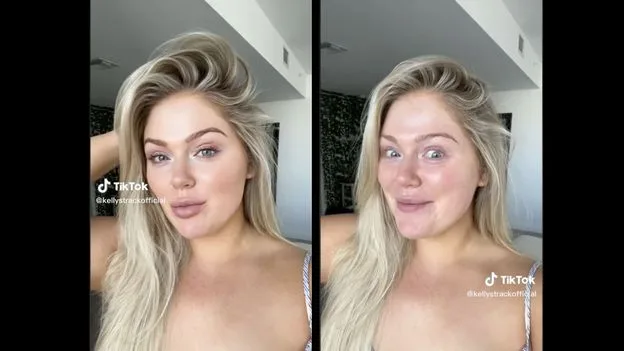
TikTok's new 'Bold Glamour' filter, which seamlessly transforms users' appearances, has sparked debate about its psychological impact. Experts warn that such filters, while seemingly harmless, can exacerbate mental health issues, particularly among Black youth who already face societal pressures around beauty standards.
Research indicates that beauty filters, which use facial-recognition technology to alter features, often promote narrow, Eurocentric ideals of beauty. This can be damaging for Black users, who may feel their natural features are less valued. The filters can reinforce biases that lighter skin, straighter hair, and narrower noses are more desirable, leading to decreased self-esteem and body image issues.
Dr. Aisha Johnson, a clinical psychologist, notes that 'for Black youth, constant exposure to filtered images that erase their natural features can contribute to a sense of inadequacy and identity conflict.' She adds that the filters' seamless technology makes it harder for users to distinguish between reality and digital alteration, deepening the psychological impact.
The problem is compounded by the fact that these filters are not created in a vacuum but reflect existing societal biases. As beauty standards become increasingly influenced by filters, the cycle continues, with real-life cosmetic procedures also rising in popularity. This creates a vicious loop where online and offline standards reinforce each other, often at the expense of mental health.
While some argue filters are no different from makeup, the key difference is that filters can fundamentally alter facial features in ways that are impossible in reality. This can lead to a distorted self-perception and unrealistic expectations. For Black youth, who may already struggle with representation in media, the impact can be particularly severe.