Ancient Human Skeleton Uncovered in Submerged Mexican Cave System
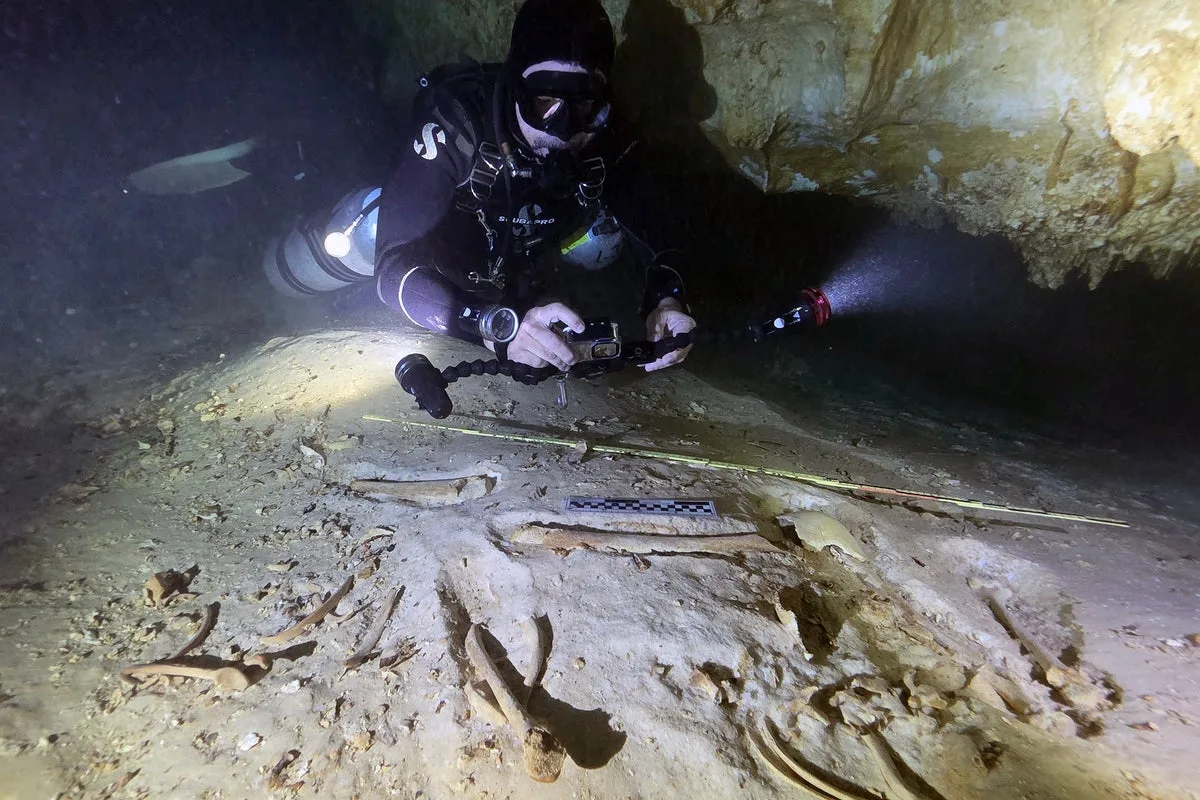
A prehistoric human skeleton has been discovered within a complex underwater cave system along Mexico's Caribbean coastline, an area that has been submerged since the conclusion of the last ice age approximately 8,000 years ago. This remarkable find represents the eleventh such skeleton located in the region's caves over the past thirty years, according to cave-diving archaeologist Octavio del Río.
Challenging Underwater Excavation
Working in collaboration with Mexico's National Institute of Anthropology and History, Mr del Río identified the area between Tulum and Playa del Carmen as a critical site for uncovering some of North America's oldest human remains, with previous discoveries dating back around 13,000 years. The archaeologist informed The Associated Press that the skeleton was situated in a flooded cave approximately eight metres below the surface, requiring divers to navigate through 200 metres of subterranean passages to reach the location.
The archaeological team successfully recovered the remains in late 2025, and detailed analysis is currently underway. Mr del Río emphasised the extremely challenging conditions of the discovery, stating: "With the distance from the cave entrance and the depth involved, the skeleton could only have been deposited there when the cave was completely dry, at least 8,000 years ago." Access to these underwater caverns remains strictly limited to highly skilled divers equipped with specialised technical gear.
Evidence of Intentional Burial Practices
The skeleton was discovered resting on a dune of sediments within a narrower section of an interior chamber, which strongly suggests deliberate placement. "This arrangement indicates a funerary deposit where the body was intentionally positioned, possibly as part of ritualistic practices," explained Del Río. Even after three decades of making similar archaeological discoveries, the archaeologist admitted his pulse still quickens during such finds. "You can shout even underwater," he remarked with a smile, describing how one begins visualising the cave environment and imagining how this individual came to be there.
Significance for Understanding Early Migration
Luis Alberto Martos, director of archaeological studies at the National Institute of Anthropology and History, highlighted how this new discovery will contribute significantly to understanding how early peoples arrived at Mexico's Yucatán Peninsula. During that prehistoric period, the region was characterised by plains with cliffs rather than the jungles and beaches visible today. The caves served as important archaeological windows into this distant past.
DNA evidence increasingly supports the theory that some early inhabitants arrived from Asia via a land bridge that now forms the Bering Strait, though there are also intriguing clues suggesting alternative migration routes from South America. "The puzzle of Yucatan prehistory is becoming better understood through discoveries like this," Martos observed.
Environmental Threats and Conservation Efforts
The hundreds of miles of underwater rivers and cave systems beneath Mexico's Caribbean coast have faced significant environmental pressures in recent years, particularly from construction of the Maya Train project under former President Andrés Manuel López Obrador. The government cleared extensive jungle areas and drove support columns directly into the caves to build this tourist railway.
Del Río, who emerged as one of the project's most vocal critics, revealed that Mexican authorities are now working to designate the entire zone as a nationally protected area. Mexico's Environmental Ministry confirmed to the Associated Press that this protective designation represents a key goal for 2026.
Ecologists have campaigned for years to safeguard these delicate cave systems as development and pollution increasingly threaten the underwater waterways. Beyond the area's natural significance, Martos noted that the National Institute of Anthropology and History has advocated for protection based on cultural heritage grounds. The caves have proven themselves to be invaluable "archaeological windows," yielding more recent historical artifacts including a small cannon and nineteenth-century rifles alongside prehistoric remains.
Passionate cave divers continue to discover additional fossils within the flooded cave systems, researchers confirmed, though archaeologists have not yet been able to initiate recovery operations for these more recent finds. The ongoing discoveries underscore the region's immense archaeological potential and the urgent need for comprehensive conservation measures.




